气候变化研究进展 ›› 2025, Vol. 21 ›› Issue (4): 529-540.doi: 10.12006/j.issn.1673-1719.2024.311
“双碳”目标下中国碳排放控制目标分解思路研究
周丽1,2( ), 章姝3, 王美涵4, 黄俊灵1
- 1 清华大学-中国长江三峡集团有限公司气候变化治理机制与绿色低碳转型战略联合研究中心,北京 100084
2 清华大学能源环境经济研究所,北京 100084
3 中国石油大学(北京)经济管理学院,北京 102249
4 中国人民大学生态环境学院,北京 100872
-
收稿日期:2024-12-20修回日期:2025-03-10出版日期:2025-07-30发布日期:2025-06-25 -
作者简介:周丽,女,副研究员,zhoulizl@tsinghua.edu.cn -
基金资助:国家自然科学基金项目(72140004);中国长江三峡集团有限公司科研项目(202303160)
Research on China’s carbon emission control decomposition methods under the “dual-carbon” goal
ZHOU Li1,2(), ZHANG Shu3, WANG Mei-Han4, HUANG Jun-Ling1
- 1 Tsinghua University-China Three Gorges Corporation Joint Research Center for Climate Governance Mechanism and Green Low-Carbon Transformation Strategy, Beijing 100084, China
2 Institute of Energy, Environment and Economics, Tsinghua University, Beijing 100084, China
3 School of Economics and Management, China University of Petroleum-Beijing, Beijing 102249, China
4 School of Ecology and Environment, Renmin University of China, Beijing 100872, China
-
Received:2024-12-20Revised:2025-03-10Online:2025-07-30Published:2025-06-25

摘要:
基于中国能耗“双控”向碳“双控”转变的趋势分析,识别了转型中存在的机制协调、任务分解和基础条件等挑战,梳理了国内外碳排放控制目标分解经验。基于中国“十五五”更适合采用全国碳强度控制目标,从公平性、透明度、成本有效性、数据可获性、上下协调难度、目标完成风险度等角度,提出并对比了“十五五”时期碳排放控制目标地区分解的三种思路和实施方案,建议开展基于地方自主确定目标形式的“两上两下”的国家-地方双向磋商目标制定机制,并最终提出相关政策建议。
引用本文
周丽, 章姝, 王美涵, 黄俊灵. “双碳”目标下中国碳排放控制目标分解思路研究[J]. 气候变化研究进展, 2025, 21(4): 529-540.
ZHOU Li, ZHANG Shu, WANG Mei-Han, HUANG Jun-Ling. Research on China’s carbon emission control decomposition methods under the “dual-carbon” goal[J]. Climate Change Research, 2025, 21(4): 529-540.
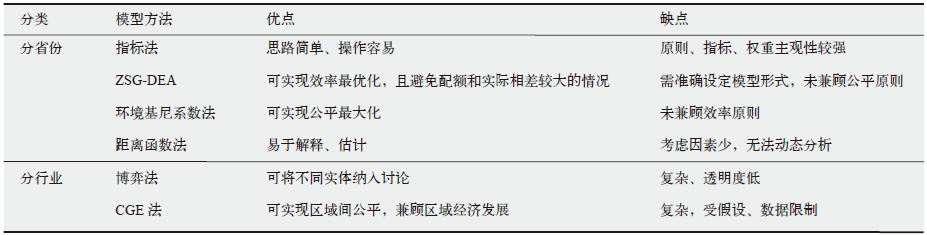 |
表1 国内文献分配选择的部分模型方法
Table 1 Selected modeling approaches for allocation choices in national literature
| |
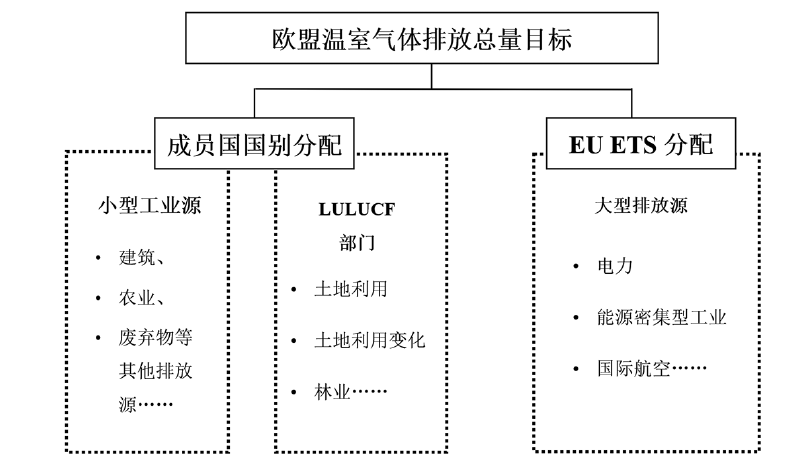
图1 欧盟温室气体排放总量目标分解 注:LULUCF为土地利用、土地利用变化及林业。
Fig. 1 Breakdown of EU’s aggregate GHG emission targets
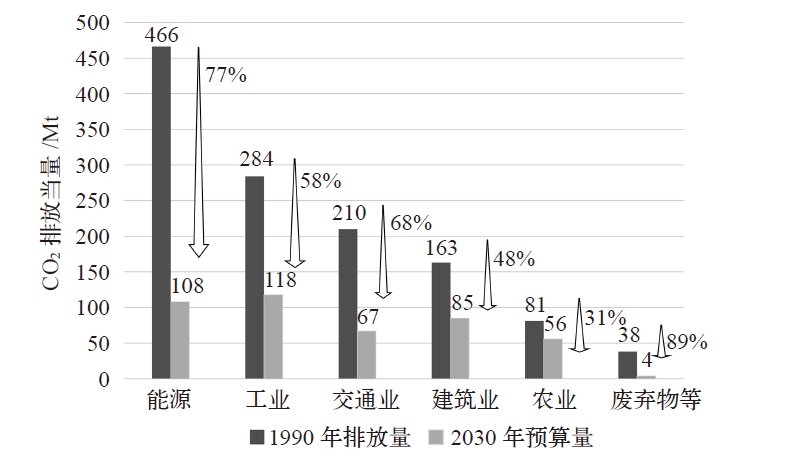
图2 德国温室气体排放总量目标分解 注:本图根据德国温室气体清单整理,百分数代表目标减排量相较1990年排放量下降比例。
Fig. 2 Breakdown of Germany’s aggregate GHG emission targets
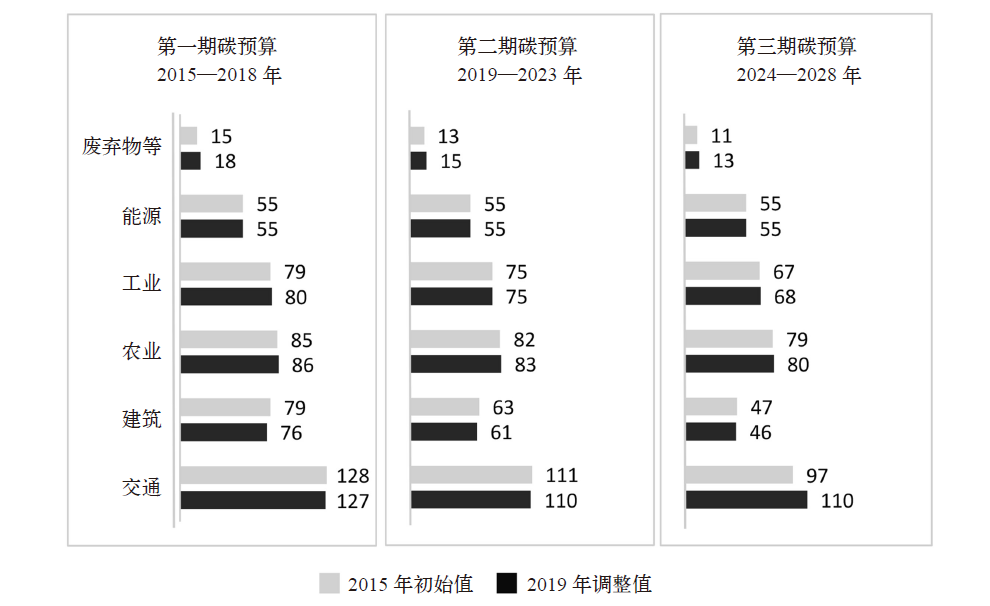
图3 法国首批三期碳预算分解情况[62] 注:以CO2排放当量计,图中数字单位为Mt。
Fig. 3 Breakdown of France’s first three carbon budgets[62]
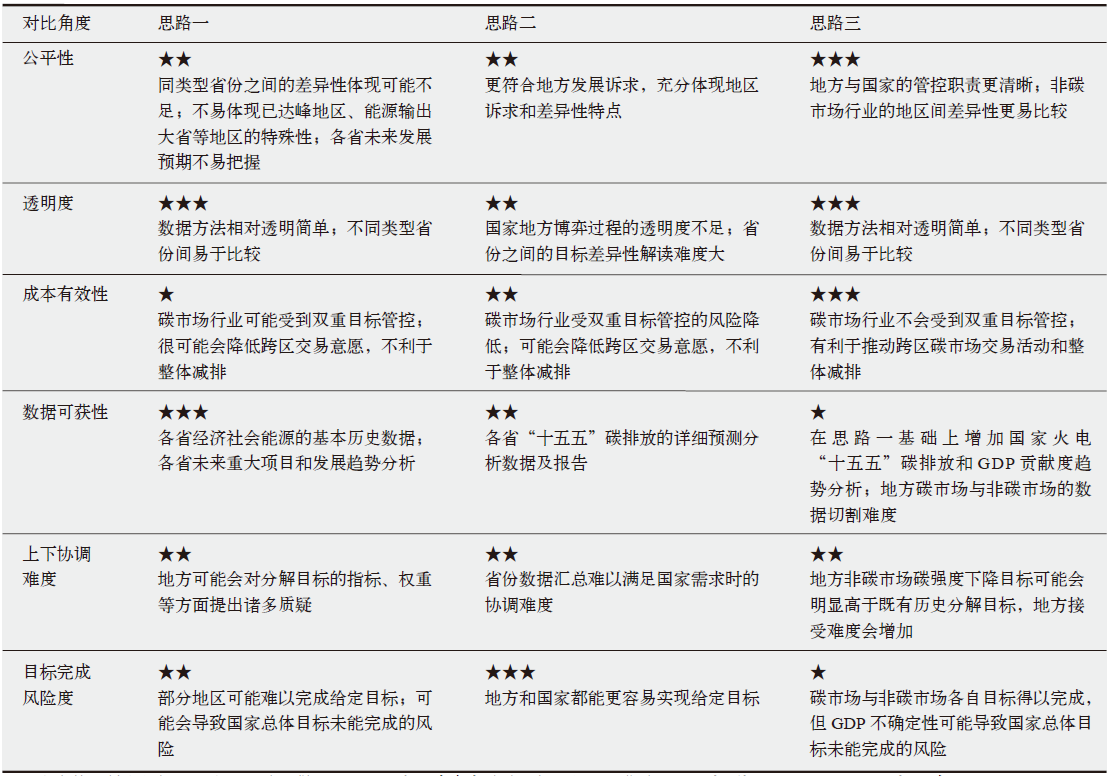 |
表2 全国碳排放控制目标分解思路比较
Table 2 Comparison of decomposition ideas for national carbon emission control targets
| |
| [1] | 中华人民共和国国务院. 国务院关于印发“十二五”控制温室气体排放工作方案的通知[Z/OL]. 2011 [2024-12-20]. https://www.gov.cn/zwgk/2012-01/13/content_2043645.htm. |
| State Council of the People’s Republic of China. Circular of the State Council on the issuance of the 12th Five-Year Plan for the control of greenhouse gas emissions[Z/OL]. 2011 [2024-12-20]. https://www.gov.cn/zwgk/2012-01/13/content_2043645.htm (in Chinese) | |
| [2] | 中华人民共和国国务院. 国务院关于印发“十三五”控制温室气体排放工作方案的通知[Z/OL]. 2016 [2024-12-20]. https://www.gov.cn/zhengce/content/2016-11/04/content_5128619.htm. |
| State Council of the People’s Republic of China. Circular of the State Council on the Issuance of the 13th Five-Year Plan for the control of greenhouse gas emissions[Z/OL]. 2016 [2024-12-20]. https://www.gov.cn/zhengce/content/2016-11/04/content_5128619.htm. (in Chinese) | |
| [3] | 中华人民共和国国家发展改革委员会规划司. 中华人民共和国国民经济和社会发展第十四个五年规划和2035年远景目标纲要 [Z/OL]. 2021 [2024-12-20]. https://www.gov.cn/xinwen/2021-03/13/content_5592681.htm. |
| Department of Planning, National Development and Reform Commission of the People’s Republic of China. Outline of the Fourteenth Five-Year Plan for the national economic and social development of the People’s Republic of China and vision 2035 [Z/OL]. 2021 [2024-12-20]. https://www.gov.cn/xinwen/2021-03/13/content_5592681.htm. (in Chinese) | |
| [4] | 吴婧. 推动能耗“双控”向碳“双控”转变[N]. 中国经营报, 2021-12-20 (A03). DOI: 10.38300/n.cnki.nzgjy.2021.003982. |
| Wu J. Promoting the shift from “dual control” of energy consumption to “dual control” of carbon[N]. China Business Journal, 2021-12-20 (A03). DOI: 10.38300/n.cnki.nzgjy.2021.003982 (in Chinese) | |
| [5] | 余璇. 能耗双控转向碳排放双控[N/OL]. 中国电力报, 2022-08-17 (2). https://www.cpnn.com.cn/news/hg/202208/t20220817_1543698_wap.html. |
| Yu X. Shifting from dual control of energy consumption to dual control of carbon emissions[N/OL]. China Electric Power News, 2022-08-17 (2). https://www.cpnn.com.cn/news/hg/202208/t20220817_1543698_wap.html. (in Chinese) | |
| [6] |
谢典, 高亚静, 芦新波, 等. 能耗“双控”向碳排放“双控”转变的实施路径研究[J]. 综合智慧能源, 2022, 44 (7): 73-80.
doi: 10.3969/j.issn.2097-0706.2022.07.009 |
|
Xie D, Gao Y J, Lu X B, et al. Research on the implementation path of the transition from dual control on energy consumption to dual control on carbon emission[J]. Integrated Intelligent Energy, 2022, 44 (7): 73-80 (in Chinese)
doi: 10.3969/j.issn.2097-0706.2022.07.009 |
|
| [7] | 李瑾, 常征, 吴越, 等. 能耗“双控”向碳排放“双控”转变推动全国碳市场长期稳步发展[J]. 环境经济, 2022, 22 (8): 32-37. |
| Li J, Chang Z, Wu Y, et al. Shifting from “dual-control” energy consumption to “dual-control” carbon emissions to promote the long-term and steady development of the national carbon market[J]. Environmental Economy, 2022, 22 (8): 32-37 (in Chinese) | |
| [8] | 宣晓伟. “能耗双控” 到 “碳双控”: 挑战与对策[J]. 城市与环境研究, 2022, 22 (3): 42-55. |
| Xuan X W. From “the amount and intensity control of energy consumption” to “the amount and intensity control of carbon emission”: challenge and strategy[J]. Journal of Eco-Civilization Studies, 2022, 22 (3): 42-55 (in Chinese) | |
| [9] | 袁惊柱. 能耗双控逐步转向碳排放双控研究[J]. 中国能源, 2024, 46 (4): 52-58. |
| Yuan J Z. Research on dual control of energy consumption gradually shifts to dual control of carbon emissions[J]. Energy of China, 2024, 46 (4): 52-58 (in Chinese) | |
| [10] | 贾骥业, 朱彩云. 绿色发展提速我国向“碳排放双控”全面转型[N/OL]. 中国青年报, 2024-08-13 [2024-09-29]. https://news.youth.cn/gn/202408/t20240813_15444413.htm#:-:text=%E2%80%9C%E6%9C%AA%E6%9D%A5%E8%BF%99%E4%BA%9B%E6%96%B0%E8%A2%AB%E7%BA%B3%E5%85%A5%E5%85%A8. |
| Jia J Y, Zhu C Y. Green development speeds up China’s overall transition to “dual control of carbon emissions”[N/OL]. China Youth Daily, 2024-08-13 [2024-09-29]. https://news.youth.cn/gn/202408/t20240813_15444413.htm#:-:text=%E2%80%9C%E6%9C%AA%E6%9D%A5%E8% BF%99%E4%BA%9B%E6%96%B0%E8%A2%AB%E7%BA%B3%E5%85%A5%E5%85%A8 (in Chinese) | |
| [11] | 田红豆, 王伟, 罗斌华, 等. “双碳” 战略下能耗双控向碳排放双控转变的内在逻辑与实现路径[J]. 能源研究与管理, 2023, 15 (4): 16-22. |
| Tian H D, Wang W, Luo B H, et al. Internal logic and realization path of transformation from “double control” of energy consumption to “double control” of carbon emission under the “double carbon” strategy[J]. Energy Research and Management, 2023, 15 (4): 16-22 (in Chinese) | |
| [12] | Li Y, Wei Y, Zhang X, et al. Regional and provincial CO2 emission reduction task decomposition of China’s 2030 carbon emission peak based on the efficiency, equity and synthesizing principles[J]. Structural Change and Economic Dynamics, 2020, 53: 237-256 |
| [13] | Wang Y, Xie J, Fu L, et al. Determinants of carbon emission: a multiple scale decomposition of Gansu province[J]. PLOS One, 2024, 19 (9): e0309467 |
| [14] | Ma C, Stern D I. Biomass and China’s carbon emissions: a missing piece of carbon decomposition[J]. Energy Policy, 2008, 36 (7): 2517-2526 |
| [15] | 王敏. 当前能耗双控政策演变路径研究[J]. 华北电力大学学报 (社会科学版), 2023 (5): 31-38. |
| Wang M. Study on the evolution path of the current dual control policy on energy consumption[J]. Journal of North China Electric Power University (Social Sciences), 2023 (5): 31-38 (in Chinese) | |
| [16] | 杨姗姗, 郭豪, 杨秀, 等. 双碳目标下建立碳排放总量控制制度的思考与展望[J]. 气候变化研究进展, 2023, 19 (2): 191-202. |
| Yang S S, Guo H, Yang X, et al. Consideration and prospect of total carbon emission control system under the double carbon target[J]. Climate Change Research, 2023, 19 (2): 191-202 (in Chinese) | |
| [17] | 汤芳, 代红才, 张宁, 等. 能耗双控向碳排放双控转变影响分析及推进路径设计[J]. 中国电力, 2023, 56 (12): 255-261. |
| Tang F, Dai H C, Zhang N, et al. Effect analysis and promotion path design for transformation from energy consumption “dual control” to carbon “dual control”[J]. Electric Power, 2023, 56 (12): 255-261 (in Chinese) | |
| [18] | 李少林, 郭晓雨. 能耗双控转向碳排放双控的理论逻辑与实践路径[J]. 东北财经大学学报, 2024 (1): 37-50. |
| Li S L, Guo X Y. Theoretical logic and path of shifting from the dual control of total energy consumption and intensity to the dual control of carbon emissions and intensity[J]. Journal of Dongbei University of Finance and Economics, 2024 (1): 37-50 (in Chinese) | |
| [19] | 田鹤琪. 能耗双控向碳排放双控全面转型, 对各行业影响几何?[N/OL]. 界面新闻, 2024-09-12. https://m.jiemian.com/article/11693248.html. |
| Tian H Q. Full transition from dual control of energy consumption to dual control of carbon emissions, what is the impact on various industries?[N/OL]. Jiemian News, 2024-09-12. https://m.jiemian.com/article/11693248.html (in Chinese) | |
| [20] |
苏利阳, 王毅, 汝醒君, 等. 面向碳排放权分配的衡量指标的公正性评价[J]. 生态环境学报, 2009, 18 (4): 1594-1598.
doi: 10.16258/j.cnki.1674-5906(2009)04-1594-05 |
|
Su L Y, Wang Y, Ru X J, et al. The equity of the indictors for assessing carbon emission[J]. Ecology and Environment Sciences, 2009, 18 (4): 1594-1598 (in Chinese)
doi: 10.16258/j.cnki.1674-5906(2009)04-1594-05 |
|
| [21] | 何建坤, 陈文颖, 滕飞, 等. 全球长期减排目标与碳排放权分配原则[J]. 气候变化研究进展, 2009, 5 (6): 362-368. |
| He J K, Chen W Y, Teng F, et al. Long-term climate change mitigation target and carbon permit allocation[J]. Climate Change Research, 2009, 5 (6): 362-368 (in Chinese) | |
| [22] | 丁仲礼, 段晓男, 葛全胜, 等. 2050年大气CO2浓度控制: 各国排放权计算[J]. 中国科学 (D辑:地球科学), 2009, 39 (8): 1009-1027. |
| Ding Z L, Duan X N, Ge Q S, et al. Control of atmospheric CO2concentration by 2050: an allocation on the emission rights of different countries[J]. Scientia Sinica (Terrae), 2009, 39 (8): 1009-1027 (in Chinese) | |
| [23] | 丁仲礼, 段晓男, 葛全胜, 等. 国际温室气体减排方案评估及中国长期排放权讨论[J]. 中国科学 (D辑:地球科学), 2009, 39 (12): 1659-1671. |
| Ding Z L, Duan X N, Ge Q S, et al. On the major proposals for carbon emission reduction and some related issues[J]. Scientia Sinica (Terrae), 2009, 39 (12): 1659-1671 (in Chinese) | |
| [24] | 周丽, 张希良, 何建坤. 我国碳强度目标地方分解的主要问题与建议[J]. 科技导报, 2013, 31 (1): 11. |
| Zhou L, Zhang X L, He J K. Main problems and suggestions for local decomposition of China’s carbon intensity target[J]. Science & Technology Review, 2013, 31 (1): 11 (in Chinese) | |
| [25] |
邱纪翔, 罗钰星, 王克, 等. 基于多情景假设的中国碳减排目标省域分解[J]. 资源科学, 2022, 44 (10): 2038-2047.
doi: 10.18402/resci.2022.10.07 |
|
Qiu J X, Luo Y X, Wang K, et al. Provincial decomposition of China’s carbon emission reduction targets based on multi-scenario hypothesis[J]. Resources Science, 2022, 44 (10): 2038-2047 (in Chinese)
doi: 10.18402/resci.2022.10.07 |
|
| [26] | 熊小平, 康艳兵, 冯升波, 等. 碳排放总量控制目标区域分解方法研究[J]. 中国能源, 2015, 37 (11): 15-19. |
| Xiong X P, Kang Y B, Feng S B, et al. Research on method for regional decomposition of carbon emission cap[J]. Energy of China, 2015, 37 (11): 15-19 (in Chinese) | |
| [27] | 孙耀华, 何爱平, 彭硕毅, 等. 碳强度减排指标约束下碳排放权的省际分配效率研究[J]. 统计与信息论坛, 2019, 34 (6): 74-81. |
| Sun Y H, He A P, Peng S Y, et al. Study on provincial distribution efficiency of carbon emissions right under the constraint of carbon intensity target[J]. Journal of Statistics and Information, 2019, 34 (6): 74-81 (in Chinese) | |
| [28] | 郑立群. 中国各省区碳减排责任分摊: 基于公平与效率权衡模型的研究[J]. 干旱区资源与环境, 2013, 27 (5): 1-6. |
| Zheng L Q. Sharing the carbon emission reduction responsibility of Chinese provinces: based on the fairness-efficiency trade-off model[J]. Journal of Arid Land Resources and Environment, 2013, 27 (5): 1-6 (in Chinese) | |
| [29] | 于潇, 孙猛. 中国省际碳排放绩效及2020年减排目标分解[J]. 吉林大学社会科学学报, 2015, 55 (1): 57-65, 172. |
| Yu X, Sun M. Study on the decomposition of China provincial carbon emission performance and the 2020 emission reduction targets[J]. Jilin University Journal Social Sciences Edition, 2015, 55 (1): 57-65, 172 (in Chinese) | |
| [30] | 常凯. 全国碳交易系统下省际间碳强度减排目标分配: 来自公平与效率证据[J]. 工业技术经济, 2016, 35 (12): 92-99. |
| Chang K. Interprovincial reduction targets allocation of emission intensity in nationwide carbon emission trading system: evidence from equity and efficiency[J]. Industrial Technology & Economy, 2016, 35 (12): 92-99 (in Chinese) | |
| [31] | 王敬敏, 薛雨田. 基于数据包络模型的电力行业碳排放权配额初始分配效率研究[J]. 中国电力, 2013, 46 (10): 146-150. |
| Wang J M, Xue Y T. Efficiency of power industry carbon emission quotas based on data envelopment[J]. Electric Power, 2013, 46 (10): 146-150 (in Chinese) | |
| [32] | 马湘山, 姜冬梅. 中国民航国际航线的减排压力和应对策略[J]. 生态经济, 2012 (6): 38-41. |
| Ma X S, Jiang D M. Study on the emissions reduction impacts on international airlines of China’s civil aviation and its combating strategy[J]. Ecological Economy, 2012 (6): 38-41 (in Chinese) | |
| [33] |
王正, 周侃, 樊杰, 等. 市-县尺度能源消费碳排放核算方法研究进展[J]. 地理科学进展, 2023, 42 (7): 1406-1419.
doi: 10.18306/dlkxjz.2023.07.014 |
|
Wang Z, Zhou K, Fan J, et al. Progress of research on energy-related carbon emission accounting methods at the prefectural and county levels[J]. Progress in Geography, 2023, 42 (7): 1406-1419 (in Chinese)
doi: 10.18306/dlkxjz.2023.07.014 |
|
| [34] |
马立, 王璟煦, 张迪迪, 等. 高时空分辨率FFCO2排放清单的构建方法及研究展望[J]. 地理学报, 2022, 77 (3): 650-664.
doi: 10.11821/dlxb202203011 |
| Ma L, Wang J X, Zhang D D, et al. Developing FFCO2 emission inventory with high spatio-temporal resolution: methodology and prospects[J]. Acta Geographica Sinica, 2022, 77 (3): 650-664 (in Chinese) | |
| [35] | 郭茹, 吕爽, 曹晓静, 等. 基于ZSG-DEA模型的中国六大行业碳减排分配效率研究[J]. 生态经济, 2020, 36 (1): 13-18. |
| Guo R, Lyu S, Cao X J, et al. Research on distribution efficiency of carbon emission reduction of six major industries in China based on ZSG-DEA model[J]. Ecological Economy, 2020, 36 (1): 13-18 (in Chinese) | |
| [36] | Jin Y, Liu X, Chen X, et al. Allowance allocation matters in China’s carbon emissions trading system[J]. Energy Economics, 2020, 92: 105012 |
| [37] | 谭显春, 程永龙, 顾佰和. 中国碳总量控制新进展: 省域碳配额分配研究综述[J]. 气候变化研究进展, 2023, 19 (1): 63-73. |
| Tan X C, Cheng Y L, Gu B H. New progress in controlling the total volume of carbon emissions in China: a review on the allocation of provincial carbon emission allowances[J]. Climate Change Research, 2023, 19 (1): 63-73 (in Chinese) | |
| [38] |
田云, 林子娟. 巴黎协定下中国碳排放权省域分配及减排潜力评估研究[J]. 自然资源学报, 2021, 36 (4): 921-933.
doi: 10.31497/zrzyxb.20210409 |
| Tian Y, Lin Z J. Provincial distribution of China’s carbon emission rights and assessment of its emission reduction potential under the Paris Agreement[J]. Journal of Natural Resources, 2021, 36 (4): 921-933 (in Chinese) | |
| [39] | 王勇, 程瑜, 杨光春, 等. 2020和2030年碳强度目标约束下中国碳排放权的省区分解[J]. 中国环境科学, 2018, 38 (8): 3180-3188. |
| Wang Y, Cheng Y, Yang G C, et al. Provincial decomposition of China’s carbon emission rights under the constraint of 2020 and 2030 carbon intensity targets[J]. China Environmental Science, 2018, 38 (8): 3180-3188 (in Chinese) | |
| [40] | 谭显春, 牛苗苗, 顾佰和, 等. 基于高质量发展视角的中国碳配额省级分配方案评价[J]. 气候变化研究进展, 2023, 19 (1): 74-83. |
| Tan X C, Niu M M, Gu B H, et al. Evaluation of China’s provincial carbon quota allocation scheme from the perspective of high-quality development[J]. Climate Change Research, 2023, 19 (1): 74-83 (in Chinese) | |
| [41] | Wu Q, Zhang H. Research on optimization allocation scheme of initial carbon emission quota from the perspective of welfare effect[J]. 2019, 12 (11): 2118 |
| [42] | Zhou L, Zhang X, Qi T, et al. Regional disaggregation of China’s national carbon intensity reduction target by reduction pathway analysis[J]. Energy for Sustainable Development, 2014, 23: 25-31 |
| [43] | He W, Zhang B. A comparative analysis of Chinese provincial carbon dioxide emissions allowances allocation schemes in 2030: an egalitarian perspective[J]. Science of the Total Environment, 2021, 765: 142705 |
| [44] | Cheng Y, Gu B, Tan X, et al. Allocation of provincial carbon emission allowances under China’s 2030 carbon peak target: a dynamic multi-criteria decision analysis method[J]. Science of the Total Environment, 2022, 837: 155798 |
| [45] | Yang M, Hou Y, Ji Q, et al. Assessment and optimization of provincial CO2 emission reduction scheme in China: an improved ZSG-DEA approach[J]. Energy Economics, 2020, 91: 104931 |
| [46] | Zhou Z, Liu C, Zeng X, et al. Carbon emission performance evaluation and allocation in Chinese cities[J]. Journal of Cleaner Production, 2018, 172: 1254-1272 |
| [47] | 程纪华. 中国省域碳排放总量控制目标分解研究[J]. 中国人口∙资源与环境, 2016, 26 (1): 23-30. |
| Cheng J H. Decomposition of carbon cap targets at provincial level in China: a case study of Zhejiang[J]. China Population, Resources and Environment, 2016, 26 (1): 23-30 (in Chinese) | |
| [48] | 王金南, 蔡博峰, 曹东, 等. 中国CO2排放总量控制区域分解方案研究[J]. 环境科学学报, 2011, 31 (4): 680-685. |
| Wang J N, Cai B F, Cao D, et al. Scenario study on regional allocation of CO2 emissions allowance in China[J]. Acta Scientiae Circumstantiae, 2011, 31 (4): 680-685 (in Chinese) | |
| [49] | 杨源, 蔡闻佳, 王灿, 等. 基于聚类分析的碳强度目标分解研究[J]. 气候变化研究进展, 2012, 8 (4): 278-284. |
| Yang Y, Cai W J, Wang C, et al. Regional allocation of CO2 intensity reduction targets based on cluster analysis[J]. Climate Change Research, 2012, 8 (4): 278-284 (in Chinese) | |
| [50] | Wu F, Huang N, Liu G, et al. Pathway optimization of China’s carbon emission reduction and its provincial allocation under temperature control threshold[J]. Journal of Environmental Management, 2020, 271: 111034 |
| [51] | Qin Q, Liu Y, Huang J P. A cooperative game analysis for the allocation of carbon emissions reduction responsibility in China’s power industry[J]. Energy Economics, 2020, 92: 104960 |
| [52] | Zhao R, Min N, Geng Y, et al. Allocation of carbon emissions among industries/sectors: an emissions intensity reduction constrained approach[J]. Journal of Cleaner Production, 2017, 142: 3083-3094 |
| [53] | Zhang Y J, Hao J F. Carbon emission quota allocation among China’s industrial sectors based on the equity and efficiency principles[J]. Annals of Operations Research, 2017, 255 (1): 117-140 |
| [54] |
Zhou L, Chen W. Impact of district-level decomposition policies to achieve a post-fossil carbon city: a case study of Beijing, China[J]. Journal of Cleaner Production, 2019, 215: 1371-1381
doi: 10.1016/j.jclepro.2019.01.082 |
| [55] | 袁永娜, 石敏俊, 李娜, 等. 碳排放许可的强度分配标准与中国区域经济协调发展: 基于30省区CGE模型的分析[J]. 气候变化研究进展, 2012, 8 (1): 60-67. |
| Yuan Y N, Shi M J, Li N, et al. Intensity allocation criteria of carbon emission permits and China regional development: based on a 30-province/autonomous region Computable Equilibrium Model analysis[J]. Climate Change Research, 2012, 8 (1): 60-67 (in Chinese) | |
| [56] | European Commission. Proposal for a Directive of the European parliament and of the council amending Directive 2003/87/EC establishing a system for greenhouse gas emission allowance trading within the Union, Decision (EU) 2015/1814 concerning the establishment and operation of a market stability reserve for the Union greenhouse gas emission trading scheme and Regulation (EU) 2015/757 [EB/OL]. 2021 [2024-09-18]. https://eur-lex.europa.eu/legal-content/EN/TXT/?uri=CELEX:52021PC0551 |
| [57] | European Commission. Proposal for a regulation of the European parliament and of the council amending regulation (EU) 2018/842 on binding annual greenhouse gas emission reductions by member states from 2021 to 2030 contributing to climate action to meet commitments under the Paris Agreement [EB/OL]. 2021 [2024-09-18]. https://eur-lex.europa.eu/legal-content/EN/TXT/?uri=CELEX:52021PC0555 |
| [58] | Federal Ministry for the Environment. Nature conservation, nuclear safety and consumer protection, federal climate change act (Bundes-Klimaschutzgesetz)[R/OL]. 2019 [2024-09-18]. https://www.bmuv.de/fileadmin/Daten_BMU/Download_PDF/Gesetz |
| [59] | UK Parliament. Climate change act 2008 [EB/OL]. 2008 [2024-09-18]. https://www.legislation.gov.uk/ukpga/2008/27/contents |
| [60] | Climate Change Committee. Progress report to parliament[R/OL]. 2022 [2024-09-18]. https://www.theccc.org.uk/publication/2022-progress-report-to-parliament/ |
| [61] | 杨儒浦, 冯相昭. 英国碳预算对我国实施碳排放总量控制制度的启示[J]. 可持续发展经济导刊, 2023 (Z1): 36-41. |
| Yang R P, Feng X Z. The enlightenment of the British carbon budget on the policy development of capping carbon emission in China[J]. China Sustainabitlity Tribune, 2023 (Z1): 36-41 (in Chinese) | |
| [62] | 杨儒浦, 李丽平. 实施碳预算的国际经验借鉴[J]. 中国能源, 2023, 45 (11): 73-81. |
| Li R P, Li Y P. International experience and reference in implementing carbon budgets[J]. Energy of China, 2023, 45 (11): 73-81 (in Chinese) | |
| [63] | French Government. National low-carbon strategy 2020 [EB/OL]. 2020 [2024-09-18]. https://climate-laws.org/document/national-low-carbon-strategy-snbc_6f60 |
| [64] | 中华人民共和国国务院新闻办公室. 中国应对气候变化的政策与行动[Z/OL]. 2021 [2024-12-20]. https://www.gov.cn/zhengce/2021-10/27/content_5646697.htm. |
| Information Office of the State Council of the People’s Republic of China. China’s policies and actions to address climate change[Z/OL]. 2021 [2024-12-20]. https://www.gov.cn/zhengce/2021-10/27/content_5646697.htm (in Chinese) | |
| [65] | 中华人民共和国国务院办公厅. 国务院办公厅关于印发《加快构建碳排放双控制度体系工作方案》的通知[Z/OL]. 2024 [2024-12-20]. https://www.gov.cn/zhengce/content/202408/content_6966079.htm. |
| General Office of the State Council of the People’s Republic of China. Circular of the General Office of the State Council on the issuance of the Work Program on Accelerating the Construction of a Dual Control System for Carbon Emissions[Z/OL]. 2024 [2024-12-20]. https://www.gov.cn/zhengce/content/202408/content_6966079.htm (in Chinese) | |
| [66] | 马丁, 陈文颖. 中国2030年碳排放峰值水平及达峰路径研究[J]. 中国人口∙资源与环境, 2016, 26 (S1): 1-4. |
| Ma D, Chen W Y. Analysis of China’s 2030 carbon emission peak level and peak path[J]. China Population, Resources and Environment, 2016, 26 (S1): 1-4 (in Chinese) | |
| [67] | 陈涛, 李晓阳, 陈斌. 中国碳排放影响因素分解及峰值预测研究[J]. 安全与环境学报, 2024, 24 (1): 396-406. |
| Chen T, Li X Y, Chen B. Decomposition of influencing factors and peak prediction of carbon emissions in China[J]. Journal of Safety and Environment, 2024, 24 (1): 396-406 (in Chinese) | |
| [68] | 王文举, 孔晓旭. 基于2030年碳达峰目标的中国省域碳配额分配研究[J]. 数量经济技术经济研究, 2022, 39 (7): 113-132. |
| Wang W J, Kong X X. Analysis on China’s provincial carbon quota allocation based on the 2030 carbon peak goal[J]. The Journal of Quantitative & Technical Economics, 2022, 39 (7): 113-132 (in Chinese) |
| [1] | 朱松丽. 联合国气候公约体系下的国家分类演变[J]. 气候变化研究进展, 2025, 21(4): 565-573. |
| [2] | 樊星, 秦圆圆, 丁鸿达, 高翔. 《巴黎协定》后主要国家减缓目标制定和履约进展与前景评估[J]. 气候变化研究进展, 2025, 21(3): 414-427. |
| [3] | 李伟起, 黄鹤, 张忠伟, 李重言, 李政. 降碳目标分解方案及评估调整机制研究[J]. 气候变化研究进展, 2025, 21(2): 246-255. |
| [4] | 秦毓翔, 黄蕊. 基于Super-SBM模型的中东欧国家碳排放效率及影响因素研究[J]. 气候变化研究进展, 2024, 20(5): 581-592. |
| [5] | 刘元欣, 贺铄, 江雅婧, 罗旭, 袁家海. 中国四大城市群碳排放驱动因素时空分解研究[J]. 气候变化研究进展, 2024, 20(2): 231-241. |
| [6] | 李现康, 韩星星, 梁洪松. 气候适应性技术采纳对农户农业收入的影响[J]. 气候变化研究进展, 2024, 20(2): 193-204. |
| [7] | 李骏, 宋昱洋. 小岛屿国家联盟在国际气候谈判中的“逆向领导力”成因分析[J]. 气候变化研究进展, 2023, 19(6): 799-809. |
| [8] | 王睿, 张赫, 张韵, 黄雅哲. 基于动态改进等比例法的省级CO2排放总量目标分解研究[J]. 气候变化研究进展, 2023, 19(2): 238-248. |
| [9] | 杨姗姗, 郭豪, 杨秀, 李政. 双碳目标下建立碳排放总量控制制度的思考与展望[J]. 气候变化研究进展, 2023, 19(2): 191-202. |
| [10] | 张宁, 庞军. 全国碳市场引入CCER交易及抵销机制的经济影响研究[J]. 气候变化研究进展, 2022, 18(5): 622-636. |
| [11] | 樊星, 高翔. 国家自主贡献更新进展、特征及其对全球气候治理的影响[J]. 气候变化研究进展, 2022, 18(2): 230-239. |
| [12] | 于飞, 崔惠娟, 葛全胜. “一带一路”沿线国家的自主贡献中水资源相关适应措施评估[J]. 气候变化研究进展, 2022, 18(1): 70-80. |
| [13] | 王谋, 康文梅, 张莹. 应对气候变化南南合作优先合作国家选择方法探讨[J]. 气候变化研究进展, 2021, 17(6): 744-752. |
| [14] | 刘蕾. 应对气候变化进程中纳入性别考虑的进展与启示[J]. 气候变化研究进展, 2021, 17(5): 548-558. |
| [15] | 王敏, 冯相昭, 安祺, 卓岳, 赵梦雪, 杜晓林, 王鹏. 基于脱钩指数和LMDI的青海省绿色低碳发展策略研究[J]. 气候变化研究进展, 2021, 17(5): 598-607. |
| 阅读次数 | ||||||
|
全文 |
|
|||||
|
摘要 |
|
|||||