Climate Change Research ›› 2025, Vol. 21 ›› Issue (6): 777-788.doi: 10.12006/j.issn.1673-1719.2025.079
• Impacts of Climate Change • Previous Articles Next Articles
Impact of the 2022 compound hot-dry extreme events on vegetation growth over the Tibetan Plateau
XIAO Xue1( ), HUANG Meng-Tian1(), ZHOU Bai-Quan1, WANG Chen-Peng2, ZHAI Pan-Mao1
- 1 State Key Laboratory of Disaster Weather Science and Technology, Chinese Academy of Meteorological Sciences, Beijing 100081, China
2 National Climate Centre, China Meteorological Administration, Beijing 100081, China
-
Received:2025-04-10Revised:2025-06-10Online:2025-11-30Published:2025-09-05

Cite this article
XIAO Xue, HUANG Meng-Tian, ZHOU Bai-Quan, WANG Chen-Peng, ZHAI Pan-Mao. Impact of the 2022 compound hot-dry extreme events on vegetation growth over the Tibetan Plateau[J]. Climate Change Research, 2025, 21(6): 777-788.
share this article
Add to citation manager EndNote|Ris|BibTeX
URL: https://www.climatechange.cn/EN/10.12006/j.issn.1673-1719.2025.079
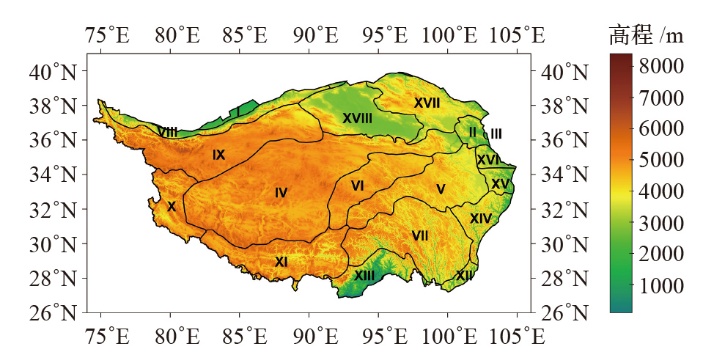
Fig. 1 Elevation and vegetation type distribution map of the Tibetan Plateau
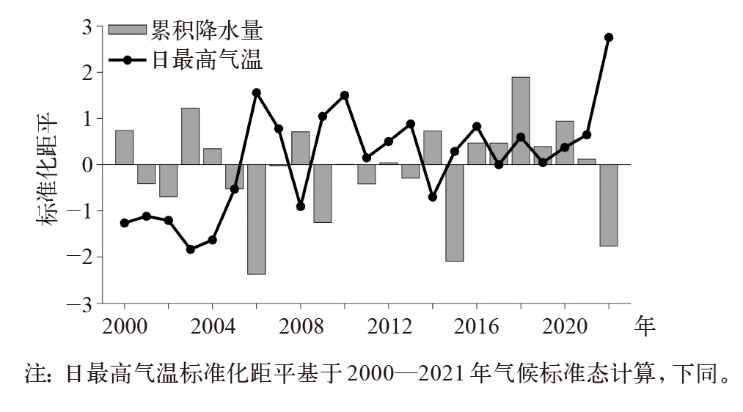
Fig. 2 Standardized anomalies of growing-season averaged daily maximum temperature and cumulative precipitation over the Tibetan Plateau from 2000 to 2022
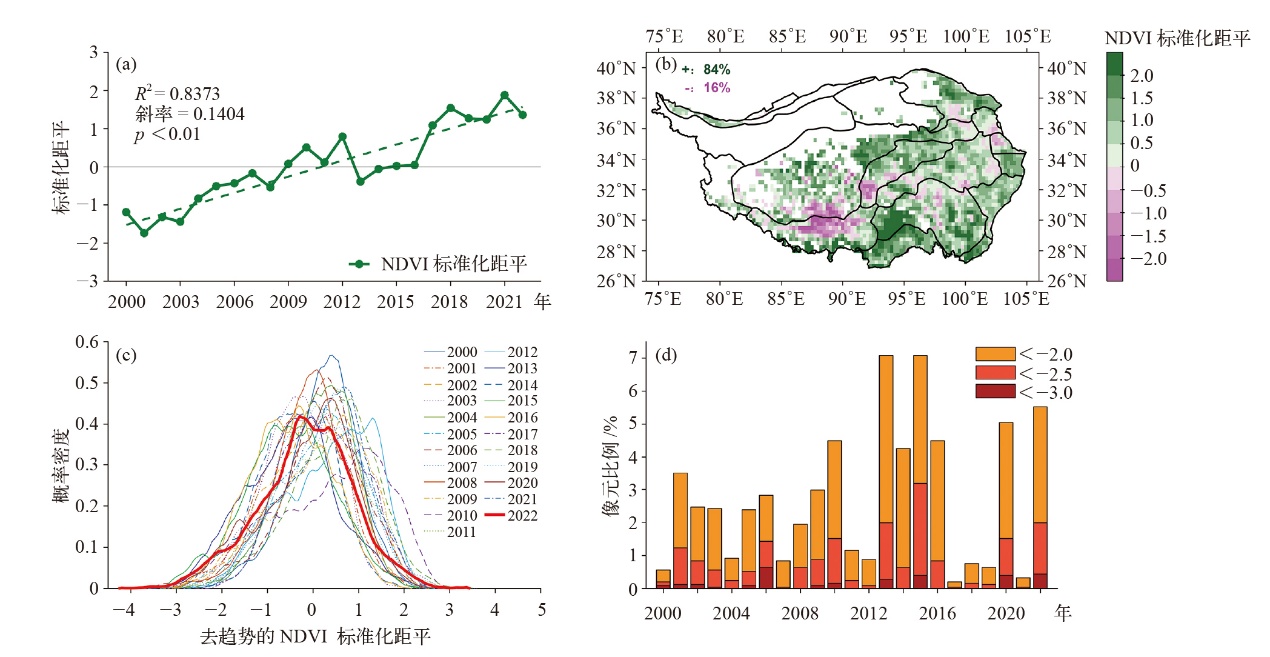
Fig. 3 Vegetation growth status on the Tibetan Plateau. (a) Standardized anomaly of growing-season averaged NDVI over the Tibetan Plateau from 2000 to 2022, (b) spatial distribution of standardized anomaly of growing-season averaged NDVI in 2022, (c) probability density function of detrended standardized anomaly of growing-season averaged NDVI from 2000 to 2022, (d) pixel proportion of detrended standardized anomaly of growing season average NDVI below -2.0, -2.5 and -3.0 from 2000 to 2022
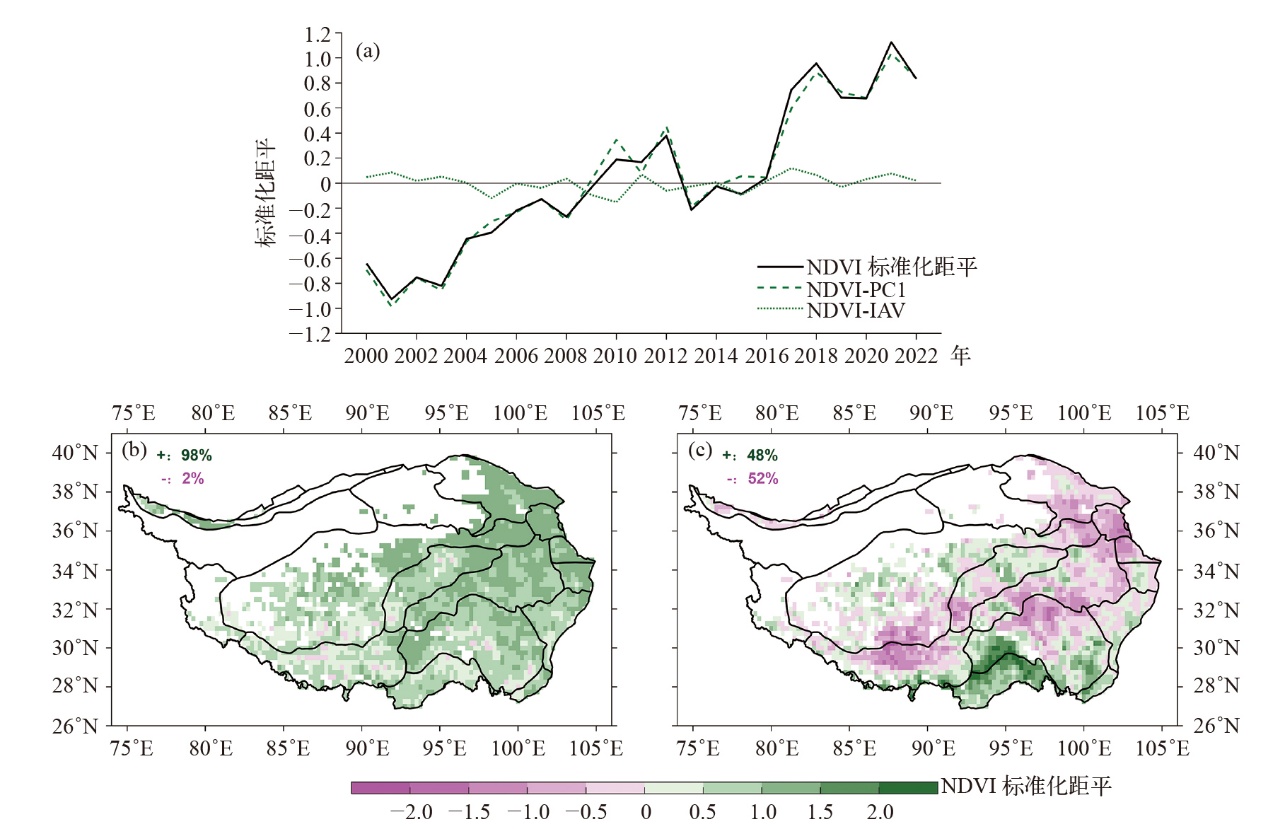
Fig. 4 Principal component analysis results of NDVI standardization anomaly during the growing season in the Tibetan Plateau. (a) Time series of regional average standardized anomaly of NDVI, NDVI-PC1 reconstructed by the first principal component, and NDVI-IAV reconstructed by the 2nd to 6th principal components over the Tibetan Plateau from 2000 to 2022, (b) spatial distribution of NDVI-PC1 in 2022, (c) spatial distribution of NDVI-IAV in 2022
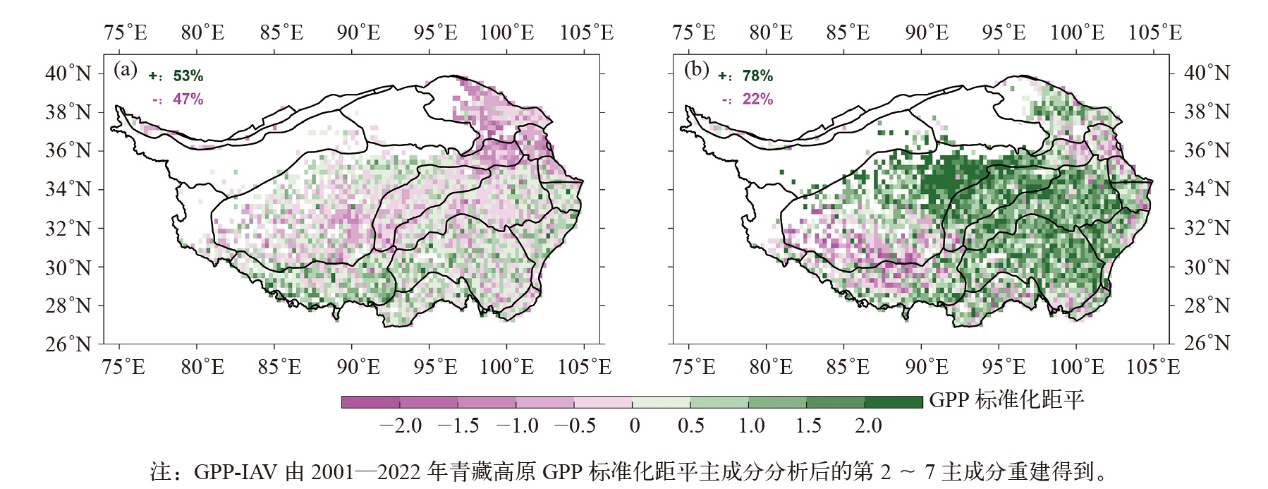
Fig. 5 Ecosystem GPP over the Tibetan Plateau. (a) Spatial distribution of GPP-IAV on the Tibetan Plateau in 2022 (with GPP-IAV reconstructed from the 2nd to 7th principal components of the standardized anomaly of GPP on the Tibetan Plateau from 2001 to 2022),(b) spatial distribution of standardized anomaly of GPP on the Tibetan Plateau in July-August, 2022
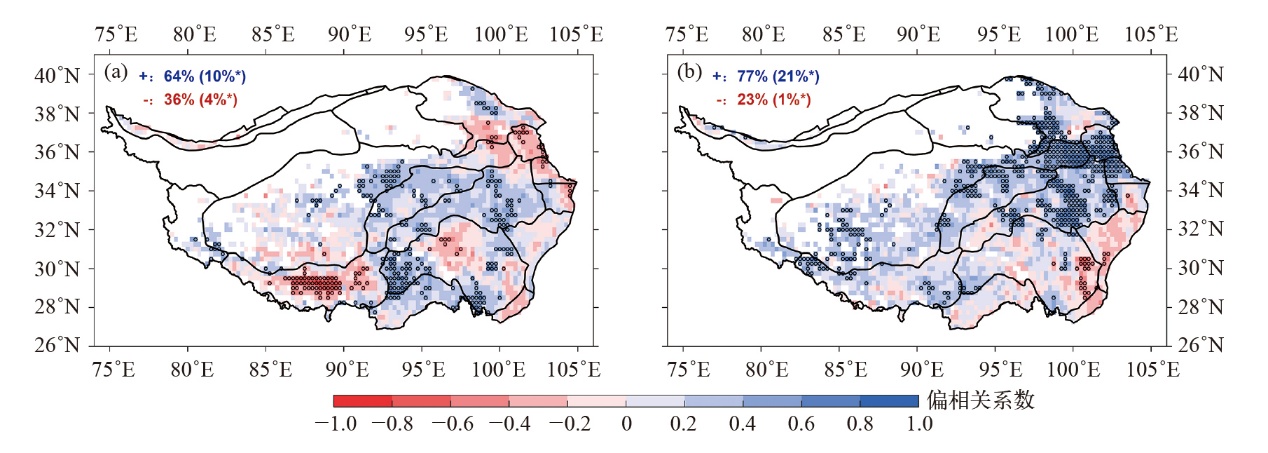
Fig. 6 Spatial distribution of partial correlation coefficients between detrended growing season NDVI and mean daily maximum temperature (a) and cumulative precipitation (b) on the Tibetan Plateau from 2000 to 2022
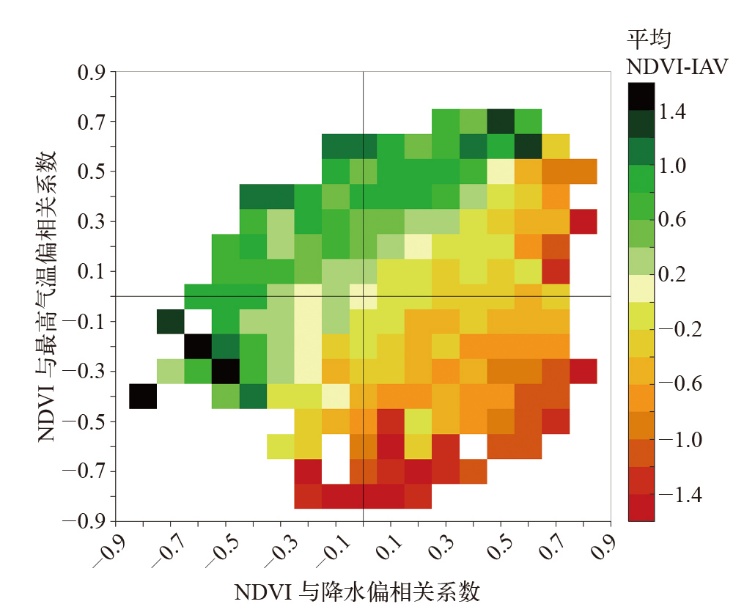
Fig. 7 The spatial distribution characteristics of vegetation change in the Tibetan Plateau caused by the compound hot-dry extreme event in 2022
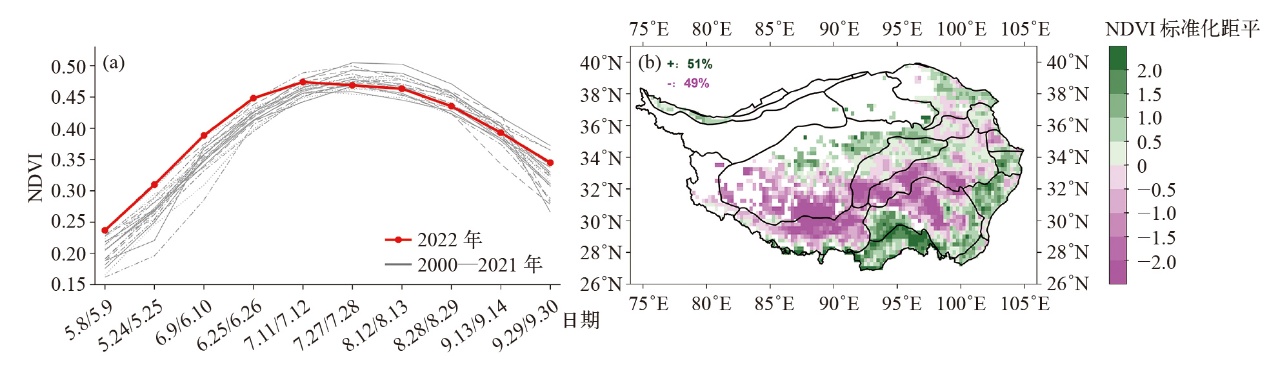
Fig. 8 Changes in NDVI during the growing season in the Tibetan Plateau. (a) Interannual variability of regionally averaged NDVI, (b) spatial distribution of standardized anomaly of NDVI in July-August, 2022
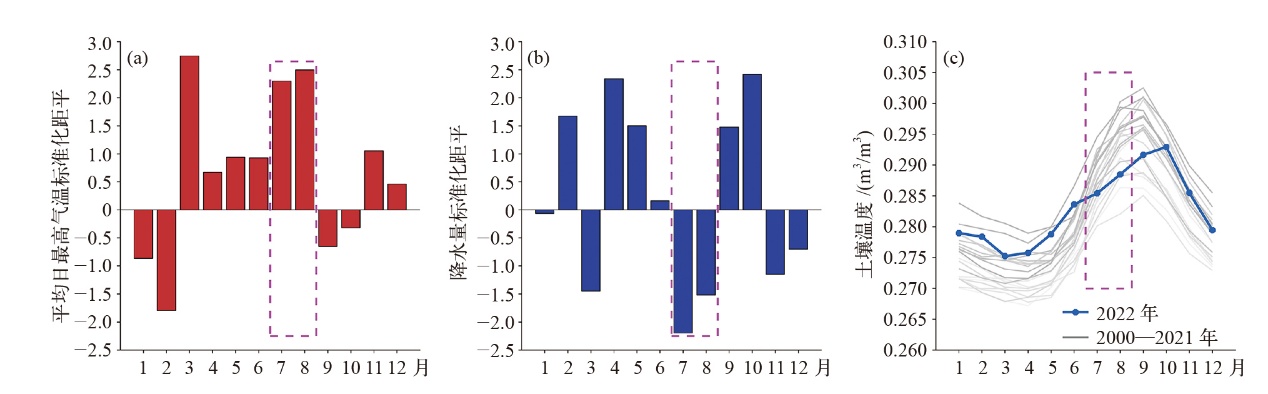
Fig. 9 Monthly variations of daily maximum temperature (a), cumulative precipitation (b), and soil moisture averaged over 0-289 cm depth (c) on the Tibetan Plateau in 2022
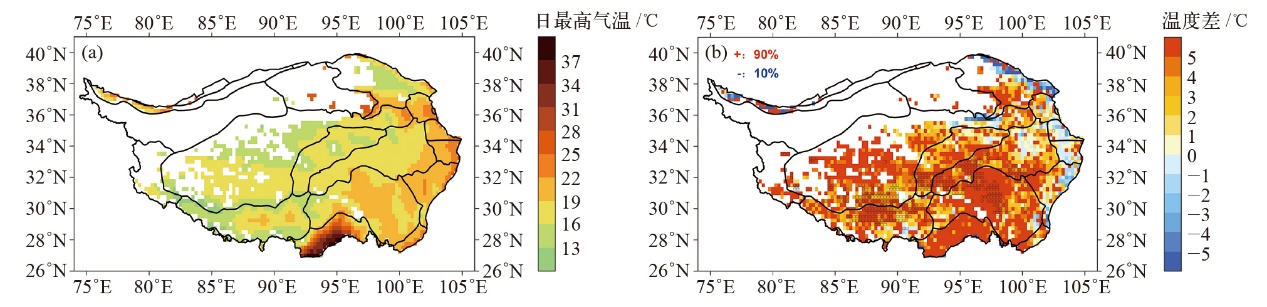
Fig. 10 Spatial distribution of daily maximum temperature (a) and the difference between daily maximum temperature and the optimal temperature for vegetation growth (b) on the Tibetan Plateau during July-August, 2022
| [1] | IPCC. Climate change 2021: the physical science basis[M]. Cambridge: Cambridge University Press, 2021 |
| [2] | Piao S L, Zhang X P, Chen A P, et al. The impacts of climate extremes on the terrestrial carbon cycle: a review[J]. Science China: Terrae, 2019, 49 (9): 1321-1334 |
| [3] | 孙博, 王会军, 黄艳艳, 等. 2022年夏季中国高温干旱气候特征及成因探讨[J]. 大气科学学报, 2023, 46 (1): 1-8. |
| Sun B, Wang H J, Huang Y Y, et al. Discussion on the climatic characteristics and causes of high temperature and drought in summer 2022 in China[J]. Journal of Atmospheric Sciences, 2023, 46 (1): 1-8 (in Chinese) | |
| [4] | Xu W F, Yuan W P, Wu D H, et al. Impacts of record-breaking compound heatwave and drought events in 2022 China on vegetation growth[J]. Agricultural and Forest Meteorology, 2024: 344 |
| [5] | Libonati R, Geirinhas J L, Silva P S, et al. Assessing the role of compound drought and heatwave events on unprecedented 2020 wildfires in the Pantanal[J]. Environmental Research Letters, 2022, 17 (1): 1-11 |
| [6] |
Ga?lle R, Jean N C, Fran?ois L, et al. Effects of drought and heat on forest insect populations in relation to the 2003 drought in western Europe[J]. Annals of Forest Science, 2006, 63 (6): 613-624
doi: 10.1051/forest:2006044 URL |
| [7] |
Xiao L Y, Wu X Q, Zhao S, et al. Memory effects of vegetation after extreme weather events under various geological conditions in a typical karst watershed in southwestern China[J]. Agricultural and Forest Meteorology, 2024, 345: 109840
doi: 10.1016/j.agrformet.2023.109840 URL |
| [8] | Shi Z T, Jia G S, Zhou Y Y, et al. Amplified intensity and duration of heatwaves by concurrent droughts in China[J]. Atmospheric Research, 2021: 261 |
| [9] |
Zscheischler J, Westra S, Hurk D V M J J B, et al. Future climate risk from compound events[J]. Nature Climate Change, 2018, 8 (6): 469-477
doi: 10.1038/s41558-018-0156-3 |
| [10] | Corey L, Weston A, Angela R, et al. Compound heat and moisture extreme impacts on global crop yields under climate change[J]. Nature Reviews Earth & Environment, 2022, 3 (12): 872-889 |
| [11] |
张晶, 郝芳华, 吴兆飞, 等. 植被物候对极端气候响应及机制[J]. 地理学报, 2023, 78 (9): 2241-2255.
doi: 10.11821/dlxb202309008 |
| Zhang J, Hao F H, Wu Z F, et al. Vegetation phenology responses and mechanisms to extreme climate[J]. Acta Geographica Sinica, 2023, 78 (9): 2241-2255 (in Chinese) | |
| [12] | Dreesen E F, Boeck D J H, Janssens A I, et al. Do successive climate extremes weaken the resistance of plant communities? An experimental study using plant assemblages [J]. Biogeosciences, 2014, 11 (1): 109-121 |
| [13] |
Ciais P, Reichstein M, Viovy N, et al. Europe-wide reduction in primary productivity caused by the heat and drought in 2003[J]. Nature, 2005, 437 (7058): 529-533
doi: 10.1038/nature03972 |
| [14] |
Von B J, Zscheischler J, Rammig A, et al. Impacts of droughts and extreme temperature events on gross primary production and ecosystem respiration: a systematic assessment across ecosystems and climate zones[J]. Biogeosciences, 2018, 15: 1293-1318
doi: 10.5194/bg-15-1293-2018 URL |
| [15] |
Gebrechorkos S H, Sheffield J, Vicente-Serrano S M, et al. Warming accelerates global drought severity[J]. Nature, 2025, 642: 628-635
doi: 10.1038/s41586-025-09047-2 |
| [16] |
Shukla S, Safeeq M, AghaKouchak A, et al. Temperature impacts on the water year 2014 drought in California[J]. Geophysical Research Letters, 2015, 42 (11): 4384-4393
doi: 10.1002/grl.v42.11 URL |
| [17] | Gu L, Schumacher D L, Fischer E M, et al. Flash drought impacts on global ecosystems amplified by extreme heat[J]. Nature Geoscience, 2025 (18): 709-715 |
| [18] |
Zhou S, Wu S H, Gao J B, et al. Increased stress from compound drought and heat events on vegetation[J]. The Science of the Total Environment, 2024, 949: 175113
doi: 10.1016/j.scitotenv.2024.175113 URL |
| [19] |
Piao S L, Cui M D, Chen A P, et al. Altitude and temperature dependence of change in the spring vegetation green-up date from 1982 to 2006 in the Qinghai-Xizang Plateau[J]. Agricultural and Forest Meteorology, 2012, 151 (12): 1599-1608
doi: 10.1016/j.agrformet.2011.06.016 URL |
| [20] |
Xu B Q, Cao J J, Hansen J, et al. Black soot and the survival of Tibetan glaciers[J]. Proceedings of the National Academy of Sciences of the United States of America, 2009, 106 (52): 22114-22118
doi: 10.1073/pnas.0910444106 pmid: 19996173 |
| [21] |
Yao T D, Xue Y K, Chen D L, et al. Recent Third Pole’s rapid warming accompanies cryospheric melt and water cycle intensification and interactions between monsoon and environment: multidisciplinary approach with observations, modeling, and analysis[J]. Bulletin of the American Meteorological Society, 2019, 100: 423-444
doi: 10.1175/BAMS-D-17-0057.1 URL |
| [22] | Klein J A, Harte J, Zhao X Q. Experimental warming causes large and rapid species loss, dampened by simulated grazing, on the Tibetan Plateau[J]. Blackwell Science Ltd, 2004, 7 (12): 1170-1179 |
| [23] | 周佰铨, 翟盘茂, 廖圳. 2022年夏季青藏高原高温干旱复合事件的双变量归因[J]. 中国科学: 地球科学, 2024, 54 (7): 2152-2166. |
|
Zhou B Q, Zhai P M, Liao Z. Bivariate attribution of the compound hot and dry summer of 2022 on the Tibetan Plateau[J]. Science China: Earth Sciences, 2024, 67 (7): 2122-2136 (in Chinese)
doi: 10.1007/s11430-023-1320-y |
|
| [24] |
Wang L C. Impacts of multiple temporal and spatial scale drought on grassland vegetation dynamics in the Tibetan Plateau region of China, 1982-2015[J]. Environmental Development, 2024, 51: 101033
doi: 10.1016/j.envdev.2024.101033 URL |
| [25] | Wu D, Hu Z Y. Increasing compound drought and hot event over the Tibetan Plateau and its effects on soil water[J]. Ecological Indicators, 2023, 153: 1-14 |
| [26] |
朱玉英, 张华敏, 丁明军, 等. 青藏高原植被绿度变化及其对干湿变化的响应[J]. 植物生态学报, 2023, 47: 51-64.
doi: 10.17521/cjpe.2021.0500 |
|
Zhu Y Y, Zhang H M, Ding M J, et al. Vegetation greenness change and its response to dry-wet changes on the Tibetan Plateau[J]. Chinese Journal of Plant Ecology, 2023, 47: 51-64 (in Chinese)
doi: 10.17521/cjpe.2021.0500 URL |
|
| [27] | 张乐乐, 高黎明, 赵林, 等. 基于 ITPCAS数据的青藏高原太阳总辐射时空变化特征[J]. 太阳能学报, 2019, 40 (9): 2521-2529. |
| Zhang L L, Gao L M, Zhao L, et al. Spatio-temporal variation characteristics of total solar radiation on the Tibetan Plateau based on ITPCAS data[J]. Acta Energiae Solaris Sinica, 2019, 40 (9): 2521-2529 (in Chinese) | |
| [28] | 龚成麒, 董晓华, 魏冲. 1978—2018年青藏高原降水区划及各区降水量时空演变特征[J]. 水资源与水工程学报, 2022, 33 (5): 96-108. |
| Gong C Q, Dong X H, Wei C. Precipitation zoning and spatio-temporal evolution characteristics in the Tibetan Plateau from 1978 to 2018[J]. Journal of Water Resources and Water Engineering, 2022, 33 (5): 96-108 (in Chinese) | |
| [29] | 康兴成. 青藏高原地区近40年来气候变化的特征[J]. 冰川冻土, 1996 (S1): 281-288. |
| Kang X C. Characteristics of climate change in the Tibetan Plateau over the past 40 years[J]. Journal of Glaciology and Geocryology, 1996 (S1): 281-288 (in Chinese) | |
| [30] | 吴佳, 高学杰. 一套格点化的中国区域逐日观测资料及与其它资料的对比[J]. 地球物理学报, 2013 (56): 1102-1111. |
| Wu J, Gao X J. A gridded daily observational dataset for regional China and comparisons with other datasets[J]. Chinese Journal of Geophysics, 2013 (56): 1102-1111 (in Chinese) | |
| [31] | Huang M T, Piao S L, Ciais P, et al. Air temperature optima of vegetation productivity across global biomes[J]. Nature Ecology & Evolution, 2019, 3 (5): 772-779 |
| [32] |
Faour G, Mhawej M, Nasrallah A. Global trends analysis of the main vegetation types throughout the past four decades[J]. Applied Geography, 2018, 97: 184-195
doi: 10.1016/j.apgeog.2018.05.020 URL |
| [33] | 封建民, 郭玲霞, 刘宇峰, 等. 2000—2021年泾河流域植被NDVI变化及影响因素[J]. 水土保持研究, 2024, 32 ( 1): 249-256. ] |
| Feng J M, Guo L X, Liu Y F, et al. Changes of vegetation NDVI and influencing factors in the Jinghe River basin from 2000 to 2021[J]. Research of Soil and Water Conservation, 2024, 32 (1): 249-256 (in Chinese) | |
| [34] | Zscheischler J, Martius O, Westra S, et al. A typology of compound weather and climate events[J]. Nature Reviews Earth & Environment, 2020, 17: 333-347 |
| [35] |
Gurgel C H, Ferreira J N. Annual and interannual variability of NDVI in Brazil and its connections with climate[J]. International Journal of Remote Sensing, 2003, 24 (18): 3595-3609
doi: 10.1080/0143116021000053788 URL |
| [36] | Jolliffe I T. Principal component analysis[J]. Journal of Marketing Research, 2002, 87 (4): 513 |
| [37] | Theil H. A rank-invariant method of linear and polynomial regression analysis[J]. Netherlands Academy of Sciences, Proceedings, 1992, 12 (2): 345-381 |
| [38] | Sen P K. Estimates of the regression coefficient based on Kendall’s tau[J]. Publications of the American Statistical Association, 1968, 63: 1379-1389 |
| [39] |
Mann H B. Non-parametric test against trend[J]. Econometrica, 1945, 13 (3): 245-259
doi: 10.2307/1907187 URL |
| [40] | Kendall M G. Rank correlation methods[J]. British Journal of Psychology, 1990, 25 (1): 86-91 |
| [41] |
杨梦娇, 赵伟, 詹琪琪, 等. 基于偏相关分析的 2003—2020年青藏高原地表温度变化驱动因子量化研究[J]. 测绘学报, 2024, 53 (5): 848-859.
doi: 10.11947/j.AGCS.2024.20230206 |
| Yang M J, Zhao W, Zhan Q Q, et al. Quantitative study on driving factors of surface temperature change on the Tibetan Plateau from 2003 to 2020 based on partial correlation analysis[J]. Acta Geodaetica et Cartographica Sinica, 2024, 53 (5): 848-859 (in Chinese) | |
| [42] |
Anniwaer N, Li X Y, Wang K, et al. Shifts in the trends of vegetation greenness and photosynthesis in different parts of Tibetan Plateau over the past two decades[J]. Agricultural and Forest Meteorology, 2024, 345: 109851
doi: 10.1016/j.agrformet.2023.109851 URL |
| [43] | Zhang Y, Yang Z, Zong Q R C, et al. Spatial variations in carbon dioxide fertilization effect on vegetation greening across the Tibetan Plateau[J]. Global and Planetary Change, 2025 (252): 104839 |
| [44] | Piao S L, Wang X H, Park T J, et al. Characteristics, drivers and feedbacks of global greening[J]. Nature Reviews Earth & Environment, 2020, 1 (1): 14 |
| [45] | 李新鸽, 韩广轩, 朱连奇, 等. 降雨引起的干湿交替对土壤呼吸的影响: 进展与展望[J]. 生态学杂志, 2019, 38 (2): 567-575. |
| Li X G, Han G X, Zhu L Q, et al. Effects of dry-wet alternation caused by rainfall on soil respiration: advances and prospects[J]. Chinese Journal of Ecology, 2019, 38 (2): 567-575 (in Chinese) | |
| [46] |
Wang J, Yan R, Wu G, et al. Unprecedented decline in photosynthesis caused by summer 2022 record-breaking compound drought-heatwave over Yangtze River basin[J]. Science Bulletin, 2023, 68 (19): 2160-2163
doi: 10.1016/j.scib.2023.08.011 URL |
| [47] | 李红英, 张存桂, 汪生珍, 等. 近40年青藏高原植被动态变化对水热条件的响应[J]. 生态学报, 2022, 42 (12): 4770-4783. |
| Li H Y, Zhang C G, Wang S Z, et al. Responses of vegetation dynamics to water and heat conditions on the Tibetan Plateau over the past 40 years[J]. Acta Ecologica Sinica, 2022, 42 (12): 4770-4783 (in Chinese) | |
| [48] | 欧阳习军, 董晓华, 魏榕, 等. 青藏高原植被生长季NDVI时空变化及对气候因子的响应分析[J]. 水土保持研究, 2023, 30 (2): 220-229. |
| Ouyang X J, Dong X H, Wei R, et al. Analysis of the spatiotemporal changes of NDVI during the growing season of vegetation in the Tibetan Plateau and its response to climate factors[J]. Research of Soil and Water Conservation, 2023, 30 (2): 220-229 (in Chinese) | |
| [49] |
马炳鑫, 和彩霞, 靖娟利, 等. 1982—2019年中国西南地区植被变化归因研究[J]. 地理学报, 2023, 78 (3): 714-728.
doi: 10.11821/dlxb202303013 |
| Ma B X, He C X, Jing J L, et al. Attribution study of vegetation change in Southwest China from 1982 to 2019[J]. Acta Geographica Sinica, 2023, 78 (3): 714-728 (in Chinese) | |
| [50] | 朴世龙, 张宪洲, 汪涛, 等. 青藏高原生态系统对气候变化的响应及其反馈[J]. 科学通报, 2019, 64 (27): 2842-2855. |
| Piao S L, Zhang X Z, Wang T, et al. Responses and feedbacks of the Tibetan Plateau ecosystem to climate change[J]. Science Bulletin, 2019, 64 (27): 2842-2855 (in Chinese). | |
| [51] | Li L H, Zhang Y L, Wu J S, et al. Increasing sensitivity of alpine grasslands to climate variability along an elevational gradient on the Qinghai-Tibet Plateau[J]. Science of the Total Environment, 2019 (678): 21-29 |
| [52] |
Berg A, Findell K, Lintner B, et al. Land-atmosphere feedbacks amplify aridity increase over land under global warming[J]. Nature Climate Change, 2016, 6 (9): 869-874
doi: 10.1038/nclimate3029 |
| [53] |
Sherwood S, Fu Q. A drier future?[J]. Science, 2014, 343 (6172): 737-739
doi: 10.1126/science.1247620 pmid: 24531959 |
| [54] |
Frank D, Reichstein M, Bahn M, et al. Effects of climate extremes on the terrestrial carbon cycle: concepts, processes and potential future impacts[J]. Global Change Biology, 2015, 21 (8): 2861-2880
doi: 10.1111/gcb.12916 pmid: 25752680 |
| [55] |
Niu S L, Luo Y Q, Fei S F, et al. Thermal optimality of net ecosystem exchange of carbon dioxide and underlying mechanisms[J]. New Phytologist, 2012, 194: 775-783
doi: 10.1111/j.1469-8137.2012.04095.x pmid: 22404566 |
| [56] | Chen A P, Huang L, Liu Q, et al. Optimal temperature of vegetation productivity and its linkage with climate and elevation on the Tibetan Plateau[J]. Global Change Biology, 2021 (27): 1942-1951 |
| [1] | ZENG Ying-Ting, TANG Zhen-Fei, WU Bin, ZHOU Ming-Zhu. Estimation of China’s offshore photovoltaic power generation potential and analysis of driving factors [J]. Climate Change Research, 2025, 21(6): 830-838. |
| [2] | GUO Yan-Jun, ZOU Cheng-Zhi. Evaluation of temporal stability in atmospheric temperature observations from FengYun-3D satellite for climate change research [J]. Climate Change Research, 2025, 21(6): 733-741. |
| [3] | WANG Sheng, CHEN Jian, ZHOU Yu, SUN Jia-Li, ZHAI Zhen-Fang, XIE Wu-San, DAI Juan, DING Xiao-Jun, WU Rong. Projection of the suitable cultivation area for single-cropping rice in the Jianghuai region based on CMIP6 and MaxEnt model [J]. Climate Change Research, 2025, 21(6): 766-776. |
| [4] | HAN Chi, WEN Hong-Qi, ZHANG Shu-Lin, ZHANG Jun-Long, LI Wei, CHEN Ming-Shuai, YOU Li. Effectiveness of cross-industry water rights trading on water management in water-deficient basins under multiple climate change scenarios [J]. Climate Change Research, 2025, 21(6): 753-765. |
| [5] | HE Hao, LI Man, LIU Miao, CHEN Ming-Jie, LI Qi, HU Zheng-Hua. Impact of climate change on rice diseases: research progress and future prospects [J]. Climate Change Research, 2025, 21(5): 641-658. |
| [6] | HU Jin-Peng, HE Yan, SHI Pei-Jun. Research progress and prospects on the impacts of compound hot and dry events on wheat yield [J]. Climate Change Research, 2025, 21(5): 625-640. |
| [7] | ZHANG Xin-Yue, LI Kuo, ZHAO Ming-Yue, XU Yin-Long. Review and prospect of agricultural adaptive capacity building to climate change in China [J]. Climate Change Research, 2025, 21(5): 613-624. |
| [8] | FAN Xing, LIANG Qi-Di, WU Cheng-Lin, GAO Xiang. Stocktaking on the Baku Climate Change Conference and perspectives on global climate governance [J]. Climate Change Research, 2025, 21(4): 583-592. |
| [9] | SUN Ruo-Shui, LIANG Mei-Cong. From Paris to Belém: progress and forecast at the decennial of Paris Agreement [J]. Climate Change Research, 2025, 21(4): 574-582. |
| [10] | TAN Xian-Chun, CHENG Yong-Long, YAN Hong-Shuo, XING Xiu-Cheng, ZHU Kai-Wei, WANG Chen-Xu. Interpretation and implications of the summary on climate change mitigation in the IPCC Seventh Assessment Report Working Group III [J]. Climate Change Research, 2025, 21(4): 494-501. |
| [11] | CHEN Xian-Yao, BI Han-Wen, HAO Xiao-Jie, MA Tian-Jiao, GUO Ling-Rui. Variability of the Atlantic Meridional Overturning Circulation and its impact on global climate change [J]. Climate Change Research, 2025, 21(4): 469-476. |
| [12] | ZHU Song-Li. The evolution of country classification under UNFCCC system [J]. Climate Change Research, 2025, 21(4): 565-573. |
| [13] | DING Jie, CAO Zuo-Nan, HU Guo-Zheng, HASBAGAN Ganjurjav, ZHAO Fen, WANG Hai-Feng, GAO Qing-Zhu. Climate change impacts, adaptation and vulnerability and implications in Working Group II of the IPCC Seventh Assessment Report [J]. Climate Change Research, 2025, 21(4): 484-493. |
| [14] | WANG Bo-Wen, HE Yi, TENG Fei. Attribution and assessment of direct and indirect economic losses from extreme weather events in China [J]. Climate Change Research, 2025, 21(4): 502-518. |
| [15] | CUI Peng, WANG Yan, ZHANG Guo-Tao, ZHANG Zheng-Tao, LEI Yu, WANG Hao, WANG Jiao, HAO Jian-Sheng, ZHU Hong. Disaster risk prevention under climate change: current status, challenges, and scientific issues [J]. Climate Change Research, 2025, 21(4): 449-460. |
| Viewed | ||||||
|
Full text |
|
|||||
|
Abstract |
|
|||||