Climate Change Research ›› 2025, Vol. 21 ›› Issue (6): 807-817.doi: 10.12006/j.issn.1673-1719.2025.092
• Mitigation to Climate Change • Previous Articles Next Articles
Discussion on methane emission characteristics and cooperation directions for emission reduction in BRICS countries
LI Ke-Xin( ), YANG Ru-Pu(), LI Li-Ping, WANG Min
- Policy Research Center for Environment and Economy, Ministry of Ecology and Environment of the People’s Republic of China, Beijing 100029, China
-
Received:2025-04-29Revised:2025-06-11Online:2025-11-30Published:2025-09-01

Cite this article
LI Ke-Xin, YANG Ru-Pu, LI Li-Ping, WANG Min. Discussion on methane emission characteristics and cooperation directions for emission reduction in BRICS countries[J]. Climate Change Research, 2025, 21(6): 807-817.
share this article
Add to citation manager EndNote|Ris|BibTeX
URL: https://www.climatechange.cn/EN/10.12006/j.issn.1673-1719.2025.092
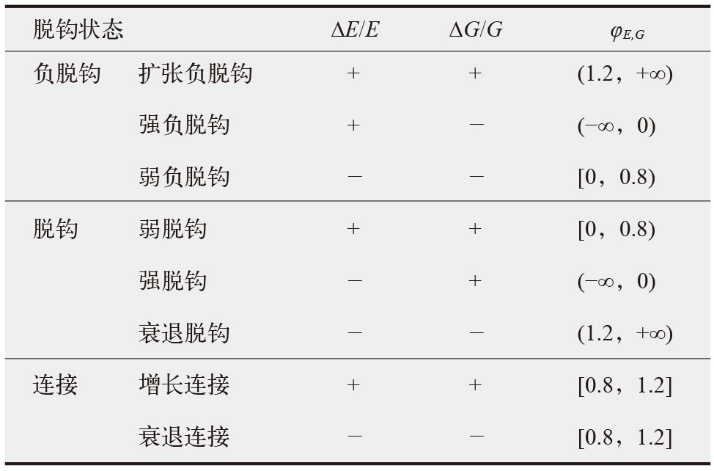 |
Table 1 State of division
| |
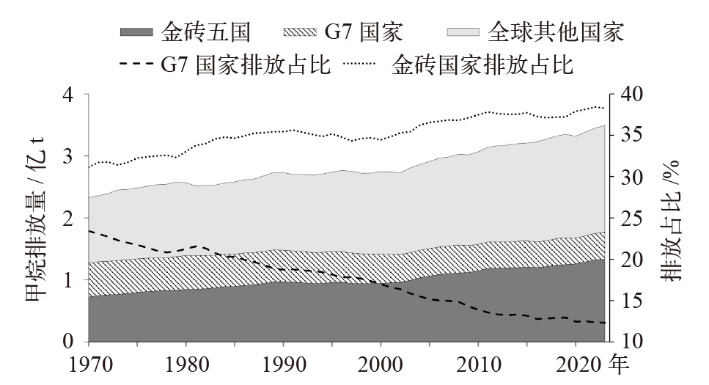
Fig. 1 Global methane emissions from 1970 to 2023
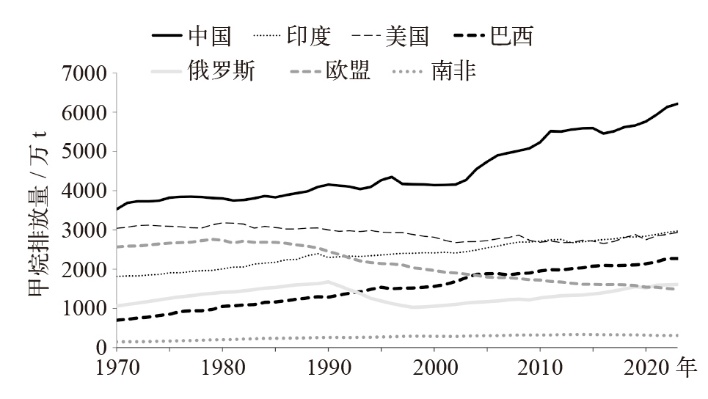
Fig. 2 Global methane emissions in major countries from 1970 to 2023
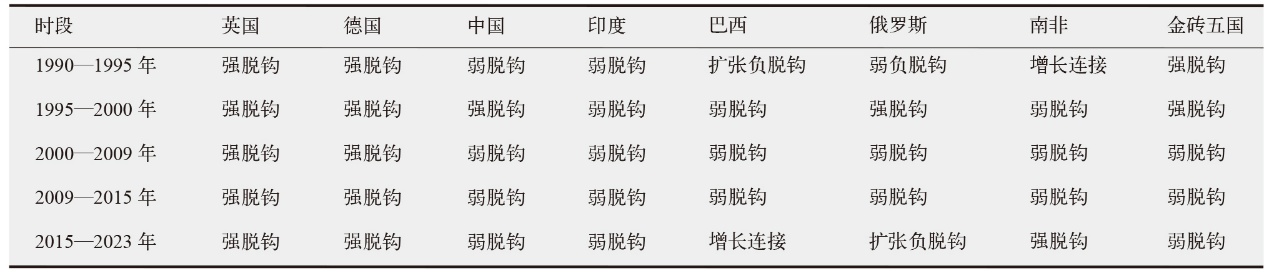 |
Table 2 The decoupling status between methane emissions and economic growth in BRICS countries and typical developed countries
| |
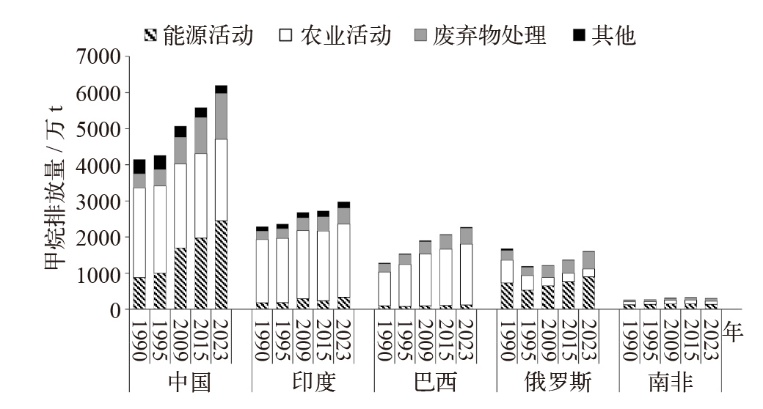
Fig. 3 Key methane emission sources in BRICS countries from 1990 to 2023
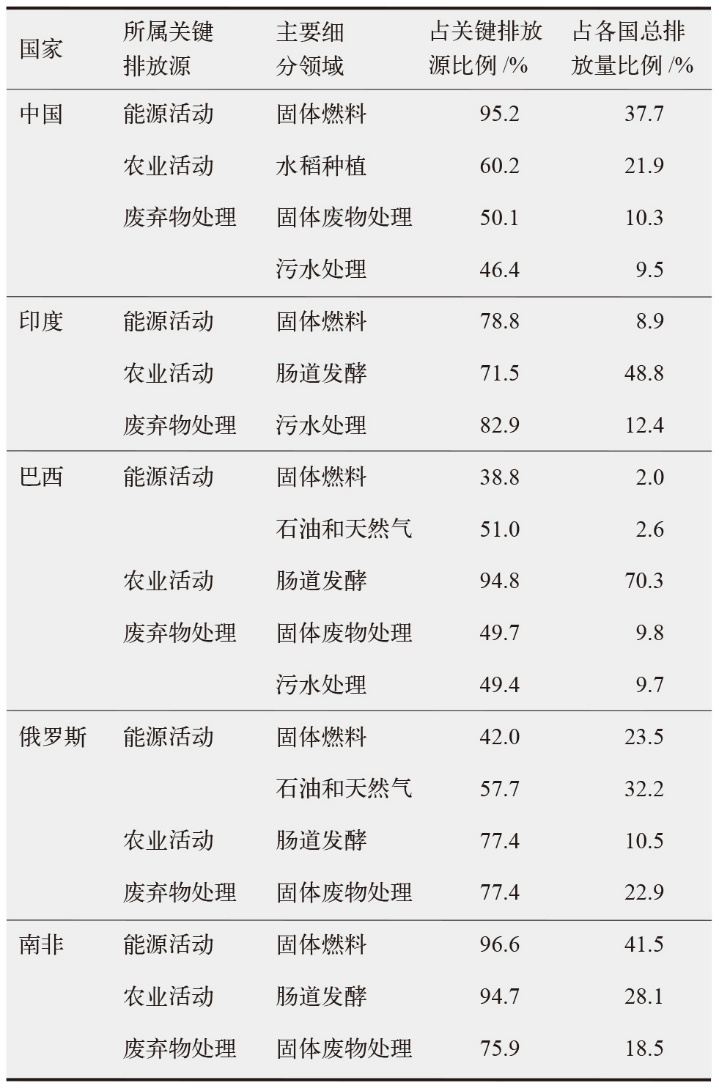 |
Table 3 Emission structure of BRICS countries by subsector in 2023
| |
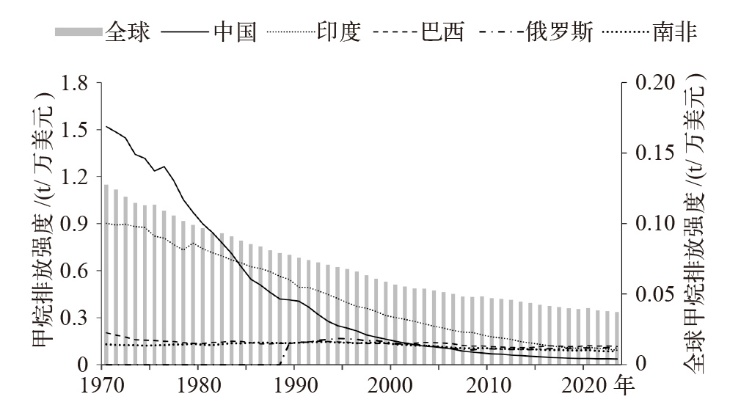
Fig. 4 Methane emission intensity in BRICS countries from 1970 to 2023
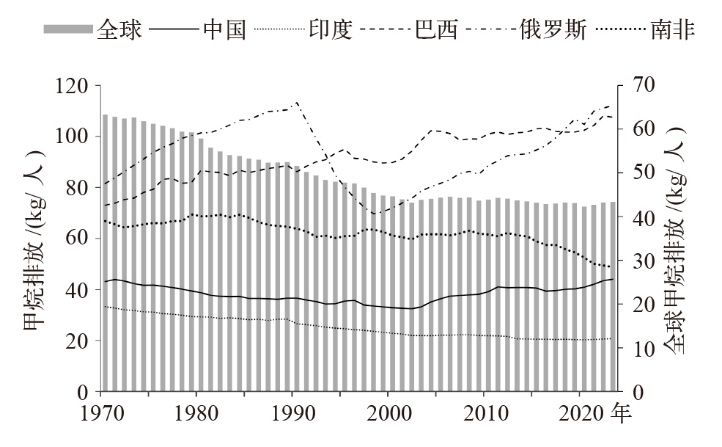
Fig. 5 Per capita methane emissions in BRICS countries from 1970 to 2023
 |
Table 4 Methane emission control policy actions of BRICS countries
| |
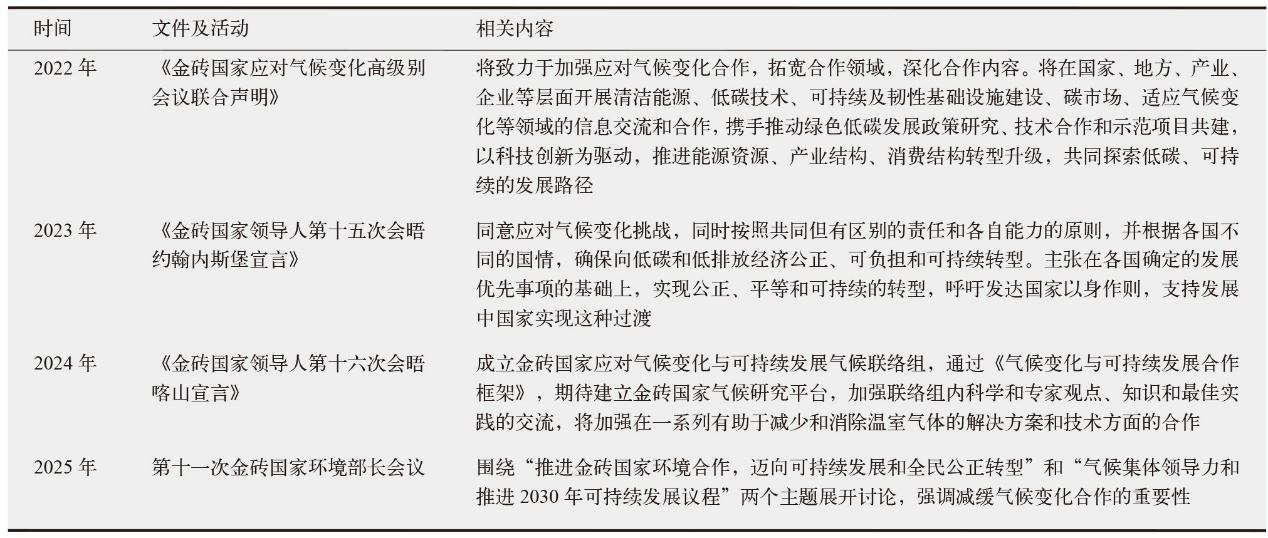 |
Table 5 Relevant joint statements and activities of the BRICS countries
| |
| [1] | International Energy Agency (IEA). Global methane tracker 2024[R/OL]. 2025 [2025-03-26]. https://www.iea.org/reports/global-methane-tracker-2024 |
| [2] | UNFCCC. 1/CMA.5-outcome of the first global stocktake[R/OL]. 2023 [2025-04-01]. https://unfccc.int/decisions |
| [3] | IPCC. Climate change 2021: the physical science basis[M]. Cambridge: Cambridge University Press, 2021 |
| [4] | IPCC. Climate change 2022: impacts, adaptation and vulnerability[M]. Cambridge: Cambridge University Press, 2022 |
| [5] | IPCC. Climate change 2022: mitigation of climate change[M]. Cambridge: Cambridge University Press, 2022 |
| [6] | 王敏, 杨儒浦, 李丽平. 甲烷排放对近地面臭氧污染的影响: 研究进展及启示[J]. 环境科学研究, 2025, 38 (3): 561-568. |
| Wang M, Yang R P, Li L P. The impact of methane on ground-level ozone pollution: research progress and policy implications[J]. Research of Environmental Sciences, 2025, 38 (3): 561-568 (in Chinese) | |
| [7] | United Nations Environment Programme (UNEP), Climate and Clean Air Coalition (CCAC). Global methane assessment: 2030 baseline report summary for policy makers[R/OL]. 2022 [2025-03-26]. https://wedocs.unep.org/bitstream/handle/20.500.11822/41108/methane_2030_SPM.pdf?sequence=l&isAllowed=y |
| [8] | IEA. Methane tracker[R/OL]. 2024 [2025-04-01]https://www.iea.org/data-and-statistics/data-tools/methane-tracker |
| [9] |
Saunois M, Stavert A R, Poulter B, et al. The global methane budget 2000-2017[J]. Earth System Science Data, 2020, 12 (3): 1561-1623
doi: 10.5194/essd-12-1561-2020 URL |
| [10] | IEA. Global methane tracker 2025[R/OL]. 2025 [2025-06-04]. https://www.iea.org/reports/global-methane-tracker-2025 |
| [11] | Climate and Clean Air Coalition (CCAC). Factsheet: 2024 global methane pledge ministerial[R/OL]. 2024 [2025-04-01]. https://www.ccacoalition.org/news/factsheet-2024-global-methane-pledge-ministerial |
| [12] | 惠婧璇, 朱松丽. 全球甲烷控排政策措施评述及其对中国的启示和建议[J]. 气候变化研究进展, 2023, 19 (6): 683-692. |
| Hui J X, Zhu S L. Overview on global policies and measures to control methane emissions and its implications for China[J]. Climate Change Research, 2023, 19 (6): 683-692 (in Chinese) | |
| [13] | 高文康, 胡杰, 马占云, 等. 全球发达国家CH4排放现状及特征分析[J]. 气候变化研究进展, 2023, 19 (6): 693-703. |
| Gao W K, Hu J, Ma Z Y, et al. Global methane emission status and characteristics based on greenhouse gas inventory in UNFCCC Annex I countries[J]. Climate Change Research, 2023, 19 (6): 693-703 (in Chinese) | |
| [14] |
王杰, 李治国, 谷继建. 金砖国家碳排放与经济增长脱钩弹性及驱动因素: 基于Tapio脱钩和LMDI模型的分析[J]. 世界地理研究, 2021, 30 (3): 501-508.
doi: 10.3969/j.issn.1004-9479.2021.03.2019470 |
|
Wang J, Li Z G, Gu J J. Decoupling analysis between energy consumption and economic growth in BRICS countries: based on Tapio decoupling and LMDI model analysis[J]. World Regional Studies, 2021, 30 (3): 501-508 (in Chinese)
doi: 10.3969/j.issn.1004-9479.2021.03.2019470 |
|
| [15] | 杨儒浦, 冯相昭, 王敏, 等. G7 国家固体废弃物处理领域甲烷排放驱动力分析[J]. 气候变化研究进展, 2023, 19 (5): 573-581. |
| Yang R P, Feng X Z, Wang M, et al. Analysis on the driving forces of methane emissions from solid waste treatment in G7 countries[J]. Climate Change Research, 2023, 19 (5): 573-581 (in Chinese) | |
| [16] | 马占云, 李照濛, 刘舒乐, 等. 全球甲烷控排对中国的启示[J]. 中国能源, 2023 (1-2): 20-30. |
| Ma Z Y, Li Z M, Liu S L, et al. Global experiences in mitigating methane emissions and its implication for China[J]. Energy of China, 2023 (1-2): 20-30 (in Chinese) | |
| [17] | 张建宇, 秦虎, 汪维. 中国开展甲烷排放控制关键问题与建议[J]. 环境与可持续发展, 2019, 44 (5): 4. |
| Zhang J Y, Qin H, Wang W. Key issues and suggestions on methane emission control in China[J]. Environment and Sustainable Development, 2019, 44 (5): 4 (in Chinese) | |
| [18] | 冯相昭. 英国重点领域甲烷排放控制经验及对我国的启示与建议[J]. 环境影响评价, 2023, 45 (3): 17-21. |
| Feng X Z. UK’s policy practices in reducing methane emission in key sectors and its implications for China[J]. Environmental Impact Assessment, 2023, 45 (3): 17-21 (in Chinese) | |
| [19] | 龙凤, 董战峰, 连超, 等. 甲烷排放控制的国际经验及对我国的启示[J]. 环境保护, 2023, 51 (1): 68-71. |
| Long F, Dong Z F, Lian C, et al. International experience of methane emission control and its inspiration to China[J]. Environmental Protection, 2023, 51 (1): 68-71 (in Chinese) | |
| [20] |
Tapio P. Towards a theory of decoupling: degrees of decoupling in the EU and the case of road traffic in Finland between 1970 and 2001[J]. Transport Policy, 2005, 12 (2): 137-151
doi: 10.1016/j.tranpol.2005.01.001 URL |
| [21] | 王敏, 冯相昭, 安祺, 等. 基于脱钩指数和LMDI的青海省绿色低碳发展策略研究[J]. 气候变化研究进展, 2021, 17 (5): 598-607. |
| Wang M, Feng X Z, An Q, et al. Study on green and low-carbon development in Qinghai province based on decoupling index and LMDI[J]. Climate Change Research, 2021, 17 (5): 598-607 (in Chinese) | |
| [22] | 丁利杰, 朱泳丽. 中国交通运输业碳排放区域差异及脱钩效应[J]. 东南学术, 2023 (4): 162-174. |
| Ding L J, Zhu Y L. Regional differences in carbon emissions and decoupling effects of China’s transportation industry[J]. Southeast Academic, 2023 (4): 162-174 (in Chinese) | |
| [23] | Crippa M, Guizzardi D, Pagani F, et al. GHG emissions of all world countries: JRC/IEA 2024 report[R/OL]. 2024 [2025-04-01]. https://data.europa.eu/doi/10.2760/4002897, JRC138862 |
| [24] | World Bank Group. GDP (constant 2015 US$)[DB/OL]. 2025 [2025-03-21]. https://data.worldbank.org/indicator/NY.GDP.MKTP.KD?view=chart |
| [25] | UNFCCC. Documents and decisions-submissions-reports[R/OL]. 2005 [2025-04-23]. https://unfccc.int/reports?f%5B0%5D=document_type%3A4233 |
| [1] | XIE Rui-Li, CHAI Qi-Min. Research on China’s methane emission reduction path based on SPAMC-Methane model [J]. Climate Change Research, 2024, 20(5): 593-610. |
| [2] | YUAN Jia-Shuang, QIU Shuang. A review analysis of methane research progress related to IPCC AR6 and its implications for China [J]. Climate Change Research, 2024, 20(3): 327-336. |
| [3] | HUI Jing-Xuan, ZHU Song-Li. Overview on global policies and measures to control methane emissions and its implications for China [J]. Climate Change Research, 2023, 19(6): 683-692. |
| [4] | LIU Qiang, TENG Fei, ZHANG Lin-Yao. The improvement and recalculation of China’s coal methane emission inventory based on a dynamic mine-level database [J]. Climate Change Research, 2023, 19(6): 704-713. |
| [5] | YANG Ru-Pu, FENG Xiang-Zhao, WANG Min, LI Li-Ping. Analysis on the driving forces of methane emissions from solid waste treatment in G7 countries [J]. Climate Change Research, 2023, 19(5): 573-581. |
| [6] | QIN Xiao-Bo, WANG Jin-Ming, WANG Bin, WAN Yun-Fan. Status of methane emissions from paddy fields, mitigation technologies and strategic pathways for low-carbon production [J]. Climate Change Research, 2023, 19(5): 541-558. |
| [7] | HUA Er-Shi, CHEN Min-Peng, CUI Yan-Rong. Analysis of the impact of healthy diet on agricultural methane emissions [J]. Climate Change Research, 2023, 19(5): 559-572. |
| [8] | LIAO Hong, XIE Pei-Fu. The roles of short-lived climate forcers in a changing climate [J]. Climate Change Research, 2021, 17(6): 685-690. |
| [9] | WANG Min, FENG Xiang-Zhao, AN Qi, ZHUO Yue, ZHAO Meng-Xue, DU Xiao-Lin, WANG Peng. Study on green and low-carbon development in Qinghai province based on decoupling index and LMDI [J]. Climate Change Research, 2021, 17(5): 598-607. |
| [10] | Ming XUE,Yi-Bin WENG,Guang-Quan LIU,Xing-Chun LI,Xiang LI,Sheng-Min YU,Xiang-Yu CUI,Lei SONG. Current status on fugitive methane emission measurements and inventory during oil and gas production [J]. Climate Change Research, 2019, 15(2): 187-196. |
| [11] | Yuan LIU,Dan-Ni SUN,Jian-Jun ZHANG,Ke-An WU,Jing ZHENG. Measures analysis for HFC-23 emission mitigation in China under the Kigali Amendment to the Montreal Protocol [J]. Climate Change Research, 2018, 14(4): 423-428. |
| [12] | Xie Bing, Zhang Hua,Yang Dongdong. A Modeling Study of Effective Radiative Forcing and Climate Response Due to the Change in Methane Concentration [J]. Climate Change Research, 2017, 13(1): 83-88. |
| [13] | Wang Ping;HUANG Yao;Wen ZHANG. Estimates of Methane Emission from Rice Paddies in China over the Period 1955-2005 [J]. Climate Change Research, 2009, 5(05): 291-297. |
| [14] | Gao Qingxian; Du Wupeng; Lu Shiqing;et al.. Methane Emission from Municipal Solid Waste Treatments in China [J]. Climate Change Research, 2007, 03(00): 70-74. |
| Viewed | ||||||
|
Full text |
|
|||||
|
Abstract |
|
|||||