Climate Change Research ›› 2025, Vol. 21 ›› Issue (6): 753-765.doi: 10.12006/j.issn.1673-1719.2025.025
• Impacts of Climate Change • Previous Articles Next Articles
Effectiveness of cross-industry water rights trading on water management in water-deficient basins under multiple climate change scenarios
HAN Chi1,2, WEN Hong-Qi3, ZHANG Shu-Lin4, ZHANG Jun-Long1,2( ), LI Wei1,2, CHEN Ming-Shuai5, YOU Li6,7
- 1 College of Environmental and Geographical Sciences, Qingdao University, Qingdao 266071, China
2 Carbon Neutrality and Eco-Environmental Technology Innovation Center of Qingdao, Qingdao 266071, China
3 Qingdao Water Affairs Development and Service Center, Qingdao 266071, China
4 Pingdu Water Conservancy and Fisheries Bureau, Qingdao 266700, China
5 State Key Laboratory of Water Resources and Management, Wuhan University, Wuhan 430072, China
6 Research Center for Eco-Environmental Sciences, Chinese Academy of Sciences, Beijing 100085,China
7 National Engineering Research Center of Industrial Wastewater Detoxication and Resource Recovery, Beijing 100085, China
-
Received:2025-02-07Revised:2025-04-24Online:2025-11-30Published:2025-12-02

Cite this article
HAN Chi, WEN Hong-Qi, ZHANG Shu-Lin, ZHANG Jun-Long, LI Wei, CHEN Ming-Shuai, YOU Li. Effectiveness of cross-industry water rights trading on water management in water-deficient basins under multiple climate change scenarios[J]. Climate Change Research, 2025, 21(6): 753-765.
share this article
Add to citation manager EndNote|Ris|BibTeX
URL: https://www.climatechange.cn/EN/10.12006/j.issn.1673-1719.2025.025
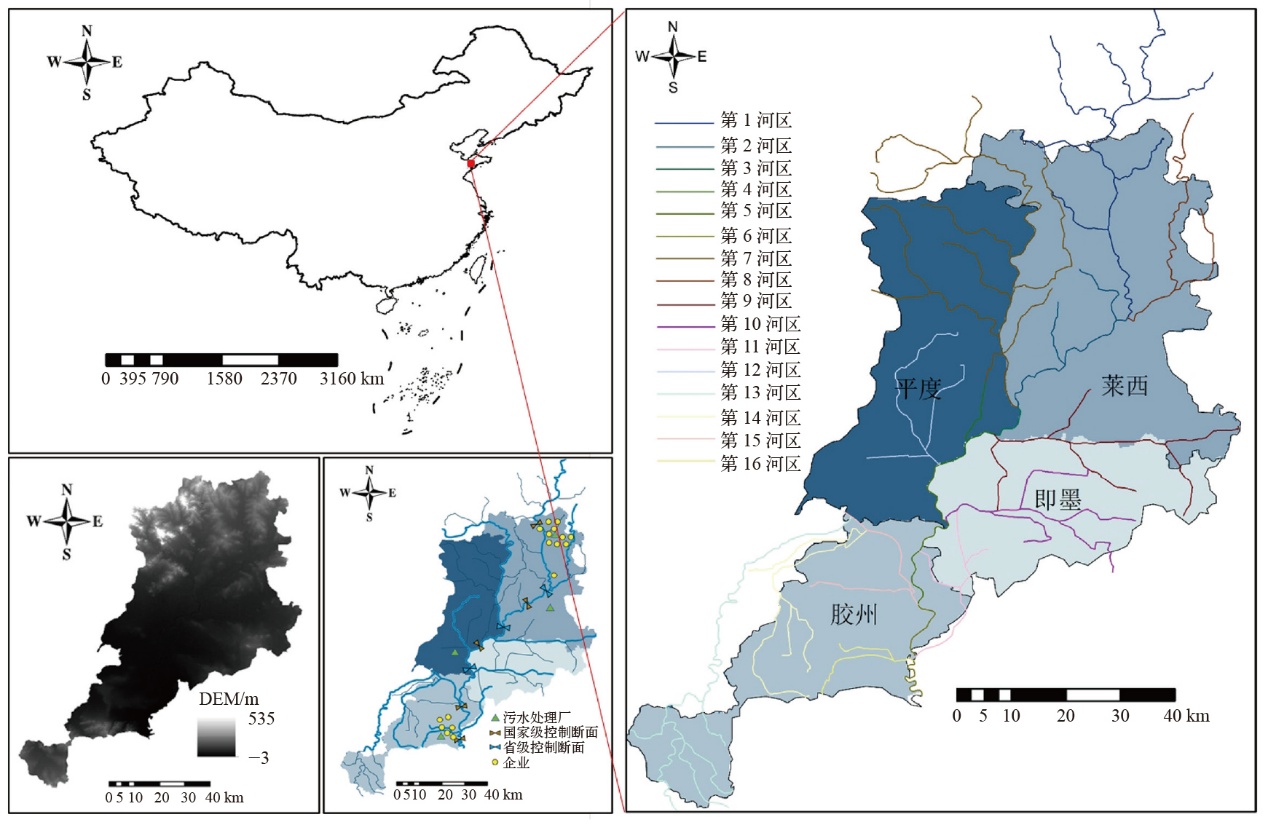
Fig. 1 Location and related information of Dagu River basin
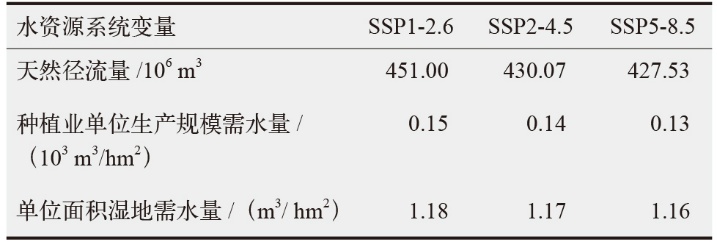 |
Table 1 Natural runoff of river basins, water demand per unit production scale of planting industry, and water demand per unit area of wetlands under multiple climate change scenarios
| |
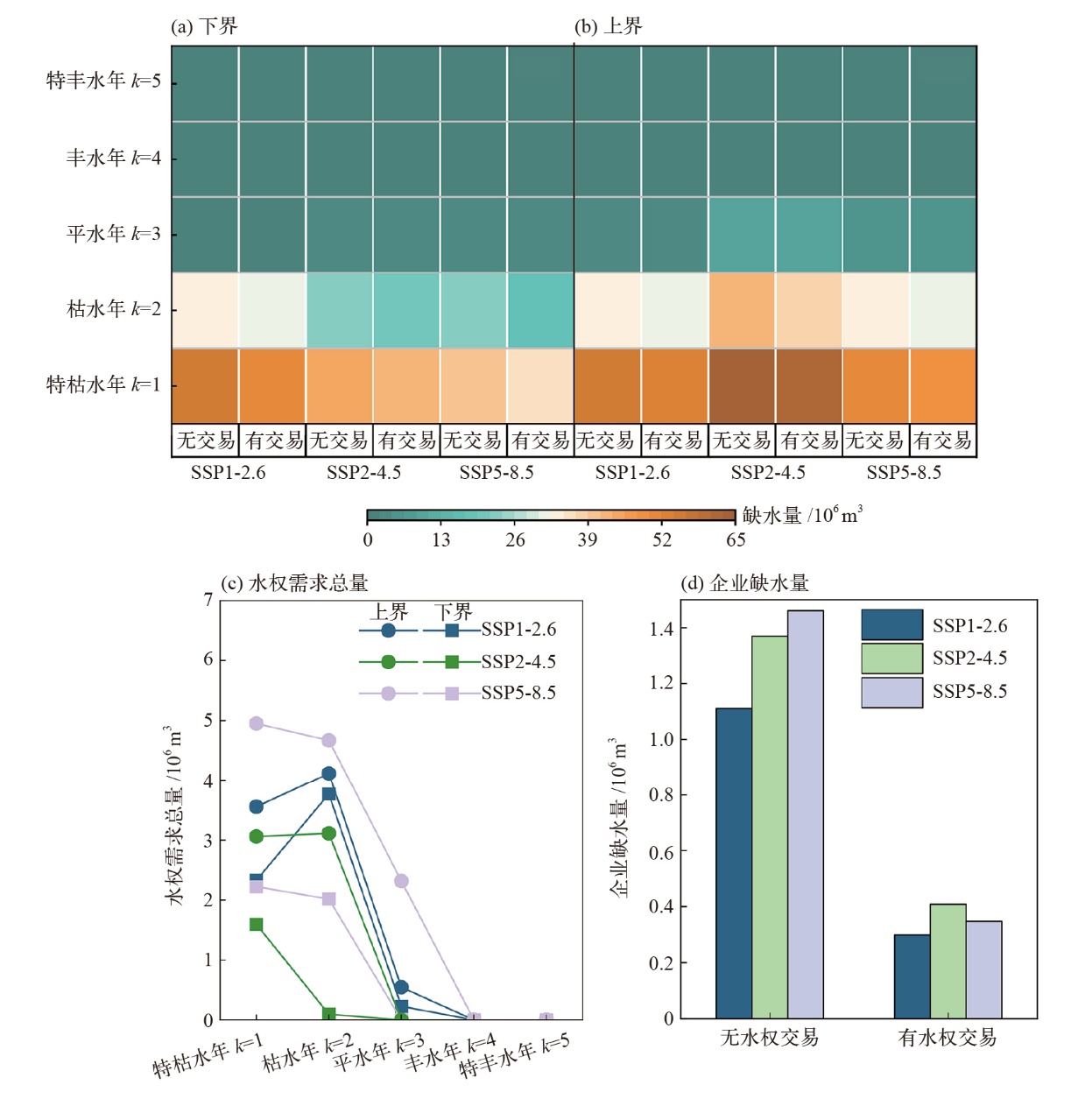
Fig. 2 Water shortage under different mechanisms and various hydrological year types
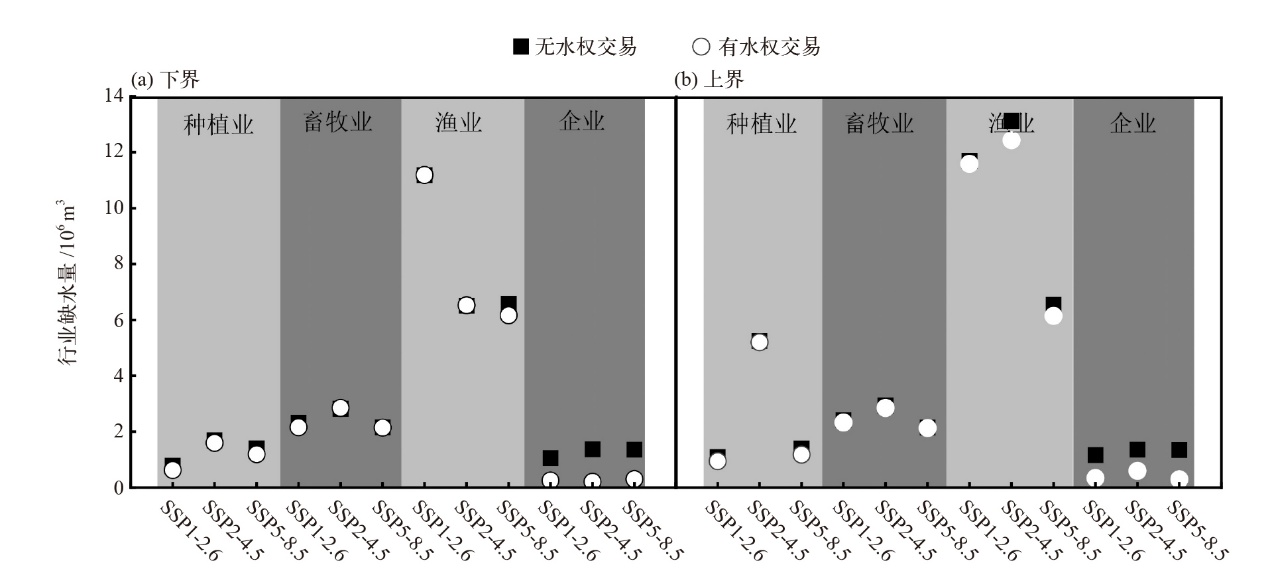
Fig. 3 Water shortage of various industries under multiple mechanisms
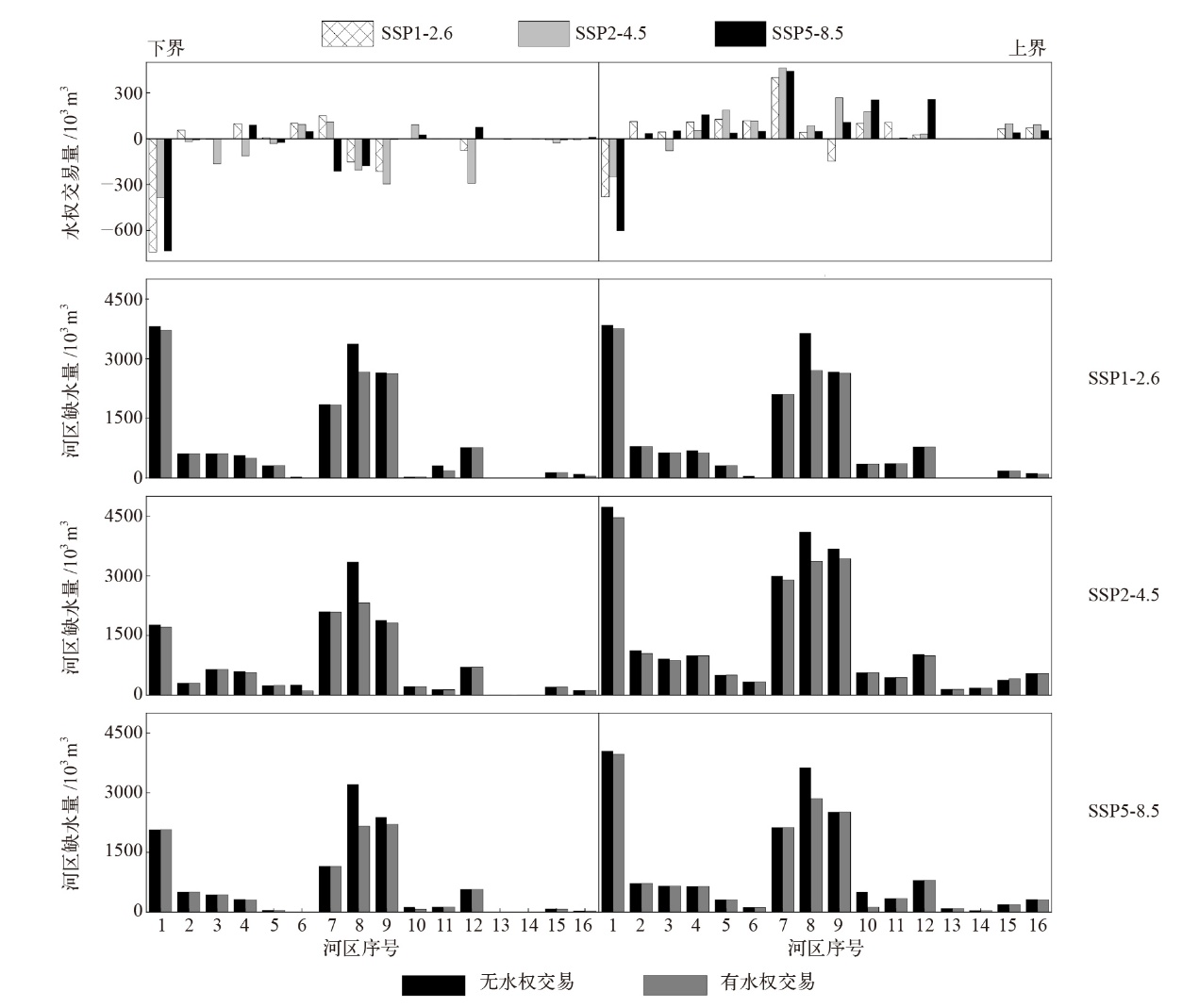
Fig. 4 Water shortage in each river region under different mechanisms
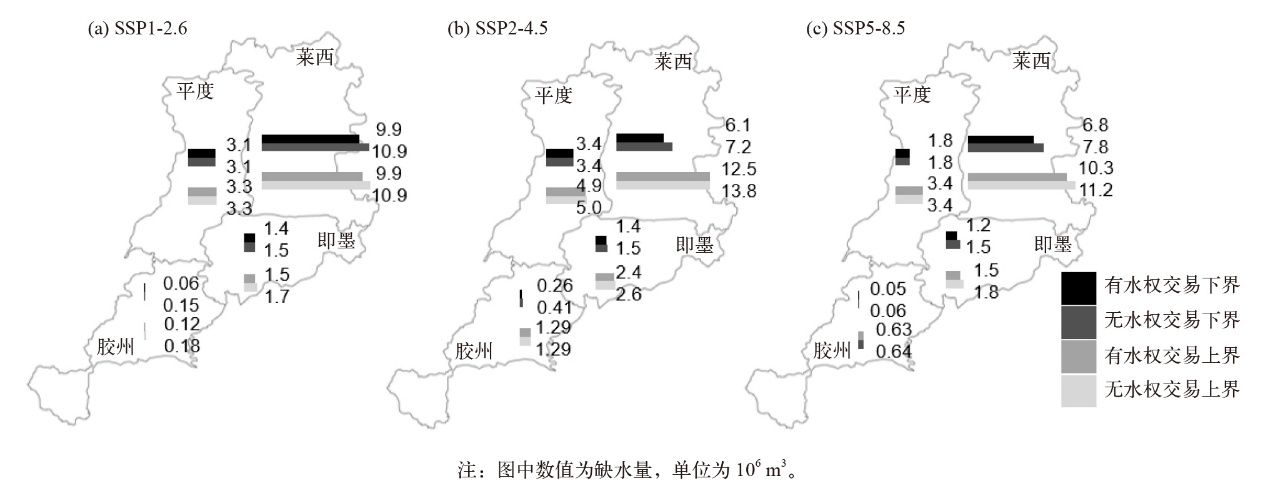
Fig. 5 Water shortage in each county under different mechanisms
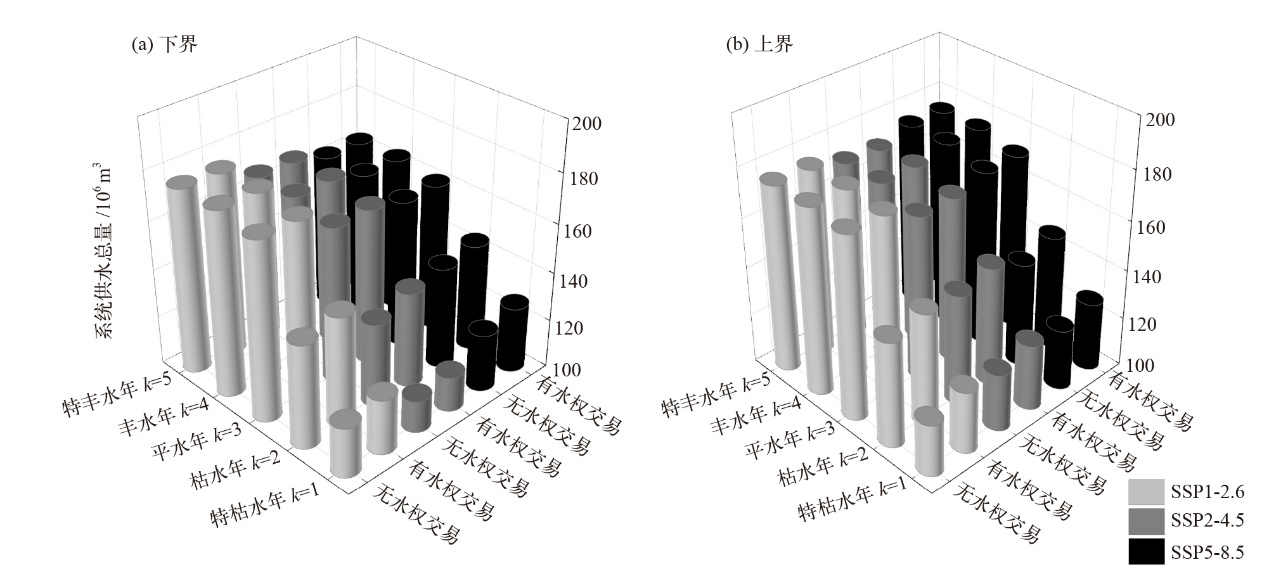
Fig. 6 Total water supply under different mechanisms
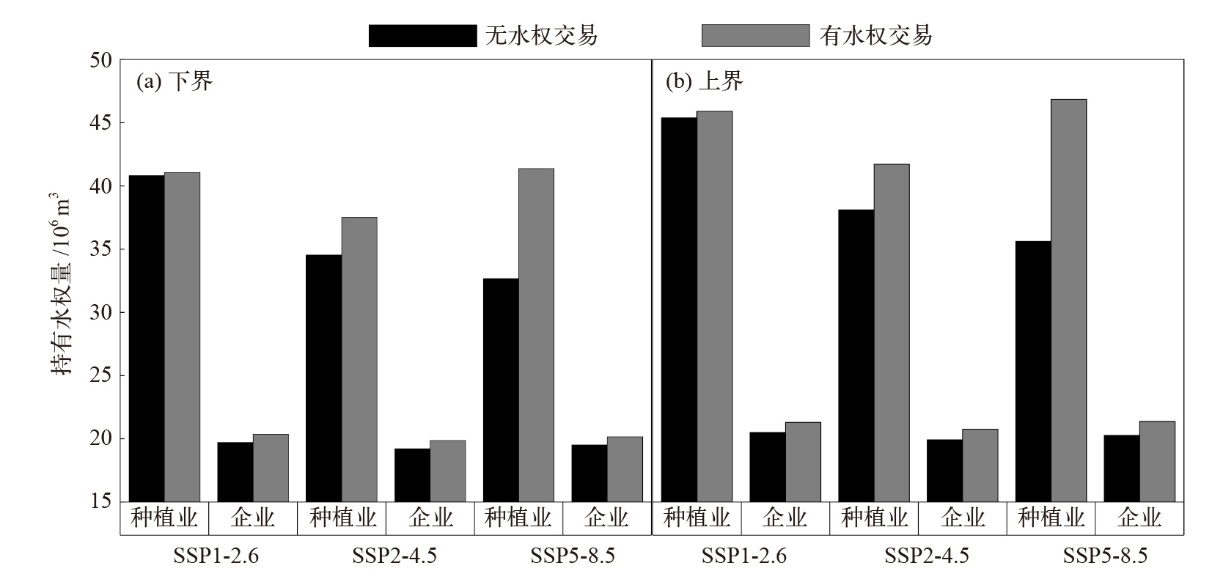
Fig. 7 Allocation of users’ possessed water right
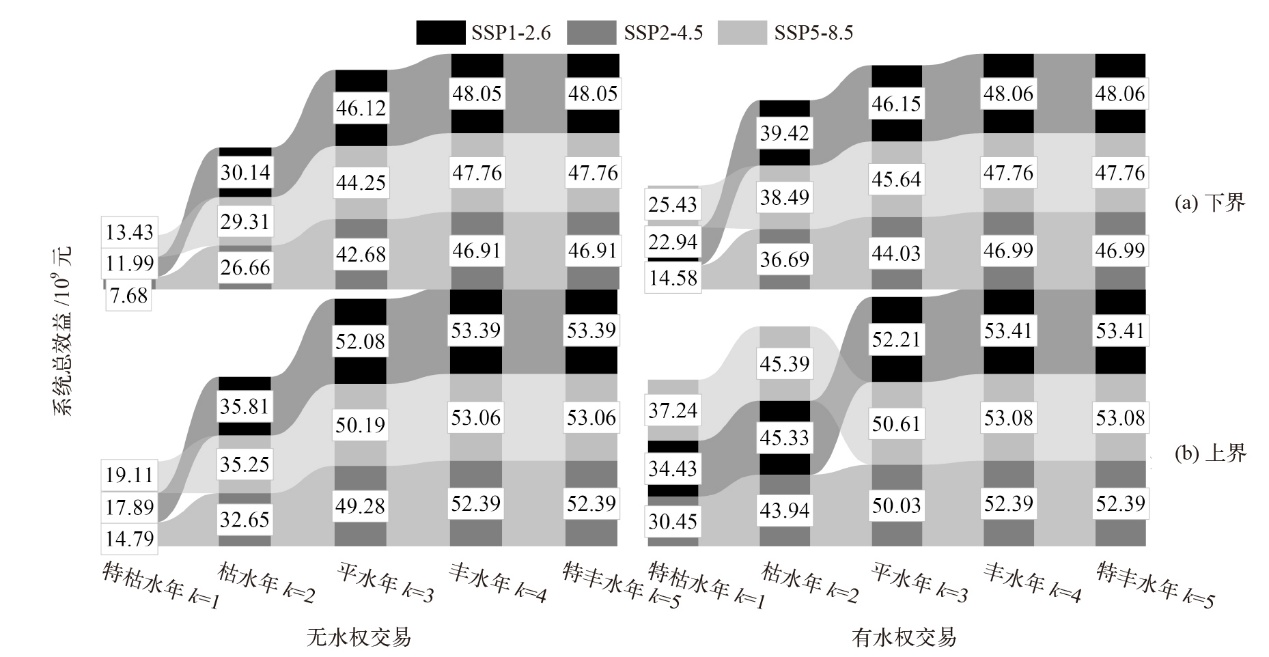
Fig. 8 System benefits under different mechanisms
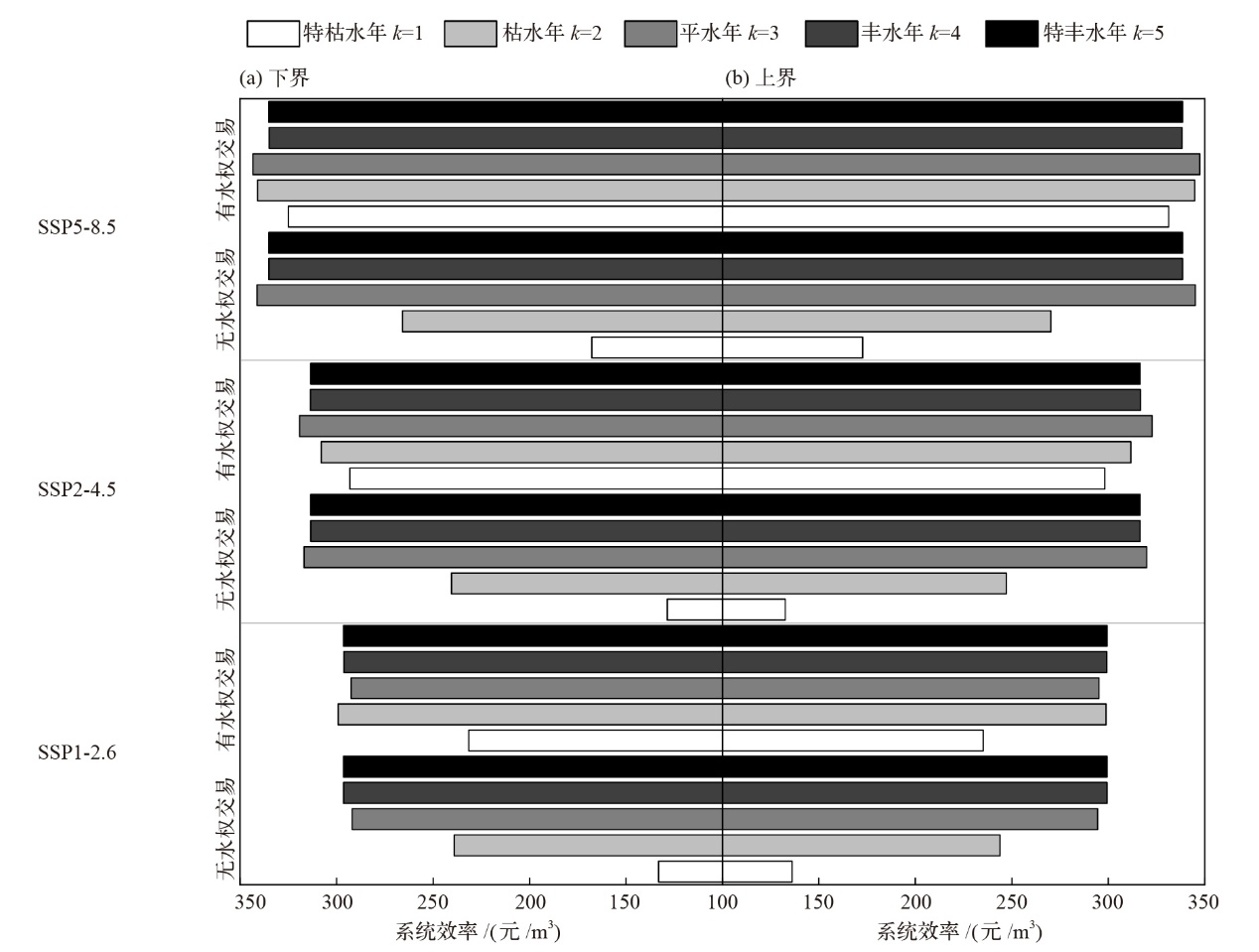
Fig. 9 System efficiency under different mechanisms
| [1] |
Ciampittiello M, Marchetto A, Boggero A. Water resources management under climate change: a review[J]. Sustainability, 2024, 16 (9): 3590
doi: 10.3390/su16093590 URL |
| [2] | Li Z, Li Y X, Sun J. Impact of climate change on water resources in the Shiyang River basin and the adaptive measures for energy conservation and emission reduction[J]. Applied Mechanics and Materials, 2013, 2685 (405-408): 2167-2171 |
| [3] | Govere S, Nyamangara J, Nyakatawa Z E. Climate change and the water footprint of wheat production in Zimbabwe[J]. Water South Africa, 2019, 45 (3): 513-526 |
| [4] |
Riediger J, Breckling B, Svoboda N, et al. Modelling regional variability of irrigation requirements due to climate change in Northern Germany[J]. Science of the Total Environment, 2016, 541: 329-340
doi: 10.1016/j.scitotenv.2015.09.043 URL |
| [5] |
Cherry A J, Battaglia L L. Tidal wetlands in a changing climate: introduction to a special feature[J]. Wetlands, 2019, 39 (6): 1139-1144
doi: 10.1007/s13157-019-01245-9 |
| [6] |
Mehrazar A, Bavani M R A, Gohari A, et al. Adaptation of water resources system to water scarcity and climate change in the suburb area of megacities[J]. Water Resources Management, 2020, 34 (12): 3855-3877
doi: 10.1007/s11269-020-02648-8 |
| [7] |
Draper E S, Kundell E J. Impact of climate change on transboundary water sharing[J]. Journal of Water Resources Planning and Management, 2007, 133 (5): 405-415
doi: 10.1061/(ASCE)0733-9496(2007)133:5(405) URL |
| [8] |
Hong S, Xia J, Chen J, et al. Multi-object approach and its application to adaptive water management under climate change[J]. Journal of Geographical Sciences, 2017, 27 (3): 259-274
doi: 10.1007/s11442-017-1375-7 |
| [9] |
Luo Y, Cao Z, Zhao X, et al. Climate change contributions to water conservation capacity in the upper Mekong River basin[J]. Water, 2024, 16 (18): 2601
doi: 10.3390/w16182601 URL |
| [10] |
Gamvroudis C, Dokou Z, Nikolaidis P N, et al. Impacts of surface and groundwater variability response to future climate change scenarios in a large Mediterranean watershed[J]. Environmental Earth Sciences, 2017, 76 (11): 385
doi: 10.1007/s12665-017-6721-7 URL |
| [11] |
Sun J, Li Y P, Zhuang X W, et al. Identifying water resources management strategies in adaptation to climate change under uncertainty[J]. Mitigation and Adaptation Strategies for Global Change, 2018, 23 (4): 553-578
doi: 10.1007/s11027-017-9749-9 URL |
| [12] |
Xu H, Chen L X, Li Q F. A method for setting the term of water rights trading based on loss-benefit function[J]. Water Supply, 2023, 23 (11): 4791-4799
doi: 10.2166/ws.2023.278 URL |
| [13] |
Jiang Q, Grafton Q R. Economic effects of climate change in the Murray-Darling basin, Australia[J]. Agricultural Systems, 2012, 110: 10-16
doi: 10.1016/j.agsy.2012.03.009 URL |
| [14] |
Luo B, Maqsood I, Gong Y. Modeling climate change impacts on water trading[J]. Science of the Total Environment, 2010, 408 (9): 2034-2041
doi: 10.1016/j.scitotenv.2010.02.014 URL |
| [15] |
Gao J J, He H X, An Q, et al. An improved fuzzy analytic hierarchy process for the allocation of water rights to industries in Northeast China[J]. Water, 2020, 12 (6): 1719
doi: 10.3390/w12061719 URL |
| [16] | 郑志国, 孙楠思, 李艳梅. 青岛市大沽河流域近20年水文情势变化分析[J]. 山东水利, 2022 (11): 10-12. |
| Zheng Z G, Sun N S, Li Y M. Analysis of hydrological changes in last 20 years in Dagu River basin of Qingdao[J]. Shandong Water Conservancy, 2022 (11): 10-12 (in Chinese) | |
| [17] |
Jiang D J, Li Z, Luo Y M, et al. River damming and drought affect water cycle dynamics in an ephemeral river based on stable isotopes: the Dagu River of North China[J]. Science of the Total Environment, 2020, 758: 143682
doi: 10.1016/j.scitotenv.2020.143682 URL |
| [18] |
Mortazavi S A, Alamdarlo H N, Bijarbas Z M. Estimating the eco-environmental value of damages caused by groundwater over drafting[J]. International Journal of Environmental Science and Technology, 2019, 16 (7): 3861-3868
doi: 10.1007/s13762-018-1808-6 |
| [19] |
林广洪, 朱碧莹, 陈杰, 等. 多气候模式的全国月降水预测能力评价及偏差校正[J]. 中国农村水利水电, 2023 (6): 47-56, 65.
doi: 10.12396/znsd.221600 |
| Lin G H, Zhu B Y, Chen Jie, et al. Evaluation of monthly precipitation prediction based on climate model and bias correction in China[J]. China Rural Water and Hydropower, 2023 (6): 47-56, 65 (in Chinese) | |
| [20] | Zulfaqar S, Eliza N A, Zulkifli Y, et al. Application of relative importance metrics for CMIP6 models selection in projecting basin-scale rainfall over Johor River basin, Malaysia[J]. Science of the Total Environment, 2024, 912: 169-187 |
| [21] | 崔素芳. 变化环境下大沽河流域地表水-地下水联合模拟与预测[D]. 济南: 山东师范大学, 2015. |
| Cui S F. Joint simulation and prediction of surface water and groundwater in the Dagu River basin under changing environments[D]. Jinan: Shandong Normal University, 2015 (in Chinese) | |
| [22] | 解煜翔. 不确定条件下面向生态需水保障的大沽河流域生态补偿研究[D]. 青岛: 青岛大学, 2022. |
| Xie Y X. Eco-compensation study of the Daguhe Watershed with the ensurance of ecological water demand under uncertainties[D]. Qingdao: Qingdao University, 2022 (in Chinese) | |
| [23] |
Myint L M. Evaluation of crop water requirements for Yazagyo irrigated area, Myanmar[J]. IOP Conference Series Materials Science and Engineering, 2020, 849 (1): 012090
doi: 10.1088/1757-899X/849/1/012090 |
| [24] | 周强. 挠力河中下游湿地生态需水量研究[D]. 大连: 大连理工大学, 2017. |
| Zhou Q. Research on ecological water requirement of wetlands in middle and lower reaches of Naoli River[D]. Dalian: Dalian University of Technology, 2017 (in Chinese) | |
| [25] | 沈惠安, 胥铭兴, 王凤翥. 莫莫格自然保护区湿地生态需水量计算[J]. 东北水利水电, 2009, 27 (6): 44-47, 72. |
| Shen H A, Xu M X, Wang F Z. Application of wetted perimeter method in determining critical point of river eco-environment water demand[J]. Water Resources & Hydropower of Northeast, 2009, 27 (6): 44-47, 72 (in Chinese) | |
| [26] | 徐艳菲, 张义文, 焦明, 等. 永年洼湿地生态需水量初步研究[J]. 湖北农业科学, 2013, 52 (9): 2031-2034. |
| Xu Y F, Zhang Y W, Jiao M, et al. Preliminary study on the ecological water requirement of Yongnianwa wetland[J]. Hubei Agricultural Sciences, 2013, 52 (9): 2031-2034 (in Chinese) | |
| [27] | 崔保山, 杨志峰. 湿地生态环境需水量等级划分与实例分析[J]. 资源科学, 2003, 25 (1): 21-28. |
| Cui B S, Yang Z F. The classification and case study oneco-environmental water requirement of wetlands[J]. Resources Science, 2003, 25 (1): 21-28 (in Chinese) | |
| [28] |
Chen M S, Wen H Q, Li M M, et al. Unveiling impacts and optimal strategies of water-saving system for integrated water resources management in a water-scarce watershed[J]. Journal of Environmental Management, 2024, 373: 123435
doi: 10.1016/j.jenvman.2024.123435 URL |
| [29] |
Zhang T Y, Tan Q, Zhang T, et al. A nexus approach engaging water rights transfer for addressing water scarcity in energy and food production under uncertainty[J]. Journal of Environmental Management, 2022, 316: 115163
doi: 10.1016/j.jenvman.2022.115163 URL |
| [30] | 刘美, 尤立, 胡春明, 等. 不确定性条件下斯里兰卡马哈韦利河流域农业水权交易研究[J]. 环境工程学报, 2024, 18 (11): 3059-3070. |
| Liu M, You L, Hu C M, et al. Research on agricultural water rights trading in the Mahaweli River basin of Sri Lanka under uncertainty[J]. Journal of Environmental Engineering, 2024, 18 (11): 3059-3070 (in Chinese) | |
| [31] |
Bekchanov M, Bhadurib A, Ringler C. Potential gains from water rights trading in the Aral Sea basin[J]. Agricultural Water Management, 2015, 152: 41-56
doi: 10.1016/j.agwat.2014.12.011 URL |
| [32] |
Xu Z, Yao L, Zhou X, et al. Optimal irrigation for sustainable development considering water rights transaction: a Stackelberg-nash-cournot equilibrium model[J]. Journal of Hydrology, 2019, 575: 628-637
doi: 10.1016/j.jhydrol.2019.05.063 URL |
| [1] | ZENG Ying-Ting, TANG Zhen-Fei, WU Bin, ZHOU Ming-Zhu. Estimation of China’s offshore photovoltaic power generation potential and analysis of driving factors [J]. Climate Change Research, 2025, 21(6): 830-838. |
| [2] | XIAO Xue, HUANG Meng-Tian, ZHOU Bai-Quan, WANG Chen-Peng, ZHAI Pan-Mao. Impact of the 2022 compound hot-dry extreme events on vegetation growth over the Tibetan Plateau [J]. Climate Change Research, 2025, 21(6): 777-788. |
| [3] | GUO Yan-Jun, ZOU Cheng-Zhi. Evaluation of temporal stability in atmospheric temperature observations from FengYun-3D satellite for climate change research [J]. Climate Change Research, 2025, 21(6): 733-741. |
| [4] | WANG Sheng, CHEN Jian, ZHOU Yu, SUN Jia-Li, ZHAI Zhen-Fang, XIE Wu-San, DAI Juan, DING Xiao-Jun, WU Rong. Projection of the suitable cultivation area for single-cropping rice in the Jianghuai region based on CMIP6 and MaxEnt model [J]. Climate Change Research, 2025, 21(6): 766-776. |
| [5] | HE Hao, LI Man, LIU Miao, CHEN Ming-Jie, LI Qi, HU Zheng-Hua. Impact of climate change on rice diseases: research progress and future prospects [J]. Climate Change Research, 2025, 21(5): 641-658. |
| [6] | HU Jin-Peng, HE Yan, SHI Pei-Jun. Research progress and prospects on the impacts of compound hot and dry events on wheat yield [J]. Climate Change Research, 2025, 21(5): 625-640. |
| [7] | ZHANG Xin-Yue, LI Kuo, ZHAO Ming-Yue, XU Yin-Long. Review and prospect of agricultural adaptive capacity building to climate change in China [J]. Climate Change Research, 2025, 21(5): 613-624. |
| [8] | FAN Xing, LIANG Qi-Di, WU Cheng-Lin, GAO Xiang. Stocktaking on the Baku Climate Change Conference and perspectives on global climate governance [J]. Climate Change Research, 2025, 21(4): 583-592. |
| [9] | SUN Ruo-Shui, LIANG Mei-Cong. From Paris to Belém: progress and forecast at the decennial of Paris Agreement [J]. Climate Change Research, 2025, 21(4): 574-582. |
| [10] | TAN Xian-Chun, CHENG Yong-Long, YAN Hong-Shuo, XING Xiu-Cheng, ZHU Kai-Wei, WANG Chen-Xu. Interpretation and implications of the summary on climate change mitigation in the IPCC Seventh Assessment Report Working Group III [J]. Climate Change Research, 2025, 21(4): 494-501. |
| [11] | CHEN Xian-Yao, BI Han-Wen, HAO Xiao-Jie, MA Tian-Jiao, GUO Ling-Rui. Variability of the Atlantic Meridional Overturning Circulation and its impact on global climate change [J]. Climate Change Research, 2025, 21(4): 469-476. |
| [12] | ZHU Song-Li. The evolution of country classification under UNFCCC system [J]. Climate Change Research, 2025, 21(4): 565-573. |
| [13] | DING Jie, CAO Zuo-Nan, HU Guo-Zheng, HASBAGAN Ganjurjav, ZHAO Fen, WANG Hai-Feng, GAO Qing-Zhu. Climate change impacts, adaptation and vulnerability and implications in Working Group II of the IPCC Seventh Assessment Report [J]. Climate Change Research, 2025, 21(4): 484-493. |
| [14] | WANG Bo-Wen, HE Yi, TENG Fei. Attribution and assessment of direct and indirect economic losses from extreme weather events in China [J]. Climate Change Research, 2025, 21(4): 502-518. |
| [15] | CUI Peng, WANG Yan, ZHANG Guo-Tao, ZHANG Zheng-Tao, LEI Yu, WANG Hao, WANG Jiao, HAO Jian-Sheng, ZHU Hong. Disaster risk prevention under climate change: current status, challenges, and scientific issues [J]. Climate Change Research, 2025, 21(4): 449-460. |
| Viewed | ||||||
|
Full text |
|
|||||
|
Abstract |
|
|||||