

引言
水稻是高密集种植的作物,易受到多种病原体包括真菌、细菌和病毒的侵害。例如,稻瘟病被称为“水稻癌症”,是水稻种植中最严重的病害之一,该病害在高湿热环境下尤为流行,主要影响水稻的叶片、茎部和穗部,其中穗瘟病最具破坏性,每年可导致10%~30%的水稻产量损失[9-10];水稻细菌性条斑病表现为叶片出现黄色条纹,多发于高温多雨地区,并且强降雨和洪水有利于病原体传播[11];中国南方黑条矮缩病和水稻条纹病属于病毒性病害,由飞虱等昆虫传播,气温升高会促进飞虱的繁殖与迁飞,加快病害的传播速度[12-13]。本文将探讨气候变化对水稻病害的主要影响机制、研究进展及应对策略。总体而言,气候变化因素,如大气CO2浓度升高、气温上升、降水模式变化和极端天气事件频发,正显著改变病原体的生态分布、传播路径及其与寄主作物的相互作用,进而加剧作物病害的风险[14-
图1
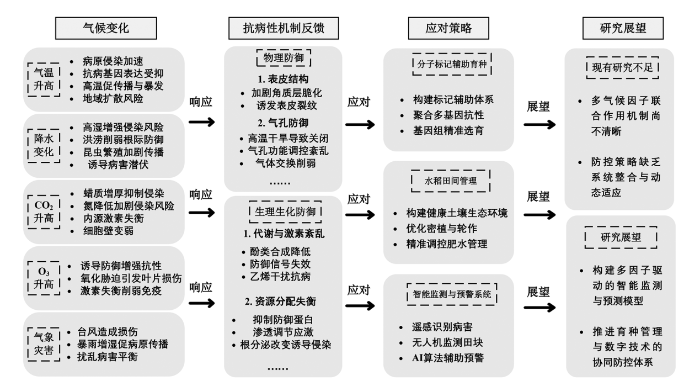
图1
气候变化对水稻病害影响、抗病性机制反馈、应对策略以及研究展望流程图
Fig. 1
Flowchart of the climate change on rice diseases, feedback mechanisms of disease resistance, response strategies, and future research directions
1 作物感病主要特点
2 气候变化对水稻病害的影响
水稻生长环境湿润温暖,极易受到多种病原体的侵染。当前水稻病害种类繁多、分布广泛,主要危害叶片、茎秆、穗部和根系等关键部位,常在抽穗期、灌浆期等关键生育阶段集中暴发,对产量和品质构成严重威胁[29]。随着气候变化,病害种类和分布范围进一步扩大,部分热带病害正向高纬度地区蔓延[30]。其次,水稻病害的流行性和季节性受气候影响,高湿、高温环境为病害的暴发提供了理想条件,异常降水和极端天气事件则显著加剧了病害的传播风险[30-31]。同时,水稻病原体的传播途径呈多样化特征,包括气溶胶传播、水体介导扩散以及昆虫等媒介的间接传播[32-33]。本文将从气温上升、降水变化、CO2浓度上升、O3浓度上升和气象灾害5个方面系统梳理气候变化不同因子对水稻病害的影响机理(图2)。
图2
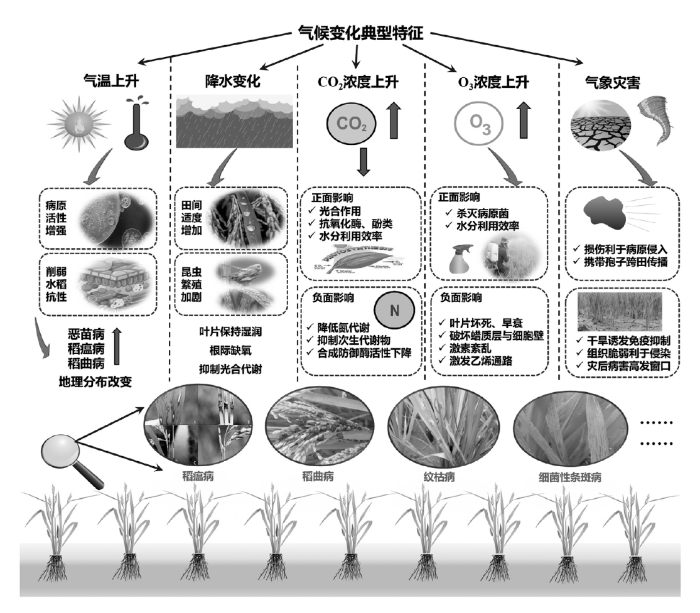
图2
气候变化对水稻病害影响示意图
Fig. 2
Schematic diagram of the impact of climate change on rice diseases
2.1 气温上升的影响
第三,温升通过改变稻田微气候结构,为病原菌提供适宜的扩散环境。高温条件下,水稻生长加快,叶面积增大,冠层密闭度提高[42-43];导致近地层湿度维持时间延长,形成“高温高湿”的局部小气候,利于病原孢子的沉降、萌发及菌丝体扩展[33
综上,气温升高通过增强病原适应性、扰乱宿主抗性调节、重构传播路径以及导致微生态失衡等机制,系统性地加剧了水稻病害的暴发频率,并扩大了其流行范围。
2.2 降水变化的影响
气候变化引发的降水量、频率与时序的变化,改变水稻田间的水分环境与微气候条件,影响病原体的生存、传播路径和致病能力。主要体现在三方面:增加田间湿度与叶面持水时间、增强病媒昆虫活动,以及扰乱根际生态系统稳定性。
最直接的影响是降水增加会提高田间湿度,且间接影响了空气中水蒸气分压(即空气中的水汽含量),延长叶片表面的水膜存在时间。例如,稻瘟病菌和条锈病菌在叶面持续湿润至少5 h的情况下更容易发病[24]。气温升高使空气的饱和水汽压增加,进一步加剧露水形成,使叶面湿润时长增加,从而提升病原侵染效率[17]。Macasero等[54]研究表明,菲律宾水稻种植区,雨养种植模式以及气候变化导致的降水增多,是导致细菌性褐斑病暴发的重要原因。陈冰等[55]采用逐步回归和通径分析方法,明确了对于我国南方晚稻,影响黑条矮缩病的气象因子主要是6月中旬至7月上旬降水日数、6月下旬至7月上旬相对湿度。而降水减少可能增强作物的自我防御反应,如Naveenkumar等[56]发现,在年降雨量偏少的年份,水稻叶片内的防御酶活性显著上调,纹枯病的发病率有所降低。
过量降水易引发田间积水与土壤过饱和状态,破坏水稻根际生态系统的稳定性。根系缺氧会引起通气组织发育受阻,导致根系氧化力下降,削弱水分与养分的吸收能力,进一步诱发植株系统性免疫能力的下降[59-60]。Martínez-Arias等[61]研究表明,强降雨导致的田间长期洪涝胁迫通过诱发植物缺氧及根际微生物群落失调,削弱植物-微生物共生系统稳定性。缺氧环境为土壤病原体的繁殖与传播提供了理想条件,常见的枯萎病原菌如尖孢镰刀菌在缺氧且富含有机质的环境中更易分泌胞外酶和毒素,穿透根皮层细胞,引发根腐和系统性萎蔫病害[62-63]。同时,排水不畅导致的长期高湿状态会显著扰乱根际微生物群落结构,有益微生物如芽孢杆菌、荧光假单胞菌等的种群密度显著下降,其通过营养竞争、合成抗菌肽、诱导宿主系统抗性等作用机制被削弱[64-65]。土壤中对病菌拮抗能力下降,导致病原菌定殖位点增加,增强了病害持续循环的生态基础。
2.3 大气CO2浓度升高的影响
当前大气中CO2浓度已超过420×10-6,较工业化前提升约48%,预计至2100年升至538×10-6~670×10-6[70]。大气CO2浓度升高对水稻-病原系统的影响具有高度复杂性和双向性,可通过影响水稻的生理代谢、病原体生态适应以及田间微环境,进而改变病害的发生规律与传播动态。
首先是潜在抑病效应。CO2升高可能增强水稻的光合能力和生物量积累,促进根系发育,提升整体生理活力,在一定程度上增强对病原体的抵抗能力[5,71]。高CO2浓度还能引起叶片结构变化,如气孔关闭频率上升、角质层增厚等,抑制病原体的物理入侵。如Dorneles等[72]发现,大气CO2浓度为700×10-6时,水稻酚类物质和木质素含量上升,形成更强的细胞壁屏障,有效抑制细菌性褐斑病的扩展。Chen等[73]研究表明,高CO2条件可增强水通道蛋白(OsPIP1;3)表达,即调节水通道的活动,增加水稻的水分吸收能力,提高光合效率并显著减少细菌病害发生,其中白叶枯病减少75.6%,细菌性条斑病减少87.6%。此外,气孔导度的下降不仅降低病原通过气孔的侵入概率,也有助于减少水分散失,提高水分利用效率,在一定程度上维持植物抗性[74-
然而,当前多数实证研究表明高CO2更可能间接促进病害流行。早期Kobayashi等[77]基于FACE平台研究表明,CO2升高通过改变植物的形态(如分蘖增加、叶片面积增大)和生理特性(如硅含量降低)间接促进稻瘟病和纹枯病的流行;Goria等[78]研究表明,高大气CO2浓度使得研究中共计3个水稻品种叶片硅含量显著降低,稻瘟病严重程度加剧;Matić等[36]研究表明,与450×10-6的背景CO2浓度相比,高CO2浓度(850×10-6)条件下显著增加地中海地区水稻恶苗病疾病指数。在代谢层面,高CO2常导致碳氮代谢比例失衡:光合作用增强使可溶性糖(如葡萄糖、果糖)积累,而氨基酸和硝酸盐等含氮化合物减少,削弱了抗病相关代谢物的合成能力[79-80]。例如,酚类化合物的合成减少,削弱了水稻通过结构性加固限制病原扩展的能力;另一方面,与防御相关的酶如过氧化物酶、苯丙氨酸解氨酶的活性下降,进一步降低了对真菌和细菌侵染的响应能力[42,81]。在营养生态层面,糖类积累为病原体提供了充足碳源,尤其对依赖活组织为营养基础的真菌、细菌等,构成了侵染优势[82-83]。对于细菌性病原体,高CO2条件下的高糖环境显著激活其代谢途径,尤其是毒素合成与分泌机制,并且高糖环境可能通过干扰宿主的糖信号免疫或减少防御性代谢产物的合成,使病害加剧[83-
2.4 大气O3浓度升高的影响
氮氧化物(NOₓ)和挥发性有机物(VOCs)在高温强光照条件下发生光化学反应,导致近地面O3浓度持续攀升,且极端气候如热浪、干旱等进一步加剧了O3的累积与滞留[90-
一方面,适度浓度的O3对水稻病害具有一定的抑制作用,主要通过对病原体的直接氧化杀灭效应以及诱导水稻自身防御系统的激活。O3能够通过氧化病原体的细胞壁、细胞膜及内部蛋白质和核酸,破坏其结构与功能,进而减少病原体在作物表面的存活和扩散[93-94]。常浩等[95]研究表明,O3对水稻恶苗病菌具有显著抑制作用,且抑制效果随处理时间和浓度的增加而增强,在200 mg/m3处理30 min条件下,菌丝生长和孢子萌发的抑制率分别可达54.47%和90%以上。该机制已在温室消毒、苗床病害控制及种子处理中得到验证,如姚洪军等[96]采用O3喷洒温室水稻苗床,对稻瘟病和纹枯病的防治效果分别达35.63%和71.51%。在植物防御系统方面,O3通过气孔进入植物体内,引发活性氧(ROS)的积累,刺激植物细胞产生一系列信号分子(如Ca²+、硝酸盐、乙烯等)及防御激素(如水杨酸和茉莉酸),激活抗氧化系统;相关酶如超氧化物歧化酶(SOD)、过氧化物酶(POD)、谷胱甘肽还原酶(GR)等被调控以清除过量的ROS[97-98]。研究表明,长期暴露在100×10-9的O3浓度下,稻瘟病的可见病斑面积显著减少,归因于O3诱导防御信号网络的持续激活[99]。此外,O3可促进木质素、酚类及黄酮类物质等抗菌次生代谢物积累,通过MAPK信号途径增强乙烯及一氧化氮(NO)等介质水平,诱发局部过敏反应及程序性细胞死亡,有效限制病原体的扩展[98,100]。
然而,高浓度或长时间暴露的O3易引发过度氧化胁迫,反而削弱水稻的健康状况与抗病能力。过量ROS会造成叶片黄化、坏死斑点及早衰,降低光合系统II的最大光化学效率,抑制净光合速率,削弱作物活力[101]。作为C3作物,水稻气孔导度较高,高O3暴露下叶片表面蜡质层和细胞壁结构受损,削弱天然物理屏障,使稻瘟病等病原更易侵入[102]。此外,大规模单一栽培与高湿田间生态环境往往放大了O3的负面效应。在内源激素水平上,O3扰乱生长素、细胞分裂素、赤霉素及水杨酸等的合成与调控,导致激素网络失衡,削弱病程相关蛋白(PR蛋白)及抗性基因的表达效率,增加病害易感性[103-104]。O3引起的水稻叶片损伤可能导致植物释放一些挥发性有机物(VOCs),如醇类、酮类、醛类等,可能成为病原菌的诱因,反向促进病原菌的扩散与侵染[105-106]。例如,乙烯诱导下,水稻OsACS1和OsACS2抗病性蛋白基因表达量有所增强,但可能抑制SA介导的系统性抗性,增加稻瘟病暴发风险[107]。最后,高O3条件下某些有机酸在植株体内积累,为病原提供碳源,也可能进一步降低水稻抗病水平[108]。
2.5 气象灾害事件的影响
全球气候变化导致台风、干旱、极端降水、冰雹等极端气象灾害发生频率与强度显著增加,不仅直接威胁水稻的正常生长发育,更深刻改变了水稻病害的发生、传播和流行动态,成为病害暴发的重要诱因之一。
台风作为典型的突发性强对流天气,对水稻病害的多重影响尤为显著。首先,强风作用会引发水稻植株的机械性损伤,如叶片撕裂、茎秆折断或大面积倒伏,这些伤口为病原体入侵提供了直接通道[24]。其次,台风伴随的暴雨会大幅提高田间空气相对湿度,创造高湿环境,而病菌的孢子萌发和侵染过程高度依赖湿度,极大地促进了病害的传播和蔓延[17,33]。此外,强风还可能将病菌孢子扩散到更远区域,加速病害的流行范围[109]。台风带来的暴雨可能引发田间洪涝,导致水稻根系缺氧、生长受阻,削弱植株的抗病能力,使其更容易受到病原体侵染[59]。同时,台风带来的极端天气可能打乱水稻的正常生长周期,降低其生理抗性,进一步加剧病害的严重程度。
一些非传统关注的气象灾害也可能通过多途径影响水稻病害的发生与发展。例如,低温冷害和昼夜温差过大会干扰水稻的生理代谢与防御基因调控,造成易感期延长;连阴雨持续时间过长则导致冠层长期处于潮湿、低光照状态,促使真菌病害高发;紫外线辐射增强可能诱发水稻表皮蜡质层破坏,同时对根际微生物群落也有潜在扰动,影响防御性菌群的稳定性。
3 气候变化下作物抗病性机制反馈
3.1 物理防御的变化
3.2 生理生化防御的调整
次生代谢物是水稻化学防御的第一道屏障,包括酚类、黄酮类、植保素等,其合成受多重气候因子抑制。高温干旱胁迫下,苯丙氨酸解氨酶(PAL)和查尔酮合成酶(CHS)活性降低,加剧了稻瘟病、细菌性叶枯病、水稻根结线虫的侵染程度[120-121]。稻瘟病菌通过分泌效应蛋白靶向抑制基因转录,削弱酚类防御[122]。Dorneles等[72]研究表明,在700×10-6的CO2浓度下,光合碳同化增强与氮吸收受限,抑制苯丙烷代谢前体合成,稻叶酚类物质含量下降42%,稻瘟病病斑面积扩大1.8倍。干旱胁迫迫使水稻将资源分配至脯氨酸等渗透调节物质,导致抗病菌的植保素如momilactones合成减少,显著提高水稻纹枯病菌侵染风险[66]。
4 水稻病害应对策略
在气候变化日益加剧的背景下,水稻病害呈现出流行区域扩大、致病性增强和暴发频次升高等趋势,本文提出了3个典型的水稻病害应对策略(图3)。
图3
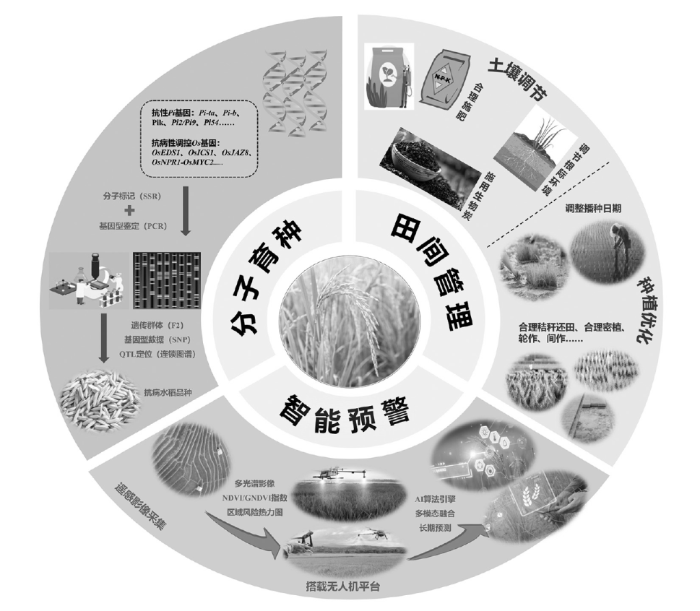
图3
水稻病害应对策略示意图
Fig. 3
Schematic diagram of strategies for dealing with rice diseases
4.1 分子标记辅助育种策略
相较于常规抗病育种周期长、适应性差等局限,构建以分子标记为核心的精准育种体系,已成为病害长期防控的关键路径。分子标记辅助选择(MAS)技术通过对目标抗病基因及其紧密连锁标记的筛选与聚合,能在幼苗期实现对植株抗病基因型的快速准确判定,缩短育种周期并提高效率。通过MAS技术,研究人员成功选育出携带 Pi54基因[123],以及Pi-ta、Pi-b和Wx-mq基因型品种[124],在区域气候条件下表现出较强的稻瘟病抗性。当前研究已逐步从单一抗病基因选育向抗病基因聚合转变。针对气候变化下植株体生理生化防御的脆弱性,需多维度创新解决方案,通过整合遗传群体(F2)、基因型数据(SNP)和QTL定位(连锁图谱)技术,可实现抗病性状的高效解析与精准选育[125-126]。
4.2 水稻田间管理
4.2.1 健康土壤构建与营养调控
健康、稳定的土壤-植株-微生物生态系统是应对气候变化下水稻病害的重要基础屏障。
第三,促进有益微生物定殖,构建稳健根际微生物屏障。相较传统化学防控,根际微生物调控是绿色、可持续抑病的核心措施之一。枯草芽孢杆菌、解淀粉芽孢杆菌、荧光假单胞菌等益生菌株,具有定殖根际、竞争营养位点、分泌抗菌化合物及诱导水稻系统性抗性的多重功能;在气候波动加剧导致土壤环境剧烈变化的情境下,接种上述有益菌可有效抑制水稻纹枯病、稻瘟病以及褐斑病等[135
4.2.2 农艺与耕作管理优化
合理的农艺与耕作制度调节田间小气候,是减轻病原压力、增强水稻抗性的有效手段。
4.3 智能监测与预警系统建设
遥感技术以覆盖面广、历史数据积累丰富为显著优势,可支撑大尺度病害监测和气候-病害时空演变分析。利用高分辨率遥感卫星可定期获取大范围农田的多光谱影像,通过归一化植被指数(NDVI)、绿色归一化植被指数(GNDVI)以及归一化水体指数(NDWI)等植被与水分指数,能够在大范围内识别出高温、高湿或暴雨后叶面病斑的风险区域[145]。
无人机搭载多光谱或高光谱相机,通过拍摄叶片病斑、冠层密度和三维结构,在病害早期即捕捉到细微变化,量化病斑面积与分布;同时,灵活的飞行时间和航线规划可针对极端天气前后进行精准复查,大幅提高了中观尺度的诊断精度[145]。Bai等[146]结合无人机遥感与积温数据建立的水稻白叶枯病疾病程度评价模型精度较高,复相关系数达0.86,均方根误差为0.65;Li等[147]通过无人机搭载高光谱遥感技术收集水稻作物的光谱数据,对稻瘟病识别总准确率和Kappa系数均达90%以上;Gu等[148]研究表明,位于15 m飞行高度的无人机搭载高光谱对水稻褐斑病诊断准确度最高,相关系数超过0.95;利用无人机搭载光谱仪采集,对稻曲病诊断总体分类精度达到了96.41%,Kappa系数可达到95%[149]。
总体而言,建设智能监测与预警系统,能够实现对水稻病害的实时感知、动态分析与精准预测,尤其在人工智能高速发展的当下,应用前景广阔。
5 未来展望与研究结论
5.1 研究结论
本研究综述了气候变化对水稻病害发生与防控的影响及研究进展。结果表明,气候因子如温度升高、湿度变化、CO2以及O3浓度升高及极端气候事件,改变病原生长繁殖和传播方式,也影响水稻自身的抗病反应,整体上增加了病害暴发的风险。应对策略包括抗病基因利用、农艺与生态措施优化及综合防控手段。未来研究需加强对病原适应性演化、水稻防御机制及多学科融合防控体系的探索,为保障水稻生产与粮食安全提供理论与技术支撑。
5.2 当前研究的不足
已有研究在病原生态适应性、宿主抗性变化以及气候驱动机制等方面取得了初步进展。但综合当前国内外研究现状,仍存在以下亟待解决的关键问题。
首先,在理论机制层面,相关研究多聚焦于单一因子影响,缺乏对多因子交互作用过程的探究。当前尚未建立涵盖温湿度、大气成分(如CO2与O3)、降水剧烈波动与极端事件的系统性作用框架,较难准确解析对病原体生命周期、致病过程及传播路径的综合影响。其次,在数据支撑层面,现有研究多依赖受控条件下的实验室试验,缺乏对水稻病害发生的长期、大规模田间观测数据支持。受限于时间和空间尺度,尤其是不同气候背景下的区域性差异和跨季节变化,可能无法全面反映真实田间生态系统中病原-宿主-环境的动态变化。此外,在模型构建与技术应用方面,虽然气候变化背景下的病害预测模型逐步增多,但大多数现有模型基于静态的气候情景或短期数据,缺乏考虑长期气候变异、季节性差异及未来气候预测的动态调整。最后,当前大部分防控策略偏重于单一环节的应对,如抗病品种选育或农药应用,缺乏跨学科融合的系统性方案,未能充分考虑气候变化、作物生长、病原物种动态、土壤环境等多维度因素的交互作用,造成防控措施的局限性和灵活性不足,难以应对未来气候变化引发的多重复杂病害风险。
5.3 未来展望
未来研究应致力于构建数据驱动、模型支撑、技术集成、管理协同的综合防控体系。首先,应重点发展多因子耦合的病害响应机制研究框架,构建融合环境因素的高精度、多变量模拟模型。通过集成长期田间观测数据、高分辨率气候预测与机制试验结果,实现对病原体在不同气候情景下侵染力变化、传播周期调整与区域流行风险的定量化分析,为风险评估与前瞻性防控提供理论支撑。其次,建立区域化、多尺度的水稻病害智能监测与感知网络,形成气候与农田一体化数据获取体系。融合遥感影像、气象观测、农田传感器与AI算法,实现病害的实时监测、自动识别与动态预警。依托大数据与云平台,开发可视化病害风险评估系统,提升病害流行趋势的空间识别能力。
在防控策略层面,应构建以抗病品种选育、农艺措施优化和智能化管理为核心要素的协同应对体系。强化聚焦气候适应性和病害广谱抗性的水稻新品种培育,依托基因组选择、基因编辑等现代育种技术提升抗性遗传基础与稳定性;并结合不同气候风险区特征,优化栽培管理措施,如调整播期、合理密植、控水控氮等,从生态系统层面增强田间群体的综合抗逆能力。
最后,应加快推动数字农业技术在病害防控中的深度融合与场景应用。构建集成式病害智能识别终端、移动监测平台和云端决策支持系统,实现从数据采集、分析诊断到干预决策的全流程数字闭环。在此基础上推广可视化操作界面、自动施药系统与智能处方生成模块,降低化学防治强度,提升精准施策能力,推动病害防控向“减药增效、绿色可持续”方向转型。
参考文献
Anthropogenic climate change has slowed global agricultural productivity growth
[J].
全球适应气候变化行动进展评估及相关工作建议
[J].
Assessment of global climate change adaptation progress and related recommendations
[J].
Optimal nitrogen rate strategy for sustainable rice production in China
[J].
A global perspective on sustainable intensification research
[J].
Interactions between elevated atmospheric CO2 and temperature on rice yield are highly dependent on growth season temperature
[J].
Elevated atmospheric CO2 and warming enhance the acquisition of soil-derived nitrogen rather than urea fertilizer by rice cultivars
[J].
Warm air temperatures increase photosynthetic acclimation to elevated CO2 concentrations in rice under field conditions
[J].
Responses of rice yield, irrigation water requirement and water use efficiency to climate change in China: historical simulation and future projections
[J].
Investigating the cell and developmental biology of plant infection by the rice blast fungus Magnaporthe oryzae
[J].
The global burden of pathogens and pests on major food crops
[J].
Expression of defense related enzymes in rice near isogenic lines IRBB4 and IRBB7 challenged with Xanthomonas oryzae pv. oryzae at elevated temperature
[J].
Prevalence of rice stripe virus can be altered by temperature and the virus-mediated development of insect vector, Laodelphax striatellus, in Korea
[J].
Investigation and characterization of rice dwarfing epidemic caused by southern rice black-streaked dwarf virus in Jiangsu in 2023
[J].
加强气候变化背景下植物病原真菌控制技术的创新和突破
[J].
Strengthen the innovation and breakthrough of plant pathogenic fungi control technology in the context of climate change
[J].
The impact of climate change on vegetable crop diseases and their management: the value of phytotron studies for the agricultural industry and associated stakeholders
[J].
Control of crop diseases through integrated crop management to deliver climate-smart farming systems for low- and high-input crop production
[J].
Climate change reshaping plant-fungal interaction
[J].
Toward understanding of rice innate immunity against magnaporthe oryzae
[J].
DOI:10.3109/07388551.2014.946883
PMID:25198435
[本文引用: 2]

The blast fungus, Magnaporthe oryzae, causes serious disease on a wide variety of grasses including rice, wheat and barley. The recognition of pathogens is an amazing ability of plants including strategies for displacing virulence effectors through the adaption of both conserved and variable pathogen elicitors. The pathogen-associated molecular pattern (PAMP)-triggered immunity (PTI) and effector-triggered immunity (ETI) were reported as two main innate immune responses in plants, where PTI gives basal resistance and ETI confers durable resistance. The PTI consists of extracellular surface receptors that are able to recognize PAMPs. PAMPs detect microbial features such as fungal chitin that complete a vital function during the organism's life. In contrast, ETI is mediated by intracellular receptor molecules containing nucleotide-binding (NB) and leucine rich repeat (LRR) domains that specifically recognize effector proteins produced by the pathogen. To enhance crop resistance, understanding the host resistance mechanisms against pathogen infection strategies and having a deeper knowledge of innate immunity system are essential. This review summarizes the recent advances on the molecular mechanism of innate immunity systems of rice against M. oryzae. The discussion will be centered on the latest success reported in plant-pathogen interactions and integrated defense responses in rice.
水稻细菌性条斑病菌遗传多样性和致病型分化研究
[J].
Genetic diversity and pathotype variability of xanthomans oryzae pv. oryzicola strains
[J].
Spectroscopic detection of wheat yellow mosaic virus infection based on invariant shape spectral processing and machine learning
[J].
Synergistic crop virus disease complexes in Sub-Saharan Africa: causes, consequences and control
[J].
Landscapes with higher crop diversity have lower aphid species richness but higher plant virus prevalence
[J].
Interaction between ustilaginoidea virens and rice and its sustainable control
[J].
DOI:10.1016/j.rsci.2023.11.012
[本文引用: 1]
Ustilaginoidea virens is a common rice pathogen that can easily lead to a decline in rice quality and the production of toxins pose potential risks to human health. In this review, we present a comprehensive literature review of research since the discovery of rice false smut. We provide a comprehensive and, at times, critical overview of the main results and findings from related research, and propose future research directions. Firstly, we delve into the interaction between U. virens and rice, including the regulation of transcription factors, the process of U. virens infecting rice panicles, and the plant immune response caused by rice infection. Following that, we discuss the identification and characterization of mycotoxins produced by the pathogenic fungus, as well as strategies for disease management. We emphasize the importance of comprehensive agricultural prevention and control methods for the sustainable management of U. virens. This knowledge will update our understanding of the interaction between U. virens and rice plants, offering a valuable perspective for those interested in U. virens.
The top 10 fungal pathogens in molecular plant pathology
[J].
DOI:10.1111/j.1364-3703.2011.00783.x
PMID:22471698
[本文引用: 4]
The aim of this review was to survey all fungal pathologists with an association with the journal Molecular Plant Pathology and ask them to nominate which fungal pathogens they would place in a 'Top 10' based on scientific/economic importance. The survey generated 495 votes from the international community, and resulted in the generation of a Top 10 fungal plant pathogen list for Molecular Plant Pathology. The Top 10 list includes, in rank order, (1) Magnaporthe oryzae; (2) Botrytis cinerea; (3) Puccinia spp.; (4) Fusarium graminearum; (5) Fusarium oxysporum; (6) Blumeria graminis; (7) Mycosphaerella graminicola; (8) Colletotrichum spp.; (9) Ustilago maydis; (10) Melampsora lini, with honourable mentions for fungi just missing out on the Top 10, including Phakopsora pachyrhizi and Rhizoctonia solani. This article presents a short resumé of each fungus in the Top 10 list and its importance, with the intent of initiating discussion and debate amongst the plant mycology community, as well as laying down a bench-mark. It will be interesting to see in future years how perceptions change and what fungi will comprise any future Top 10.© 2012 THE AUTHORS. MOLECULAR PLANT PATHOLOGY © 2012 BSPP AND BLACKWELL PUBLISHING LTD.
Bacillus amyloliquefaciens modulate autophagy pathways to control Rhizoctonia solani infection in rice
[J].
Ustilaginoidea virens, an emerging pathogen of rice: the dynamic interplay between the pathogen virulence strategies and host defense
[J].
DOI:10.1007/s00425-024-04523-x
PMID:39261328
[本文引用: 1]
The Ustilaginoidea virens -rice pathosystem has been used as a model for flower-infecting fungal pathogens. The molecular biology of the interactions between U. virens and rice, with an emphasis on the attempt to get a deeper comprehension of the false smut fungus's genomes, proteome, host range, and pathogen biology, has been investigated. Meta-QTL analysis was performed to identify potential QTL hotspots for use in marker-assisted breeding. The Rice False Smut (RFS) caused by the fungus Ustilaginoidea virens currently threatens rice cultivators across the globe. RFS infects rice panicles, causing a significant reduction in grain yield. U. virens can also parasitize other hosts though they play only a minor role in its life cycle. Furthermore, because it produces mycotoxins in edible rice grains, it puts both humans and animals at risk of health problems. Although fungicides are used to control the disease, some fungicides have enabled the pathogen to develop resistance, making its management challenging. Several QTLs have been reported but stable gene(s) that confer RFS resistance have not been discovered yet. This review offers a comprehensive overview of the pathogen, its virulence mechanisms, the genome and proteome of U. virens, and its molecular interactions with rice. In addition, information has been compiled on reported resistance QTLs, facilitating the development of a consensus genetic map using meta-QTL analysis for identifying potential QTL hotspots. Finally, this review highlights current developments and trends in U. virens-rice pathosystem research while identifying opportunities for future investigations.© 2024. The Author(s), under exclusive licence to Springer-Verlag GmbH Germany, part of Springer Nature.
First report of Sw-5 resistance-breaking strain of tomato spotted wilt virus (Orthotospovirus tomatomaculae) infecting tomato in Texas
[J].
First report of leaf spot disease caused by Fusarium asiaticum on Lonicera caerulea L. in Heilongjiang province, China
[J].
Genome editing strategies towards enhancement of rice disease resistance
[J].
DOI:10.1016/j.rsci.2021.01.003
[本文引用: 1]
The emerging pests and phytopathogens have reduced the crop yield and quality, which has threatened the global food security. Traditional breeding methods, molecular marker-based breeding approaches and use of genetically modified crops have played a crucial role in strengthening the food security worldwide. However, their usages in crop improvement have been highly limited due to multiple caveats. Genome editing tools like transcriptional activator-like effector nucleases and clustered regularly interspaced short palindromic repeats (CRISPR)-associated endonuclease Cas9 (CRISPR/Cas9) have effectively overcome limitations of the conventional breeding methods and are being widely accepted for improvement of crops. Among the genome editing tools, the CRISPR/Cas9 system has emerged as the most powerful tool of genome editing because of its efficiency, amicability, flexibility, low cost and adaptability. Accumulated evidences indicate that genome editing has great potential in improving the disease resistance in crop plants. In this review, we offered a brief introduction to the mechanisms of different genome editing systems and then discussed recent developments in CRISPR/Cas9 system-based genome editing towards enhancement of rice disease resistance by different strategies. This review also discussed the possible applications of recently developed genome editing approaches like CRISPR/Cas12a (formerly known as Cpf1) and base editors for enhancement of rice disease resistance.
气候变化对中国农作物病害发生的影响
[J].
Effects of climate change on the occurrence of crop diseases in China
[J].
昆虫病原真菌感染昆虫宿主的机制和宿主昆虫的防御策略研究进展
[J].
Advances in the mechanisms of entomopathogenic fungi infecting insect hosts and the defense strategies of insects
[J].
Climate change impacts on plant pathogens, food security and paths forward
[J].
DOI:10.1038/s41579-023-00900-7
PMID:37131070
[本文引用: 4]
Plant disease outbreaks pose significant risks to global food security and environmental sustainability worldwide, and result in the loss of primary productivity and biodiversity that negatively impact the environmental and socio-economic conditions of affected regions. Climate change further increases outbreak risks by altering pathogen evolution and host-pathogen interactions and facilitating the emergence of new pathogenic strains. Pathogen range can shift, increasing the spread of plant diseases in new areas. In this Review, we examine how plant disease pressures are likely to change under future climate scenarios and how these changes will relate to plant productivity in natural and agricultural ecosystems. We explore current and future impacts of climate change on pathogen biogeography, disease incidence and severity, and their effects on natural ecosystems, agriculture and food production. We propose that amendment of the current conceptual framework and incorporation of eco-evolutionary theories into research could improve our mechanistic understanding and prediction of pathogen spread in future climates, to mitigate the future risk of disease outbreaks. We highlight the need for a science-policy interface that works closely with relevant intergovernmental organizations to provide effective monitoring and management of plant disease under future climate scenarios, to ensure long-term food and nutrient security and sustainability of natural ecosystems.© 2023. Springer Nature Limited.
Projections of when temperature change will exceed 2℃ above pre-industrial levels
[J].
A global timekeeping problem postponed by global warming
[J].
Combined and single effects of elevated CO2 and temperatures on rice bakanae disease under controlled conditions in phytotrons
[J].
Effects of panicle development stage and temperature on rice panicle blast infection by Magnaporthe oryzae and visualization of its infection process
[J].
Reversible activation of XA21-mediated resistance by temperature
[J].
DOI:10.1007/s10658-018-01634-6
[本文引用: 2]
The pattern recognition receptor XA21 confers developmentally-regulated resistance to bacterial blight disease of rice caused by Xanthomonas oryzae pv. oryzae. Under normal conditions, XA21 plants are susceptible when inoculated 2weeks after germination and become fully resistant as they mature (after six-week-old). We report here that XA21-mediated resistance can be fully activated when the juvenile plants are grown at 27 degrees C under fluorescent light. Once transferred back to 31 degrees C under the same light intensity, XA21 seedlings lose the gained resistance. Temperature shift experiments indicate that high temperature treatment can suppress activated XA21 resistance. We also show that abundance of the XA21 protein is not significantly influenced by the temperature changes. These results highlight an interplay between development and temperature in this immune system. Full activation of resistance at juvenile stage will greatly facilitate the studies of XA21 immunity.
高温胁迫对抽穗扬花期水稻丙二醛含量和抗氧化酶活性的影响
[J].
Effects of high temperature stress on the MDA content and antioxidant enzyme activity of rice at heading and flowering stage
[J].
水稻减数分裂期高温对苯丙烷类代谢及下游分支代谢途径的影响
[J].
DOI:10.16819/j.1001-7216.2023.221112
[本文引用: 1]
【目的】 探究水稻减数分裂期高温如何影响苯丙烷类代谢,并分析其与水稻耐热性的关系。【方法】 以N22、广陆矮15、SDWG005、全两优681、Y两优900、Y两优1号、两优培九和绵恢101(MH101)等8种耐热和不耐热水稻品种为试验材料,设置常温和高温处理,分析减数分裂期高温胁迫对水稻的花粉活力与苯丙烷类代谢关键酶活性、木质素、总黄酮及总酚等主要代谢产物含量之间的相关性;并进一步选择极端耐高温的SDWG005和极端不耐高温的MH101为材料分析苯丙烷类代谢、碳水化合物代谢和抗氧化系统对水稻耐热性的影响。【结果】 1) 与对照相比,高温显著降低水稻花粉活力和颖花受精率,不同的水稻品种受高温影响后,花粉活力和颖花受精率的降幅不同。2) 高温显著增加颖花中肉桂酸-4-羟化酶和4-香豆酸辅酶A连接酶活性以及木质素、总黄酮和总酚的含量,且耐热品种增幅高于敏感品种。3) 高温下花粉活力与肉桂酸-4-羟化酶活性、木质素含量显著相关,颖花受精率与木质素含量以及木质素含量与类黄酮含量极显著相关。4) 与MH101相比,SDWG005小穗颖壳中木质素受高温显著诱导积累,且高温下能够维持较高细胞壁过氧化物酶活性。5) 与MH101相比,SDWG005颖花在高温下能够维持较高过氧化物酶、超氧化物歧化酶和抗坏血酸氧化酶活性,进而减少颖花中过氧化氢和丙二醛的积累。高温下SDWG005颖花中淀粉含量更高,酸性转化酶、蔗糖合酶及ATPase基因的表达量显著增加。【结论】 减数分裂期高温促进颖花中苯丙烷类代谢关键酶活性的上升和代谢产物含量的增加,耐热品种高温下能够积累较多的木质素和类黄酮,具有较高抗氧化酶活性,同时蔗糖代谢和能量产生效率较高,从而具有较强的耐热性。
Effects of high temperature on phenylpropane metabolism and downstream branch metabolic pathways in rice meiosis
[J].
DOI:10.16819/j.1001-7216.2023.221112
[本文引用: 1]
【Objective】 Our purposes are to investigate how high temperature during rice meiosis affects phenylpropane metabolism and analyze its relationship with heat tolerance of rice. 【Methods】 Eight rice varieties differed in heat tolerance including N22, GLA15 (Guanglu’ai 15), SDWG005, QLY681 (Quanliangyou 681), YLY900 (Y Liangyou 900), YLY1 (Y Liangyou 1), LYP9 (Liangyoupeijiu), and MH101 (Mianhui 101) were used as experimental materials and exposed to room temperature and high temperature for 5 days. The correlations between activities of key enzymes in phenylpropane metabolism and main metabolite contents such as lignin, total flavonoids and total phenols were analyzed as well as the fertility of rice under high temperature stress during the meiotic stage. SDWG005 (heat resistant) and MH101 (heat sensitive) were used as experimental materials to analyze the effects of phenylpropane metabolism, carbohydrate metabolism and antioxidant defense system on heat tolerance of rice. 【Results】 1) Compared with the control, the pollen vitality and fertilization rate of spikelets decreased significantly to various extents at high temperature. 2) HT(high temperature) significantly increased the activities of cinnamate-4-hydroxylase and 4-coumaric acid coenzyme A ligase, as well as the accumulation of lignin, flavonoids and total phenols in spikelets, with resistant varieties registering a higher growth than sensitive ones. 3) Correlation analysis showed that in response to HT pollen activity was significantly correlated with cinnamate-4-hydroxylase activity and lignin content, spikelet fertility was significantly correlated with lignin content, and lignin content was significantly correlated with flavonoid content. 4) Compared with MH101, lignin accumulation in the glumes of SDWG005 was significantly induced under HT. And higher cell wall peroxidase activities were maintained in SDWG005 under HT. 5) Compared with MH101, SDWG005 could maintain higher antioxidant enzyme activities under HT, resulting in less accumulation of H2O2 and malondialdehyde. Under HT, the starch level in SDWG005 flowers was higher, and the expression levels of genes involved in acid invertase, sucrose synthase and ATPase were significantly upregulated. 【Conclusion】 High temperature stress increases the key enzyme activities and metabolite contents in the phenylpropanoid pathway in spikelets during the meiosis stage. The resistant variety accumulates more lignin and flavonoids during HT, has higher antioxidant enzyme activities, higher sucrose metabolism and energy utilization efficiency, thereby improving heat tolerance.
Warm temperature compromises JA-regulated basal resistance to enhance Magnaporthe oryzae infection in rice
[J].
Influence of atmospheric and climatic change on plant-pathogen interactions
[J].
水稻冠层温度研究进展
[J].
Research progress on the factors affecting canopy temperature of rice
[J].
Climate change, plant diseases and food security: an overview
[J].
Viruliferous rate of small brown planthopper is a good indicator of rice stripe disease epidemics
[J].
Effect of temperature on rice stripe virus infection, transmission efficiency, and the development period in laodelphax striatellus
[J].
Effect of rice growth stage, temperature, relative humidity and wetness duration on infection of rice panicles by Villosiclava virens
[J].
Higher relative humidity and more moderate temperatures increase the severity of rice false smut disease in the rice-crayfish coculture system
[J].
高温对水稻根际细菌群落及功能代谢多样性的影响
[J].
The effects of thermal stress on diversity of rhizobacteria and functional genes of rice rhizosphere
[J].
Prediction of a geographical shift in the prevalence of rice stripe virus disease transmitted by the small brown planthopper, Laodelphax striatellus (Fallén) (Hemiptera: Delphacidae), under global warming
[J].
2000—2010年我国水稻病虫害发生与为害特征分析
[J].
Characteristics of occurrence and damage from diseases and insect pests in rice production in China during 2000-2010
[J].
水稻细菌性条斑病发生流行与综防技术
[J].
Epidemic and comprehensive control technology of bacterial stripe spot disease in rice
[J].
Influence of production situation on the incidence of brown spot of rice (Oryza sativa) caused by Bipolaris oryzae in the Philippines
[J].
影响南方水稻黑条矮缩病发生流行的因子分析
[J].
Factor analysis of epidemic of Southern rice black-streaked dwarf virus
[J].
Deciphering environmental factors and defense response of rice genotypes against sheath blight disease
[J].
2020年江苏省稻飞虱虫源地及暴发成因分析
[J].
Source areas and outbreak reasons of rice planthoppers in Jiangsu province, 2020
[J].
粤西地区南方水稻黑条矮缩病的流行规律及防治
[J].
DOI:10.11923/j.issn.2095-4050.cjas17050003
[本文引用: 1]
南方水稻黑条矮缩病为白背飞虱传播的一种毁灭性的水稻病毒病。文章根据2009~2016年化州地区南方水稻黑条矮缩病发生和危害情况,通过对南方水稻黑条矮缩病病害症状和介体昆虫的认识,分析南方水稻黑条矮缩病发生的轻重与介体数量、毒源量、水稻品种、种植方式、水稻播期、秧田位置及气候条件等因素有关。提出全面实施“防控技术前移,切断毒源,治虫防病”的防治策略;形成适合粤西稻区特点的南方水稻黑条矮缩病综合防控的技术体系,并在生产上推广应用,有效预防控制了南方水稻黑条矮缩病发生流行危害,取得了显著的社会经济效益。
Southern rice black-streaked dwarf disease: the epidemic law and control in western Guangdong
[J].
DOI:10.11923/j.issn.2095-4050.cjas17050003
[本文引用: 1]
Southern rice black-streaked dwarf virus (SRBSDV) is a kind of ruinous rice virus disease transmitted by the whitebacked planthopper. Basing on the occurrence and harm of SRBSDV in Huazhou district from 2009 to 2016, with recognization of the disease symptom and insect vector of SRBSDV, the essay analyzes that the severity of SRBSDV is related to vector numbers, viral source capacity, rice species, planting patterns, rice sowing period, seedling bed position and climate condition. The control strategy, which includes putting forward prevention and control technology, cutting off viral source, defending against insects, is proposed for comprehensive application. The synthetical preventing SRBSDV technical system which adapts to rice region in the western part of Guangdong province is implemented. The technical system is promoted and applied in production. With the measures above, the epidemic risks of SRBSDV can be prevented and controlled to obtain remarkable social and economic benefits.
Making sense of low oxygen sensing
[J].
DOI:10.1016/j.tplants.2011.12.004
PMID:22280796
[本文引用: 2]
Plant-specific group VII Ethylene Response Factor (ERF) transcription factors have emerged as pivotal regulators of flooding and low oxygen responses. In rice (Oryza sativa), these proteins regulate contrasting strategies of flooding survival. Recent studies on Arabidopsis thaliana group VII ERFs show they are stabilized under hypoxia but destabilized under oxygen-replete conditions via the N-end rule pathway of targeted proteolysis. Oxygen-dependent sequestration at the plasma membrane maintains at least one of these proteins, RAP2.12, under normoxia. Remarkably, SUB1A, the rice group VII ERF that enables prolonged submergence tolerance, appears to evade oxygen-regulated N-end rule degradation. We propose that the turnover of group VII ERFs is of ecological relevance in wetland species and might be manipulated to improve flood tolerance of crops.Copyright © 2011 Elsevier Ltd. All rights reserved.
Fossil-fuel-dependent scenarios could lead to a significant decline of global plant-beneficial bacteria abundance in soils by 2100
[J].
Beneficial and pathogenic plant-microbe interactions during flooding stress
[J].
Control of soil-borne pathogen Fusarium oxysporum by biological soil disinfestation with incorporation of various organic matters
[J].
Molecular phylogeny, pathogenic variability and phytohormone production of Fusarium species associated with bakanae disease of rice in temperate agro-ecosystems
[J].
The rhizosphere microbiome: significance of plant beneficial, plant pathogenic, and human pathogenic microorganisms
[J].
DOI:10.1111/1574-6976.12028
PMID:23790204
[本文引用: 1]
Microbial communities play a pivotal role in the functioning of plants by influencing their physiology and development. While many members of the rhizosphere microbiome are beneficial to plant growth, also plant pathogenic microorganisms colonize the rhizosphere striving to break through the protective microbial shield and to overcome the innate plant defense mechanisms in order to cause disease. A third group of microorganisms that can be found in the rhizosphere are the true and opportunistic human pathogenic bacteria, which can be carried on or in plant tissue and may cause disease when introduced into debilitated humans. Although the importance of the rhizosphere microbiome for plant growth has been widely recognized, for the vast majority of rhizosphere microorganisms no knowledge exists. To enhance plant growth and health, it is essential to know which microorganism is present in the rhizosphere microbiome and what they are doing. Here, we review the main functions of rhizosphere microorganisms and how they impact on health and disease. We discuss the mechanisms involved in the multitrophic interactions and chemical dialogues that occur in the rhizosphere. Finally, we highlight several strategies to redirect or reshape the rhizosphere microbiome in favor of microorganisms that are beneficial to plant growth and health. © 2013 Federation of European Microbiological Societies. Published by John Wiley & Sons Ltd. All rights reserved.
The rhizosphere: a playground and battlefield for soilborne pathogens and beneficial microorganisms
[J].
General mechanisms of drought response and their application in drought resistance improvement in plants
[J].
DOI:10.1007/s00018-014-1767-0
PMID:25336153
[本文引用: 3]
Plants often encounter unfavorable environmental conditions because of their sessile lifestyle. These adverse factors greatly affect the geographic distribution of plants, as well as their growth and productivity. Drought stress is one of the premier limitations to global agricultural production due to the complexity of the water-limiting environment and changing climate. Plants have evolved a series of mechanisms at the morphological, physiological, biochemical, cellular, and molecular levels to overcome water deficit or drought stress conditions. The drought resistance of plants can be divided into four basic types-drought avoidance, drought tolerance, drought escape, and drought recovery. Various drought-related traits, including root traits, leaf traits, osmotic adjustment capabilities, water potential, ABA content, and stability of the cell membrane, have been used as indicators to evaluate the drought resistance of plants. In the last decade, scientists have investigated the genetic and molecular mechanisms of drought resistance to enhance the drought resistance of various crops, and significant progress has been made with regard to drought avoidance and drought tolerance. With increasing knowledge to comprehensively decipher the complicated mechanisms of drought resistance in model plants, it still remains an enormous challenge to develop water-saving and drought-resistant crops to cope with the water shortage and increasing demand for food production in the future.
农业生物多样性防控作物病害的研究进展
[J].
Research advances in agrobiodiversity for crop disease management
[J].
Climate change and forest diseases
[J].
Predicting the effects of climate change on natural enemies of agricultural pests
[J].
Revisiting changes in growth, physiology and stress responses of plants under the effect of enhanced CO2 and temperature
[J].
Biochemical defenses of rice against Bipolaris oryzae increase with high atmospheric concentration of CO2
[J].
Functional modulation of an aquaporin to intensify photosynthesis and abrogate bacterial virulence in rice
[J].
DOI:10.1111/tpj.15427
PMID:34273211
[本文引用: 1]
Plant aquaporins are recently noted biological resource with a great potential to improve crop growth and defense traits. Here, we report functional modulation of Oryza sativa aquaporin OsPIP1;3 to enhance rice photosynthesis and grain production and to control bacterial blight and leaf streak, the most devastating world-wide bacterial diseases in the crop. We characterize OsPIP1;3 as a physiologically relevant CO -transporting facilitator, which supports 30% of rice photosynthesis on average. This role is nullified by OsPIP1;3 interaction with the bacterial protein Hpa1, an essential component of the type-III translocon that supports translocation of the bacterial type-III effectors PthXo1 and TALi into rice cells to induce leaf blight and streak, respectively. Hpa1 binding shifts OsPIP1;3 from CO transport to the effector translocation, aggravates bacterial virulence, but sacrifices rice photosynthesis. On the contrary, the external application of isolated Hpa1 to rice plants effectively prevents OsPIP1;3 from interaction with Hpa1 secreted by the bacteria that are infecting the plants. The inhibition of OsPIP1;3-Hpa1 interaction reverts OsPIP1;3 from the effector translocation to CO transport, abrogates bacterial virulence, and meanwhile induces defense responses in rice. These beneficial effects can combine to confer photosynthesis enhancement by 29-30%, bacterial disease reductions by 58-75%, and grain yield increase between 11% and 34%, in different rice varieties investigated in small-scale field trails implemented during the past years. Our results suggest that crop productivity and immunity can be coordinated by modulating physiological and pathological functions of a single aquaporin to break the growth-defense tradeoff barrier.This article is protected by copyright. All rights reserved.
Atmospheric CO2concentration effects on rice water use and biomass production
[J].
Influences of residual stomatal conductance on the intrinsic water use efficiency of two C3 and two C4 species
[J].
水分胁迫和高浓度CO2处理下水稻幼苗光合生理响应特征
[J].
Photosynthetic physiological response of rice seedlings to waterstress and high CO2 concentration
[J].
Effects of elevated atmospheric CO2 concentration on the infection of rice blast and sheath blight
[J].
DOI:10.1094/PHYTO-96-0425
PMID:18943425
[本文引用: 1]
The effect of elevated atmospheric CO(2) concentration on rice blast and sheath blight disease severity was studied in the field in northern Japan for 3 years. With free-air CO(2) enrichment (FACE), rice plants were grown in ambient and elevated ( approximately 200 to 280 mumol mol(-1) above ambient) CO(2) concentrations, and were artificially inoculated with consist of Magnaporthe oryzae. Rice plants grown in an elevated CO(2) concentration were more susceptible to leaf blast than those in ambient CO(2) as indicated by the increased number of leaf blast lesions. Plants grown under elevated CO(2) concentration had lower leaf silicon content, which may have contributed to the increased susceptibility to leaf blast under elevated CO(2) concentrations. In contrast to leaf blast, panicle blast severity was unchanged by the CO(2) enrichment under artificial inoculation, whereas it was slightly but significantly higher under elevated CO(2) concentrations in a spontaneous rice blast epidemic. For naturally occurring epidemics of the sheath blight development in rice plants, the percentage of diseased plants was higher under elevated as opposed to ambient CO(2) concentrations. However, the average height of lesions above the soil surface was similar between the treatments. One hypothesis is that the higher number of tillers observed under elevated CO(2) concentrations may have increased the chance for fungal sclerotia to adhere to the leaf sheath at the water surface. Consequently, the potential risks for infection of leaf blast and epidemics of sheath blight would increase in rice grown under elevated CO(2) concentration.
Elevated atmospheric CO2concentration increases rice blast severity
[J].
CO2倍增条件下不同生育期水稻碳氮磷含量及其计量比特征
[J].
Effect of CO2 doubling and different plant growth stages on rice carbon, nitrogen, and phosphorus and their stoichiometric ratios
[J].
大气CO2浓度和温度升高对水稻植株碳氮吸收及分配的影响
[J].
Effect of experimental CO2enrichment and warming on uptake and distribution of C and N in rice plant
[J].
Interactive effect of elevated [CO2] and temperature on the photosynthetic process, anti-oxidative properties, and grain yield of rice
[J].
Increased atmospheric CO2 concentration causes modification of physiological, biochemical and histological characteristics that affects rice-Bipolaris oryzae interaction
[J].
DOI:10.1007/s10658-020-01972-4
[本文引用: 1]
The leaf anatomy, photosynthetic system parameters and accumulation of carbohydrates were determined at different times for Bipolaris oryzae pathogenesis in two rice cultivars (BRS Querencia and Inov CL), grown in an environment with 400 ppm or 700 ppm of atmospheric CO2. The results demonstrated that the plants exposed to 700 ppm underwent changes in anatomical characteristics (reduction in parenchyma thickness and size of bulliform cells), photosynthetic parameters (increased carbon assimilation rate, leaf intercellular CO2 concentration and water use efficiency, and reduction of stomatal conductance to water vapor, transpiration rate and carboxylation efficiency), and carbohydrate accumulation (increased concentration of soluble sugars and starch), when compared to plants at 400 ppm. Therefore, the changes in morphological traits of the leaf and the accumulation of carbohydrates, which were stimulated in the rice plants by increased CO2 concentration (700 ppm), were associated with less severe brown spot, caused by B. oryzae.
Delineating the mechanisms of elevated CO2mediated growth, stress tolerance and phytohormonal regulation in plants
[J].
碳源与氮源限制下细菌代谢调节研究进展
[J].
Metabolic regulation of bacteria with limited carbon and nitrogen sources
[J].
糖信号及其在植物响应逆境胁迫中的作用
[J].
DOI:10.13560/j.cnki.biotech.bull.1985.2021-1289
[本文引用: 1]
糖不仅是植物细胞的碳源、能源和结构物质,也是一种信号分子,在植物生长发育及响应逆境胁迫中起重要作用。非生物逆境如高温、低温、干旱、盐渍和重金属胁迫是限制作物产量的主要胁迫因子,糖作为信号分子在植物响应这些胁迫因子中的确切机理,尚未清楚。基于植物中糖信号转导途径及其在植物耐逆性形成中作用的最新研究进展,归纳了植物中分别依赖己糖激酶(HXK)、G蛋白信号1调节子(RGS1)、糖酵解(EMP)和磷酸戊糖途径(PPP)的糖信号转导途径,讨论了糖信号在植物耐逆性包括耐热性、耐冷性、耐旱性、耐盐性和重金属胁迫耐性形成中的作用,最后展望了糖信号在植物生物学领域的研究方向。
Sugar signaling and its role in plant response to environmental stress
[J].
The roles of jasmonate signalling in nitrogen uptake and allocation in rice (Oryza sativa L.)
[J].
Membrane protein MHZ3 regulates the on-off switch of ethylene signaling in rice
[J].
The RLCK-VND6 module coordinates secondary cell wall formation and adaptive growth in rice
[J].
Cell wall properties in Oryza sativa influence mesophyll CO2 conductance
[J].
DOI:10.1111/nph.15173
PMID:29676468
[本文引用: 1]
Diffusion of CO from the leaf intercellular air space to the site of carboxylation (g ) is a potential trait for increasing net rates of CO assimilation (A ), photosynthetic efficiency, and crop productivity. Leaf anatomy plays a key role in this process; however, there are few investigations into how cell wall properties impact g and A. Online carbon isotope discrimination was used to determine g and A in Oryza sativa wild-type (WT) plants and mutants with disruptions in cell wall mixed-linkage glucan (MLG) production (CslF6 knockouts) under high- and low-light growth conditions. Cell wall thickness (T ), surface area of chloroplast exposed to intercellular air spaces (S ), leaf dry mass per area (LMA), effective porosity, and other leaf anatomical traits were also analyzed. The g of CslF6 mutants decreased by 83% relative to the WT, with c. 28% of the reduction in g explained by S. Although A /LMA and A /Chl partially explained differences in A between genotypes, the change in cell wall properties influenced the diffusivity and availability of CO. The data presented here indicate that the loss of MLG in CslF6 plants had an impact on g and demonstrate the importance of cell wall effective porosity and liquid path length on g.© 2018 The Authors. New Phytologist © 2018 New Phytologist Trust.
气候变化对中国夏季臭氧影响
[J].
Impact of climate change on summer ozone in China
[J].
Ozone depletion, ultraviolet radiation, climate change and prospects for a sustainable future
[J].Changes in stratospheric ozone and climate over the past 40-plus years have altered the solar ultraviolet (UV) radiation conditions at the Earth's surface. Ozone depletion has also contributed to climate change across the Southern Hemisphere. These changes are interacting in complex ways to affect human health, food and water security, and ecosystem services. Many adverse effects of high UV exposure have been avoided thanks to the Montreal Protocol with its Amendments and Adjustments, which have effectively controlled the production and use of ozone-depleting substances. This international treaty has also played an important role in mitigating climate change. Climate change is modifying UV exposure and affecting how people and ecosystems respond to UV; these effects will become more pronounced in the future. The interactions between stratospheric ozone, climate and UV radiation will therefore shift over time; however, the Montreal Protocol will continue to have far-reaching benefits for human well-being and environmental sustainability.
Climate change penalty to ozone air quality: review of current understandings and knowledge gaps
[J].
臭氧植保机在设施蔬菜苗期病害防治中的应用研究
[J].
Application of ozone sterilizer devices for controlling vegetable diseases during seeding stages in greenhouse
[J].
DOI:10.13733/j.jcam.issn.2095-5553.2023.07.008
[本文引用: 1]
In order to explore the efficacy of a new type of ozone sterilizer device in controlling vegetable seedling diseases and its impact on the growth of vegetables, experiments on disease control were conducted in greenhouses using tomato leaf mold, cucumber powdery mildew, and cabbage dampingoff as test subjects. In one of the greenhouses, the ozone plant protection machine was suspended from the greenhouse ceiling and used highvoltage discharge to generate ozone, which was then rapidly diffused throughout the facility using a highspeed fan and special air duct. The machine can be controlled remotely for realtime adjustment of ozone release, and its operation status can be constantly monitored using a mobile app. Thus, the ozone concentration in a facility can be dynamically adjusted to better control vegetable diseases. Compared with conventionally managed greenhouses without disease control measures, the incidence rates of tomato leaf mold, cucumber powdery mildew, and cabbage dampingoff in the greenhouse with the installed multifunctional plant protection machine were controlled at 5.2%, 4.7%, and 17.4%, which is 12.2%, 9.8%, and 1.8% lower, respectively, than the incidence rates in the conventionally managed greenhouse. The results showed that ozone had favorable control effects on tomato leaf mold and cucumber powdery mildew and showed certain control effects on cabbage dampingoff. Moreover, the ozone had no adverse effects on the normal growth of the vegetables. These data provide a reference for the wide use of ozone to control vegetable diseases in greenhouses.
Drought, ozone, ABA and ethylene: new insights from cell to plant to community
[J].
臭氧对水稻恶苗病菌的抑制作用
[J].
Inhibition effect of ozone on fusarium moniliforme
[J].
臭氧功能水对水稻病害的防治效果及产量影响
[J].
Effects of ozone water on rice diseases and yield
[J].
臭氧胁迫对植物主要生理功能的影响
[J].
Effects of ozone stress on major plant physiological functions
[J].
Plant biochemistry influences tropospheric ozone formation, destruction, deposition, and response
[J].
DOI:10.1016/j.tibs.2021.06.007
PMID:34303585
[本文引用: 3]
Tropospheric ozone (O) is among the most damaging air pollutant to plants. Plants alter the atmospheric O concentration in two distinct ways: (i) by the emission of volatile organic compounds (VOCs) that are precursors of O and (ii) by dry deposition, which includes diffusion of O into vegetation through stomata and destruction by nonstomatal pathways. Isoprene, monoterpenes, and higher terpenoids are emitted by plants in quantities that alter tropospheric O. Deposition of O into vegetation is related to stomatal conductance, leaf structural traits, and the detoxification capacity of the apoplast. The biochemical fate of O once it enters leaves and reacts with aqueous surfaces is largely unknown, but new techniques for the tracking and identification of initial products have the potential to open the black box.Published by Elsevier Ltd.
Interactive effects of tropospheric ozone and blast disease (Magnaporthe oryzae) on different rice genotypes
[J].
Ambient ozone and plant health
[J].DOI:10.1094/PDIS.2001.85.1.4 PMID:30832068 [本文引用: 1]
不同水稻品种光合特性及叶绿素对臭氧浓度升高的响应差异
[J].
Different responses to elevated ozone among cultivars in the photosynthetic characteristics and chlorophyll of rice
[J].
Breeding of ozone resistant rice: relevance, approaches and challenges
[J].
DOI:S0269-7491(14)00511-9
PMID:25528448
[本文引用: 1]
Tropospheric ozone concentrations have been rising across Asia, and will continue to rise during the 21st century. Ozone affects rice yields through reductions in spikelet number, spikelet fertility, and grain size. Moreover, ozone leads to changes in rice grain and straw quality. Therefore the breeding of ozone tolerant rice varieties is warranted. The mapping of quantitative trait loci (QTL) using bi-parental populations identified several tolerance QTL mitigating symptom formation, grain yield losses, or the degradation of straw quality. A genome-wide association study (GWAS) demonstrated substantial natural genotypic variation in ozone tolerance in rice, and revealed that the genetic architecture of ozone tolerance in rice is dominated by multiple medium and small effect loci. Transgenic approaches targeting tolerance mechanisms such as antioxidant capacity are also discussed. It is concluded that the breeding of ozone tolerant rice can contribute substantially to the global food security, and is feasible using different breeding approaches. Copyright © 2014 Elsevier Ltd. All rights reserved.
PYR/RCAR receptors contribute to ozone-, reduced air humidity-, darkness-, and CO2-induced stomatal regulation
[J].
DOI:10.1104/pp.113.220608
PMID:23703845
[本文引用: 1]
Rapid stomatal closure induced by changes in the environment, such as elevation of CO2, reduction of air humidity, darkness, and pulses of the air pollutant ozone (O3), involves the SLOW ANION CHANNEL1 (SLAC1). SLAC1 is activated by OPEN STOMATA1 (OST1) and Ca(2+)-dependent protein kinases. OST1 activation is controlled through abscisic acid (ABA)-induced inhibition of type 2 protein phosphatases (PP2C) by PYRABACTIN RESISTANCE/REGULATORY COMPONENTS OF ABA RECEPTOR (PYR/RCAR) receptor proteins. To address the role of signaling through PYR/RCARs for whole-plant steady-state stomatal conductance and stomatal closure induced by environmental factors, we used a set of Arabidopsis (Arabidopsis thaliana) mutants defective in ABA metabolism/signaling. The stomatal conductance values varied severalfold among the studied mutants, indicating that basal ABA signaling through PYR/RCAR receptors plays a fundamental role in controlling whole-plant water loss through stomata. PYR/RCAR-dependent inhibition of PP2Cs was clearly required for rapid stomatal regulation in response to darkness, reduced air humidity, and O3. Furthermore, PYR/RCAR proteins seem to function in a dose-dependent manner, and there is a functional diversity among them. Although a rapid stomatal response to elevated CO2 was evident in all but slac1 and ost1 mutants, the bicarbonate-induced activation of S-type anion channels was reduced in the dominant active PP2C mutants abi1-1 and abi2-1. Further experiments with a wider range of CO2 concentrations and analyses of stomatal response kinetics suggested that the ABA signalosome partially affects the CO2-induced stomatal response. Thus, we show that PYR/RCAR receptors play an important role for the whole-plant stomatal adjustments and responses to low humidity, darkness, and O3 and are involved in responses to elevated CO2.
植物激素信号调控的“植物病毒-植物-媒介昆虫”三者互作对温室气体变化的响应
[J].
Effect of elevated CO2 and O3 on phytohormone-mediated plant resistance to vector insects and insect-borne plant viruses
[J].
城市植物挥发性有机化合物排放与臭氧相互作用及其机制
[J].
The interactions and mechanisms between biogenic volatile organic compounds emissions and ozone concentrations in urban areas: a review
[J].
臭氧浓度升高对植物源挥发性有机化合物 (BVOCs) 影响的研究进展
[J].
Effects of elevated ozone on Biogenic Volatile Organic Compounds (BVOCs) emission: a review
[J].
Ethylene biosynthesis and signaling is required for rice immune response and basal resistance against magnaporthe oryzae infection
[J].Recent studies have suggested that ethylene enhances host resistance to fungal pathogen Magnaporthe oryzae, the causal agent of rice blast disease. Among the six 1-aminocyclopropane-1-carboxylic acid synthase genes in rice, OsACS1 and OsACS2 are induced within 24 h of inoculation by M. oryzae. This induction occurs simultaneously with an increase in ethylene production that is noticeable 12 h postinoculation. The purpose of this study was to examine the dynamics of ethylene production and signaling in wild type and RNA interference-mediated suppression lines deficient in ethylene production (acs2) or signaling (eil1) after challenge with M. oryzae as well as fungal cell-wall elicitors. Ethylene-insensitive mutant lines show an attenuated basal defense response including lower basal expression of the genes encoding a chitin-binding receptor, pathogenesis-related (PR) proteins, and the enzymes involved in the synthesis of diterprenoid phytoalexins, a reduction on early hypersensitive response (HR)-like cell death, and reduced incidence of callose deposition. Ethylene-deficient mutants showed an intermediate phenotype, with a significant reduction in expression of defense-related genes and callose deposition, but only a slight reduction in HR-like cell death. As a result, all ethylene-insensitive mutants show increased susceptibility to M. oryzae, whereas the ethylene-deficient lines show a slight but less significant increase in disease severity. These results show that ethylene signaling and, to some extent, ethylene production are required for rice basal resistance against the blast fungus Magnaporthe oryzae.
硅和稻瘟病菌接种对水稻植株有机酸含量的影响
[J].以抗病性不同的一对水稻近等基因系——感病CO39和抗病C101LACPi-1)为实验材料,在水培条件下研究了施硅和稻瘟病接菌对水稻根系和叶片抗性物质有机酸含量的影响,揭示硅提高水稻对稻瘟病抗性的机理。结果表明:接菌条件下硅处理显著降低了2个基因型材料的叶片反丁烯二酸、柠檬酸的含量,而增加了叶片中草酸、顺丁烯二酸的含量;加硅显著降低接菌后第3天的CO39叶片酒石酸含量,但增加了C101LAC(Pi-1)接菌后第7天的叶片酒石酸含量;硅处理还显著增加了根系中苹果酸和草酸的含量;各种有机酸在水稻植株体内的分布也不尽相同,如柠檬酸主要分布在叶片中,苹果酸主要分布在根系中,顺丁烯二酸、反丁烯二酸、酒石酸和草酸在叶片和根系中都有分布。研究表明,硅可能通过影响植株体内的有机酸代谢而增强稻瘟病的抗性。
Influence of silicon application and Magnaporthe oryzae infection on organic acids contents in rice plants
[J].
稻瘟病综合防控技术研究进展
[J].
Advance of integrated control technology of rice blast
[J].
Connections between abscission, dehiscence, pathogen defense, drought tolerance, and senescence
[J].
DOI:S0168-9452(18)31020-3
PMID:31084875
[本文引用: 1]
This review focuses on relationships between the abscission process (organ shedding) and other related processes like shattering, senescence, pathogen defense, and drought stress with emphasis on how the relationships might be exploited to advance their respective fields. Shared molecular components provide a means for cross-talk between processes as well as a means for knowledge transfer between fields. The review briefly covers how fundamental abscission molecular mechanisms can be used for crop improvement. We cover seed abscission and shattering in rice, cereals, and beans as well as abscission in Arabidopsis and tomato. The review provides a set of five guidelines that can be used to direct future cell separation research. Finally, we give our perspective on methods and technologies that are likely to advance the abscission field.Copyright © 2019 Elsevier B.V. All rights reserved.
An expanded cysteine-rich receptor-like kinase gene cluster functionally differentiates in drought, cold, heat, and pathogen stress responses in rice
[J].
Intermittent drought adversely impacts monogenic resistance of rice to the blast pathogen Magnaporthe oryzae and is associated with alteration in histone acetylation
[J].
盐、干旱及其复合胁迫对水稻产量和品质形成影响的研究进展
[J].
DOI:10.16819/j.1001-7216.2024.240205
[本文引用: 1]
滨海盐碱地水稻生产受限于淡水资源和水利基础设施,盐害和干旱往往交织出现,极易遭受盐−旱复合胁迫,严重制约了滨海盐碱地水稻丰产优质目标的实现。全面剖析盐、干旱胁迫及其复合胁迫对水稻产量和品质形成的影响及其生理机制,可为滨海盐碱地水稻高产与品质调优栽培提供科学支撑。本文概述了盐、干旱及其复合胁迫对水稻生长发育、产量形成和稻米品质的影响,从渗透调节、离子平衡、光合作用、抗氧化酶系统、内源激素、蔗糖-淀粉代谢关键酶活性和分子机制等方面阐述其影响水稻产量和品质形成的作用机制,从耐盐耐旱品种选育及栽培调控等方面提出了减轻水稻盐/干旱胁迫的调控措施,为今后深入开展水稻耐盐和干旱的研究提出建议。
Research progress in the effect of salinity, drought, and their combined stresses on rice yield and quality formation
[J].
DOI:10.16819/j.1001-7216.2024.240205
[本文引用: 1]
The production of rice in coastal saline-alkali lands is constrained by limited freshwater resources and water infrastructure. The presence of salinity damage and drought, often occurring together, renders rice production in these areas highly susceptible to combined salinity-drought stress, significantly impeding the attainment of high yield and quality in rice in coastal saline-alkali lands. A comprehensive analysis of the impacts of salinity damage, drought, and their combined stresses on rice yield and quality formation, along with their physiological mechanisms, can offer scientific backing for optimizing high-yield and quality rice cultivation in coastal saline-alkali lands. This article presents an overview of the effects of salinity damage, drought, and their combined stresses on the growth, development, yield formation, and grain quality of rice. The mechanisms underlying their influence on rice yield and quality formation are elucidated, focusing on osmotic regulation, ion balance, photosynthetic functions, antioxidant enzyme systems, endogenous hormones, key enzyme activities related to sucrose-starch metabolism, and molecular mechanisms. Recommendations are provided for the selection of salinity- and drought-tolerant varieties, as well as cultivation practices to mitigate salinity and drought stress in rice. Lastly, suggestions are proposed for further research on salinity and drought stress in rice.
植物角质蜡质代谢及抗病机制研究
[J].
Metabolism of the cutin and wax of plants and their diseaseresistance mechanisms
[J].
OsWR2-RNAi对水稻角质层生物合成和耐旱性的影响
[J].
Influence of OsWR2-RNAi on rice cuticle biosynthesis and drought resistance
[J].
逆境处理下水稻叶角质层蜡质积累及其与蜡质合成相关基因OsGL1表达的关系
[J].
Effect of stresses on leaf cuticular wax accumulation and its relationship to expression of OsGL1-homologous genes in rice
[J].
水稻对干旱胁迫的生理生化响应及分子调控研究进展
[J].
DOI:10.16819/j.1001-7216.2024.230410
[本文引用: 1]
水稻是全球最重要的粮食作物之一,其生长过程需要大量水分。随着全球气候变暖,干旱成为其产量的重要限制因素。因此,本文结合近些年的研究成果从形态(根系和地上部)、生理(气孔、蒸腾作用、光合作用和水分利用率)、生化(植物激素、脯氨酸等渗透调节剂和抗氧化剂)及分子水平(抗旱基因的表达水平)综述了水稻在干旱胁迫下的自我保护机制,可为全面了解水稻抗旱机制和选育抗旱品种提供参考。
Research progress in physiological, biochemical responses of rice to drought stress and its molecular regulation
[J].
DOI:10.16819/j.1001-7216.2024.230410
[本文引用: 1]
Rice is one of the most important food crops globally, and its growth requires more water than many other crops. With global warming, drought has emerged as the main factor limiting crop yields. Therefore, based on recent research achievements, this paper summarizes the self-protection mechanisms of rice under drought stress. This includes aspects such as morphology (plant height, roots, leaves, number of tillers, and plant biomass), physiology (stomata, transpiration, photosynthesis, and water use efficiency), biochemistry (plant hormones, proline, other osmotic regulators, and antioxidants), and molecular biology (expression levels of drought resistance genes). The aim is to comprehensively understand rice's drought resistance mechanisms and provide a reference for breeding drought-resistant varieties
The Nup98 homolog APIP12 targeted by the effector avrPiz-t is involved in rice basal resistance against magnaporthe oryzae
[J].
Rice stomatal mega-papillae restrict water loss and pathogen entry
[J].
The phenylalanine ammonia-lyase inhibitor AIP induces rice defence against the root-knot nematode Meloidogyne graminicola
[J].
Genome-wide identification, characterization, and expression analysis of the chalcone synthase gene family in oryza sativa under abiotic stresses
[J].
A fungal effector targets a heat shock-dynamin protein complex to modulate mitochondrial dynamics and reduce plant immunity
[J].
Effect of temperature on Pi54-mediated leaf blast resistance in rice
[J].
利用分子标记辅助选择聚合水稻Pi-ta、Pi-b和Wx-mq基因
[J].
DOI:10.3724/SP.J.1006.2017.01622
[本文引用: 1]
近年来,优良食味粳稻品种南粳46、南粳5055和南粳9108在江苏等地大面积推广,促进了优质稻米产业的发展。但这些品种均不抗稻瘟病,且缺乏适合在淮北地区种植的中熟中粳型优良食味粳稻品种。本研究以同时携带稻瘟病抗性基因Pi-ta和Pi-b的江苏抗病、高产粳稻品种武粳15为母本,携带低直链淀粉含量基因Wx-mq的优良食味粳稻品种南粳5055为父本配置杂交组合进行聚合育种。利用Pi-ta和Pi-b基因的分子标记多重PCR体系以及Wx-mq基因的四引物扩增受阻突变体系PCR检测技术,分别在不同的分离世代对目标基因位点进行检测,结合田间多代选育、抗性鉴定和籽粒胚乳外观鉴定,成功地将Pi-ta、Pi-b和Wx-mq基因聚合于一体,选育出稻瘟病抗性好、食味品质优、产量高的水稻新品系“南粳0051”,适合在江苏省淮北地区种植。本研究将三套自主研发的PCR检测体系成功应用于分子标记辅助选择,不仅为水稻多基因聚合育种提供了快捷、高效的选择方法,也为水稻抗病、优质育种创制了新的种质资源。
Pyramiding Pi-ta, Pi-b, and Wx-mq genes by marker-assisted selection in rice (Oryza sativa L.)
[J].
Analysis of rice blast fungus genetic diversity and identification of a novel blast resistance OsDRq12 gene
[J].
Improvement of upland rice variety by pyramiding drought tolerance QTL with two major blast resistance genes for sustainable rice production
[J].
DOI:10.1016/j.rsci.2021.07.009
[本文引用: 1]
Varalu is an early maturing rice variety widely grown in the rainfed ecosystem preferred for its grain type and cooking quality. However, the yield of Varalu is substantially low since it is being affected by reproductive drought stress along with the blast disease. The genetic improvement of Varalu was done by introgressing a major yield QTL, qDTY12.1, along with two major blast resistance genes i.e. Pi54 and Pi1 through marker-assisted backcross breeding. Both traits were transferred till BC2 generation and intercrossing was followed to pyramid the two traits. Stringent foreground selection was carried out using linked markers as well as peak markers (RM28099, RM28130, RM511 and RM28163) for the targeted QTL (qDTY12.1), RM206 for Pi54 and RM224 for Pi1. Extensive background selection was done using genome-wide SSR markers. Six best lines (MSM-36, MSM-49, MSM-53, MSM-57, MSM-60 and MSM-63) having qDTY12.1 and two blast resistance genes in homozygous condition with recurrent parent genome of 95.0%?96.5% having minimal linkage drag of about 0.1 to 0.7 Mb were identified. These lines showed yield advantage under drought stress as well as irrigated conditions. MSM-36 showed better performance in the national coordinated trials conducted across India, which indicated that improved lines of Varalu expected to replace Varalu and may have an important role in sustaining rice production. The present study demonstrated the successful marker-assisted pyramiding strategy for introgression of genes/QTLs conferring biotic stress resistance and yield under abiotic stress in rice.
D53 represses rice blast resistance by directly targeting phenylalanine ammonia lyases
[J].DOI:10.1111/jipb.13734 [本文引用: 1]
A canonical protein complex controls immune homeostasis and multipathogen resistance
[J].
DOI:10.1126/science.adr2138
PMID:39509474
[本文引用: 2]
The calcium (Ca) sensor ROD1 (RESISTANCE OF RICE TO DISEASES1) is a master regulator of immunity in rice. By screening suppressors of mutants, we show that ROD1 governs immune homeostasis by surveilling the activation of a canonical immune pathway. Mutations in (), (), (), and () all abolish enhanced disease resistance of plants. OsTIR catalyzes the production of second messengers 2'-(5″-phosphoribosyl)-5'-adenosine monophosphate (pRib-AMP) and diphosphate (pRib-ADP), which trigger formation of an OsEDS1-OsPAD4-OsADR1 (EPA) immune complex. ROD1 interacts with OsTIR and inhibits its enzymatic activity, whereas mutation of leads to constitutive activation of the EPA complex. Thus, we unveil an immune network that fine-tunes immune homeostasis and multipathogen resistance in rice.
Salicylic acid and RNA interference mediate antiviral immunity of plant stem cells
[J].
Alternation of soil bacterial and fungal communities by tomato-rice rotation in Hainan Island in Southeast of China
[J].
DOI:10.1007/s00203-020-02086-5
PMID:33078269
[本文引用: 2]
Tomato-rice rotation is prevalent in subtropical and tropical regions in China. This practice enhances crop productivity and the disease suppression property of soils against soil-borne plant pathogens. To explore the variations and dynamics of bacterial and fungal communities, bulk soil samples were collected during two consecutive years under a rotation system between tomato and rice originated from the year of 2010 in Hainan Island, and 16S rDNA and ITS amplicons were sequenced by Illumina MiSeq. The results demonstrated that potentially beneficial bacterial phyla Acidobacteria, Chloroflexi and genus Paenibacillus, as well as the fungal genus Mortierella were significantly enriched, while the potentially pathogenic fungal genus Fusarium was significantly decreased during the crop rotation. Measurements of soil physicochemical properties indicated that the soil acidification was improved. Redundancy analysis (RDA) revealed the correlation of the microbial community with soil pH and identified soil total phosphorus (TP) level as the highest determinant factor for both bacterial and fungal communities. This work provides a preliminary description of changes of the bacterial and fungal communities related to tomato-rice rotation in China and offered experimental evidences for exploring the effects of this agricultural practice on soil ecology.
Microbial diversity and soil functions
[J].
Silicon-enriched rice straw biochar and silicon fertilizer mitigate rice straighthead disease by reducing dimethylarsinic acid accumulation
[J/OL].
氮肥减量配施硅肥对水稻产量及病虫害防控的影响
[J].
DOI:10.3969/j.issn.1006-8082.2020.03.019
[本文引用: 1]
为探究减氮条件下配施硅肥对水稻产量及病虫害的影响,本研究比较了氮肥常规用量和氮肥用量减少20%~40%条件下,配施一定量的硅肥对水稻产量及病虫害发生的影响。结果表明,与常规用量施氮(300 kg/hm2)相比,氮肥减少20%~40%条件下,配施硅肥提高了水稻的产量及经济效益,显著降低了卷叶螟的数量且提升了害虫天敌数量,并显著降低稻曲病发生率和病情指数,最终减轻水稻病虫害。
Effects of reduce nitrogen fertilizer combined with silicon fertilizer on grain yield and pests and diseases of rice
[J].
DOI:10.3969/j.issn.1006-8082.2020.03.019
[本文引用: 1]
In order to explore the effects of applying silicon fertilizer on the yield and diseases and insect pests control of rice under reduced nitrogen fertilizer application, five different fertilization treatments were designed. The results showed that, compared with N300 treatment, the N240Si60 and N180Si60 treatments could improve the yield and economic benefits of rice. Under N240Si60 and N180Si60 treatments, the number of Cnaphalocrocis medinalis as well as the incidence and disease index of rice false smut were significantly decreased, moreover, the number of natural enemies was significantly increased.
氮肥运筹对江西省双季稻主要病虫害发生及产量的影响
[J].
Effects of nitrogen fertilizer operation on occurrence of major diseases and insects in double cropping rice and its yield in Jiangxi province
[J].
Biocontrol potential of Bacillus subtilis RH5 against sheath blight of rice caused by Rhizoctonia solani
[J].
DOI:10.1002/jobm.201900347
PMID:31851769
[本文引用: 1]
The sheath blight disease of rice caused by Rhizoctonia solani is widely prevalent and one of the most destructive diseases, affecting rice cultivation and loss worldwide. In the present study, a set of twenty Bacillus isolates from saline soil of Uttar Pradesh were tested for their biocontrol activity against R. solani with the aim to obtain a potential strain for the control of sheath blight disease toward ecofriendly and sustainable agriculture. The results of dual-culture assay and scanning electron microscopic studies showed that the strain RH5 exhibited significant antagonistic activity (84.41%) against the fungal pathogen R. solani. On the basis of 16S rDNA sequencing analysis, the potential biocontrol strain RH5 was identified as Bacillus subtilis. Furthermore, the strain RH5 was characterized by different plant growth-promoting (PGP) activities and induction of defense-related enzymes in rice plants against R. solani. The strain RH5 posses various PGP attributes (indole acetic acid, siderophore, hydrogen cyanide production and phosphate, Zn, K solubility), hydrolytic enzymatic (chitinase, protease, cellulase, xylanase) activity, and presence of antimicrobial peptide biosynthetic genes (bacylisin, surfactin, and fengycin), which support the strain for efficient colonization of hyphae and its inhibition. Finally, the results of the greenhouse study confirmed that strain RH5 significantly increased plant growth and triggered resistance in rice plants through the production of defense-related antioxidant enzymes.© 2019 WILEY-VCH Verlag GmbH & Co. KGaA, Weinheim.
Enhanced resistance to rice blast and sheath blight in rice (oryza sativa L.) by expressing the oxalate decarboxylase protein Bacisubin from Bacillus subtilis
[J].
Bacillus amyloliquefaciens D203 ameliorates rice growth and resistance to rice blast disease
[J].
Bio-protection of brown spot disease of rice and insight into the molecular basis of interaction between Oryza sativa, Bipolaris oryzae and Bacillus amyloliquefaciens
[J].
Effect of rice sowing date on occurrence of small brown planthopper and epidemics of planthopper-transmitted rice stripe viral disease
[J].
Mutation of G-protein γ subunit DEP1 increases planting density and resistance to sheath blight disease in rice
[J].
Overexpression of loose plant architecture 1 increases planting density and resistance to sheath blight disease via activation of PIN-FORMED 1 a in rice
[J].
翻耕深度对水稻稻瘟病和纹枯病发生程度的影响
[J].
Effect of tillage depth on the incidence of rice blast and rice sheath blight
[J].
Agronomic practices preventing local outbreaks of rice yellow mottle virus disease revealed by spatial autoregressive analysis
[J].
Application of rice straw inhibits clubroot disease by regulating the microbial community in soil
[J].
A systematic review of UAV and AI integration for targeted disease detection, weed management, and pest control in precision agriculture
[J].
Dynamic UAV phenotyping for rice disease resistance analysis based on multisource data
[J].
Unmanned aerial vehicle hierarchical detection of leaf blast in rice crops based on a specific spectral vegetation index
[J].
DOI:10.15302/J-FASE-2024576
[本文引用: 1]
Leaf blast is a significant global problem, severely affecting rice quality and yield, making swift, non-invasive detection crucial for effective field management. This study used hyperspectral remote sensing technology via an unmanned aerial vehicle to gather spectral data from rice crops. ANOVA and the Relief-F algorithm were used to identify spectral bands sensitive to the disease and developed a new vegetation index, the rice blast index (RBI). This RBI was compared with 30 established vegetation indexes, using correlation analysis and visual comparison to further shortlist six superior indexes, including RBI. These were evaluated using the K-nearest neighbor (KNN) and random forests (RF) classification models. RBI demonstrated superior detection accuracy for leaf blast in both the KNN model (95.0% overall accuracy and 93.8% kappa coefficient) and the RF model (95.1% overall accuracy and 92.5% kappa coefficient). This study highlights the significant potential of RBI as an effective tool for precise leaf blast detection, offering a powerful new mechanism and theoretical basis for enhanced disease management in rice cultivation.
Assessing narrow brown leaf spot severity and fungicide efficacy in rice using low altitude UAV imaging
[J].
基于高光谱的水稻稻曲病早期监测研究
[J].
Early monitoring of rice koji disease based on hyperspectroscop
[J].
An interpretable fusion model integrating lightweight CNN and transformer architectures for rice leaf disease identification
[J].
Image-based rice leaf disease detection using CNN and generative adversarial network
[J].
A dual-branch multimodal model for early detection of rice sheath blight: fusing spectral and physiological signatures
[J].


