Climate Change Research ›› 2025, Vol. 21 ›› Issue (5): 641-658.doi: 10.12006/j.issn.1673-1719.2025.072
• Impacts of Climate Change • Previous Articles Next Articles
Impact of climate change on rice diseases: research progress and future prospects
HE Hao( ), LI Man, LIU Miao, CHEN Ming-Jie, LI Qi, HU Zheng-Hua()
Collaborative Innovation Center on Forecast and Evaluation of Meteorological Disasters / School of Ecology and Applied Meteorology ,Nanjing University of Information Science & Technology Nanjing 210044, China
-
Received:2025-04-02Revised:2025-06-16Online:2025-09-30Published:2025-09-05

Cite this article
HE Hao, LI Man, LIU Miao, CHEN Ming-Jie, LI Qi, HU Zheng-Hua. Impact of climate change on rice diseases: research progress and future prospects[J]. Climate Change Research, 2025, 21(5): 641-658.
share this article
Add to citation manager EndNote|Ris|BibTeX
URL: https://www.climatechange.cn/EN/10.12006/j.issn.1673-1719.2025.072
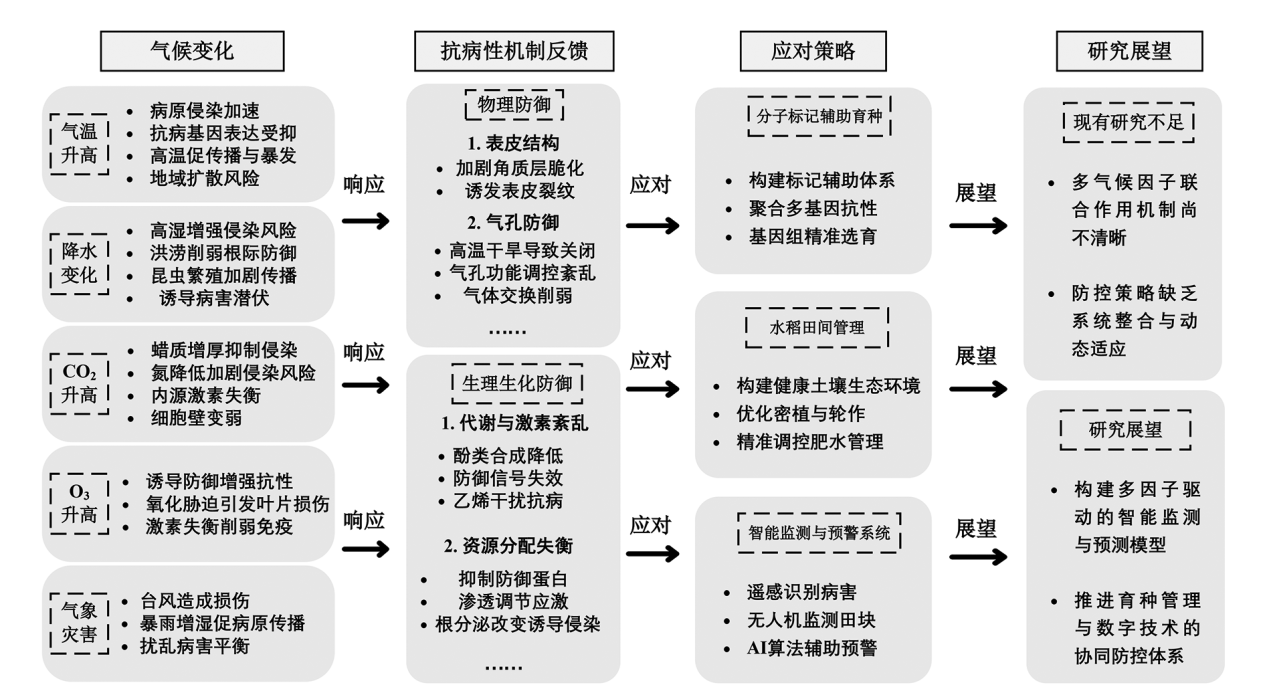
Fig. 1 Flowchart of the climate change on rice diseases, feedback mechanisms of disease resistance, response strategies, and future research directions

Fig. 2 Schematic diagram of the impact of climate change on rice diseases
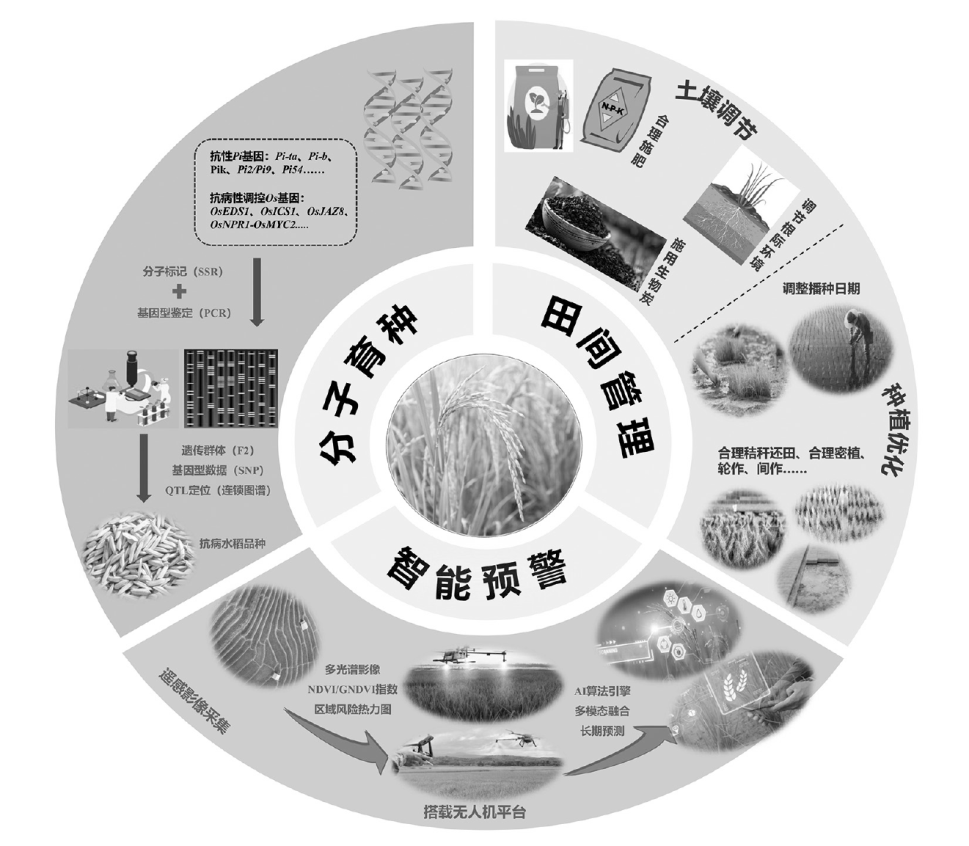
Fig. 3 Schematic diagram of strategies for dealing with rice diseases
| [1] | Ortiz-Bobea A, Ault T R, Carrillo C M, et al. Anthropogenic climate change has slowed global agricultural productivity growth[J]. Nature Climate Change, 2021, 11 (4): 306-312 |
| [2] | 周泽宇, 王君华, 曹颖. 全球适应气候变化行动进展评估及相关工作建议[J]. 气候变化研究进展, 2024, 20 (6): 764-772. |
| Zhou Z Y, Wang J H, Cao Y. Assessment of global climate change adaptation progress and related recommendations[J]. Climate Change Research, 2024, 20 (6): 764-772 (in Chinese) | |
| [3] | Cai S, Zhao X, Pittelkow C M, et al. Optimal nitrogen rate strategy for sustainable rice production in China[J]. Nature, 2023, 615 (7950): 73-79 |
| [4] | Cassman K G, Grassini P. A global perspective on sustainable intensification research[J]. Nature Sustainability, 2020, 3 (4): 262-268 |
| [5] | Jing L, Zhou N, Lai S, et al. Interactions between elevated atmospheric CO2 and temperature on rice yield are highly dependent on growth season temperature[J]. Field Crops Research, 2024, 307: 109270 |
| [6] | Zhang J, Li Y, Yu Z, et al. Elevated atmospheric CO2 and warming enhance the acquisition of soil-derived nitrogen rather than urea fertilizer by rice cultivars[J]. Agricultural and Forest Meteorology, 2022, 324: 109117 |
| [7] | Yuan M, Cai C, Wang X, et al. Warm air temperatures increase photosynthetic acclimation to elevated CO2 concentrations in rice under field conditions[J]. Field Crops Research, 2021, 262: 108036 |
| [8] | Wang W, Yu Z, Zhang W, et al. Responses of rice yield, irrigation water requirement and water use efficiency to climate change in China: historical simulation and future projections[J]. Agricultural Water Management, 2014, 146: 249-261 |
| [9] | Eseola A B, Ryder L S, Osés-Ruiz M, et al. Investigating the cell and developmental biology of plant infection by the rice blast fungus Magnaporthe oryzae[J]. Fungal Genetics and Biology, 2021, 154: 103562 |
| [10] | Savary S, Willocquet L, Pethybridge S J, et al. The global burden of pathogens and pests on major food crops[J]. Nature Ecology & Evolution, 2019, 3 (3): 430-439 |
| [11] | Hunjan M S, Kamboj I, Lore J S, et al. Expression of defense related enzymes in rice near isogenic lines IRBB4 and IRBB7 challenged with Xanthomonas oryzae pv. oryzae at elevated temperature[J]. Indian Phytopathology, 2021, 74 (1): 33-43 |
| [12] | Lee M, Lee S, Park J W, et al. Prevalence of rice stripe virus can be altered by temperature and the virus-mediated development of insect vector, Laodelphax striatellus, in Korea[J]. Journal of Asia-Pacific Entomology, 2017, 20 (4): 1145-1149 |
| [13] | Li C, Yang W, Zhang Y, et al. Investigation and characterization of rice dwarfing epidemic caused by southern rice black-streaked dwarf virus in Jiangsu in 2023[J]. Virology, 2024, 593: 110027 |
| [14] | 姚彦坡, 朱永官, 褚海燕. 加强气候变化背景下植物病原真菌控制技术的创新和突破[J]. 农业环境科学学报, 2024, 43 (3): 473-475. |
| Yao Y P, Zhu Y G, Chu H Y. Strengthen the innovation and breakthrough of plant pathogenic fungi control technology in the context of climate change[J]. Journal of Agro-Environment Science, 2024, 43 (3): 473-475 (in Chinese) | |
| [15] | Pugliese M, Gilardi G, Garibaldi A, et al. The impact of climate change on vegetable crop diseases and their management: the value of phytotron studies for the agricultural industry and associated stakeholders[J]. Phytopathology, 2024, 114 (5): 843-854 |
| [16] | Richard B, Qi A, Fitt B D L. Control of crop diseases through integrated crop management to deliver climate-smart farming systems for low- and high-input crop production[J]. Plant Pathology, 2022, 71 (1): 187-206 |
| [17] | Waheed A, Haxim Y, Islam W, et al. Climate change reshaping plant-fungal interaction[J]. Environmental Research, 2023, 238: 117282 |
| [18] |
Azizi P, Rafii M Y, Abdullah S N A, et al. Toward understanding of rice innate immunity against magnaporthe oryzae[J]. Critical Reviews in Biotechnology, 2016, 36 (1): 165-174
doi: 10.3109/07388551.2014.946883 pmid: 25198435 |
| [19] | 张荣胜, 陈志谊, 刘永锋. 水稻细菌性条斑病菌遗传多样性和致病型分化研究[J]. 中国水稻科学, 2011, 25 (5): 523-528. |
| Zhang R S, Chen Z Y, Liu Y F. Genetic diversity and pathotype variability of xanthomans oryzae pv. oryzicola strains[J]. Chinese Journal of Rice Science, 2011, 25 (5): 523-528 (in Chinese) | |
| [20] | Feng Z, Ding X, Zhang H, et al. Spectroscopic detection of wheat yellow mosaic virus infection based on invariant shape spectral processing and machine learning[J]. Ecological Indicators, 2023, 154: 110750 |
| [21] | Abraham A. Synergistic crop virus disease complexes in Sub-Saharan Africa: causes, consequences and control[J]. Phytoparasitica, 2024, 52 (1): 27 |
| [22] | Pitt W J, Kairy L R, Mora V, et al. Landscapes with higher crop diversity have lower aphid species richness but higher plant virus prevalence[J]. Journal of Applied Ecology, 2024, 61 (7): 1573-1586 |
| [23] |
Fengmin Z, Zhenzhen C, Xin Z, et al. Interaction between ustilaginoidea virens and rice and its sustainable control[J]. Rice Science, 2024, 31 (3): 269-284
doi: 10.1016/j.rsci.2023.11.012 |
| [24] |
Dean R, van Kan J A L, Pretorius Z A, et al. The top 10 fungal pathogens in molecular plant pathology[J]. Molecular Plant Pathology, 2012, 13 (4): 414-30
doi: 10.1111/j.1364-3703.2011.00783.x pmid: 22471698 |
| [25] | Ansari M M, Bisht N, Singh T, et al. Bacillus amyloliquefaciens modulate autophagy pathways to control Rhizoctonia solani infection in rice[J]. Plant Physiology and Biochemistry, 2025, 218: 109317 |
| [26] |
Sunani S K, Koti P S, Sunitha N C, et al. Ustilaginoidea virens, an emerging pathogen of rice: the dynamic interplay between the pathogen virulence strategies and host defense[J]. Planta, 2024, 260 (4): 92
doi: 10.1007/s00425-024-04523-x pmid: 39261328 |
| [27] | Chinnaiah S, Gautam S, Workneh F, et al. First report of Sw-5 resistance-breaking strain of tomato spotted wilt virus (Orthotospovirus tomatomaculae) infecting tomato in Texas[J]. Plant Disease, 2023, 107 (8): 2569 |
| [28] | Yan H, Mi Y, Man Z, et al. First report of leaf spot disease caused by Fusarium asiaticum on Lonicera caerulea L. in Heilongjiang province, China[J]. Plant Disease, 2024 |
| [29] |
Mishra R, Zheng W, Joshi R K, et al. Genome editing strategies towards enhancement of rice disease resistance[J]. Rice Science, 2021, 28 (2): 133-145
doi: 10.1016/j.rsci.2021.01.003 |
| [30] | 张蕾. 气候变化背景下农作物病虫害的变化及区域动态预警研究[D]. 北京: 中国气象科学研究院, 2013. |
| Zhang L. Variation and regional dynamic warning of crop disease and pestsunder climate change[D]. Beijing: Chinese Academy of Meteorological Sciences, 2013 (in Chinese) | |
| [31] | 王丽, 霍治国, 张蕾, 等. 气候变化对中国农作物病害发生的影响[J]. 生态学杂志, 2012, 31 (7): 1673-1684. |
| Wang L, Huo Z G, Zhang L, et al. Effects of climate change on the occurrence of crop diseases in China[J]. Chinese Journal of Ecology, 2012, 31 (7): 1673-1684 (in Chinese) | |
| [32] | 戚海迪, 张定海, 单立山, 等. 昆虫病原真菌感染昆虫宿主的机制和宿主昆虫的防御策略研究进展[J]. 生物多样性, 2023, 31 (11): 226-239. |
| Qi H D, Zhang D H, Shan L S, et al. Advances in the mechanisms of entomopathogenic fungi infecting insect hosts and the defense strategies of insects[J]. Biodiversity Science, 2023, 31 (11): 226-239 (in Chinese) | |
| [33] |
Singh B K, Delgado-Baquerizo M, Egidi E, et al. Climate change impacts on plant pathogens, food security and paths forward[J]. Nature Reviews Microbiology, 2023, 21 (10): 640-656
doi: 10.1038/s41579-023-00900-7 pmid: 37131070 |
| [34] | Joshi M, Hawkins E, Sutton R, et al. Projections of when temperature change will exceed 2℃ above pre-industrial levels[J]. Nature Climate Change, 2011, 1 (8): 407-412 |
| [35] | Agnew D C. A global timekeeping problem postponed by global warming[J]. Nature, 2024, 628 (8007): 333-336 |
| [36] | Matić S, Garibaldi A, Gullino M L. Combined and single effects of elevated CO2 and temperatures on rice bakanae disease under controlled conditions in phytotrons[J]. Plant Pathology, 2021, 70 (4): 815-826 |
| [37] | Du Y, Qi Z, Yu J, et al. Effects of panicle development stage and temperature on rice panicle blast infection by Magnaporthe oryzae and visualization of its infection process[J]. Plant Pathology, 2021, 70 (6): 1436-1444 |
| [38] |
Chen Q, Huang X, Chen X, et al. Reversible activation of XA21-mediated resistance by temperature[J]. European Journal of Plant Pathology, 2019, 153 (4): 1177-1184
doi: 10.1007/s10658-018-01634-6 |
| [39] | 黄乾龙, 李贤勇, 欧阳杰, 等. 高温胁迫对抽穗扬花期水稻丙二醛含量和抗氧化酶活性的影响[J]. 杂交水稻, 2025, 40 (1): 21-26. |
| Huang Q L, Li X Y, Ouyang J, et al. Effects of high temperature stress on the MDA content and antioxidant enzyme activity of rice at heading and flowering stage[J]. Hybrid Rice, 2025, 40 (1): 21-26 (in Chinese) | |
| [40] |
汪胜勇, 陈宇航, 陈会丽, 等. 水稻减数分裂期高温对苯丙烷类代谢及下游分支代谢途径的影响[J]. 中国水稻科学, 2023, 37 (4): 368-378.
doi: 10.16819/j.1001-7216.2023.221112 |
|
Wang S Y, Chen Y H, Chen H L, et al. Effects of high temperature on phenylpropane metabolism and downstream branch metabolic pathways in rice meiosis[J]. Chinese Journal of Rice Science, 2023, 37 (4): 368-378 (in Chinese)
doi: 10.16819/j.1001-7216.2023.221112 |
|
| [41] | Qiu J, Xie J, Chen Y, et al. Warm temperature compromises JA-regulated basal resistance to enhance Magnaporthe oryzae infection in rice[J]. Molecular Plant, 2022, 15 (4): 723-739 |
| [42] | Eastburn D M, McElrone A J, Bilgin D D. Influence of atmospheric and climatic change on plant-pathogen interactions[J]. Plant Pathology, 2011, 60 (1): 54-69 |
| [43] | 江陵杰, 范鹏, 郭柯凡, 等. 水稻冠层温度研究进展[J]. 江苏农业学报, 2020, 36 (1): 234-242. |
| Jiang L J, Fan P, Guo K F, et al. Research progress on the factors affecting canopy temperature of rice[J]. Jiangsu Journal of Agricultural Sciences, 2020, 36 (1): 234-242 (in Chinese) | |
| [44] | Chakraborty S, Newton A C. Climate change, plant diseases and food security: an overview[J]. Plant Pathology, 2011, 60 (1): 2-14 |
| [45] | He D C, Zhan J, Cheng Z B, et al. Viruliferous rate of small brown planthopper is a good indicator of rice stripe disease epidemics[J]. Scientific Reports, 2016, 6 (1): 21376 |
| [46] | Hwang S, Kim D. Effect of temperature on rice stripe virus infection, transmission efficiency, and the development period in laodelphax striatellus[J]. Entomological Research, 2025, 55 (2): e70021 |
| [47] | Jia Q, Lv B, Guo M, et al. Effect of rice growth stage, temperature, relative humidity and wetness duration on infection of rice panicles by Villosiclava virens[J]. European Journal of Plant Pathology, 2015, 141 (1): 15-25 |
| [48] | Song J H, Wang Y, Chen L Y, et al. Higher relative humidity and more moderate temperatures increase the severity of rice false smut disease in the rice-crayfish coculture system[J]. Food and Energy Security, 2022, 11 (1): e323 |
| [49] | 邱虎森, 甄博, 周新国. 高温对水稻根际细菌群落及功能代谢多样性的影响[J]. 灌溉排水学报, 2020, 39 (11): 97-103. |
| Qiu H S, Zhen B, Zhou X G. The effects of thermal stress on diversity of rhizobacteria and functional genes of rice rhizosphere[J]. Journal of Irrigation and Drainage, 2020, 39 (11): 97-103 (in Chinese) | |
| [50] | Jones R A C. Chapter three-future scenarios for plant virus pathogens as climate change progresses[M]//Kielian M, Maramorosch K, Mettenleiter T C. Advances in virus research. Academic Press, 2016: 87-147 |
| [51] | Yamamura K, Yokozawa M. Prediction of a geographical shift in the prevalence of rice stripe virus disease transmitted by the small brown planthopper, Laodelphax striatellus (Fallén) (Hemiptera: Delphacidae), under global warming [J]. Applied Entomology and Zoology, 2002, 37 (1): 181-90 |
| [52] | 赵梦, 欧阳芳, 张永生, 等. 2000—2010年我国水稻病虫害发生与为害特征分析[J]. 生物灾害科学, 2014, 37 (4): 275-280. |
| Zhao M, Ouyang F, Zhang Y S, et al. Characteristics of occurrence and damage from diseases and insect pests in rice production in China during 2000-2010[J]. Biological Disaster Science, 2014, 37 (4): 275-280 (in Chinese) | |
| [53] | 沈建新, 董国堃, 张水妹, 等. 水稻细菌性条斑病发生流行与综防技术[J]. 植物保护, 2002 (1): 33-34. |
| Shen J X, Dong G K, Zhang S M, et al. Epidemic and comprehensive control technology of bacterial stripe spot disease in rice[J]. Plant Protection, 2002 (1): 33-34 (in Chinese) | |
| [54] | Macasero J B M, Castilla N P, Pangga I B, et al. Influence of production situation on the incidence of brown spot of rice (Oryza sativa) caused by Bipolaris oryzae in the Philippines[J]. Plant Pathology, 2024, 73 (2): 390-403 |
| [55] | 陈冰, 陈观浩, 江满桃, 等. 影响南方水稻黑条矮缩病发生流行的因子分析[J]. 植物保护, 2016, 42 (2): 204-208, 24. |
| Chen B, Chen G H, Jiang M T, et al. Factor analysis of epidemic of Southern rice black-streaked dwarf virus[J]. Plant Protection, 2016, 42 (2): 204-208, 24 (in Chinese) | |
| [56] | Naveenkumar R, Anandan A, Singh V, et al. Deciphering environmental factors and defense response of rice genotypes against sheath blight disease[J]. Physiological and Molecular Plant Pathology, 2022, 122: 101916 |
| [57] | 张国, 朱凤, 于居龙, 等. 2020年江苏省稻飞虱虫源地及暴发成因分析[J]. 环境昆虫学报, 2022, 44 (3): 658-669. |
| Zhang G, Zhu F, Yu J Y, et al. Source areas and outbreak reasons of rice planthoppers in Jiangsu province, 2020[J]. Journal of Environmental Entomology, 2022, 44 (3): 658-669 (in Chinese) | |
| [58] |
颜松毅, 陈冰, 陈蔚烨, 等. 粤西地区南方水稻黑条矮缩病的流行规律及防治[J]. 农学学报, 2017, 7 (10): 14-18.
doi: 10.11923/j.issn.2095-4050.cjas17050003 |
|
Yan S Y, Chen B, Chen W Y, et al. Southern rice black-streaked dwarf disease: the epidemic law and control in western Guangdong[J]. Journal of Agriculture, 2017, 7 (10): 14-18 (in Chinese)
doi: 10.11923/j.issn.2095-4050.cjas17050003 |
|
| [59] |
Bailey-Serres J, Fukao T, Gibbs D J, et al. Making sense of low oxygen sensing[J]. Trends in Plant Science, 2012, 17 (3): 129-138
doi: 10.1016/j.tplants.2011.12.004 pmid: 22280796 |
| [60] | Li P, Tedersoo L, Crowther T W, et al. Fossil-fuel-dependent scenarios could lead to a significant decline of global plant-beneficial bacteria abundance in soils by 2100[J]. Nature Food, 2023, 4 (11): 996-1006 |
| [61] | Martínez-Arias C, Witzell J, Solla A, et al. Beneficial and pathogenic plant-microbe interactions during flooding stress[J]. Plant, Cell & Environment, 2022, 45 (10): 2875-2897 |
| [62] | Huang X Q, Wen T, Zhang J B, et al. Control of soil-borne pathogen Fusarium oxysporum by biological soil disinfestation with incorporation of various organic matters[J]. European Journal of Plant Pathology, 2015, 143 (2): 223-235 |
| [63] | Mohiddin F A, Majid R, Bhat A H, et al. Molecular phylogeny, pathogenic variability and phytohormone production of Fusarium species associated with bakanae disease of rice in temperate agro-ecosystems[J]. Molecular Biology Reports, 2021, 48 (4): 3173-3184 |
| [64] |
Mendes R, Garbeva P, Raaijmakers J M. The rhizosphere microbiome: significance of plant beneficial, plant pathogenic, and human pathogenic microorganisms[J]. FEMS Microbiology Reviews, 2013, 37 (5): 634-643
doi: 10.1111/1574-6976.12028 pmid: 23790204 |
| [65] | Raaijmakers J M, Paulitz T C, Steinberg C, et al. The rhizosphere: a playground and battlefield for soilborne pathogens and beneficial microorganisms[J]. Plant and Soil, 2009, 321 (1): 341-361 |
| [66] |
Fang Y, Xiong L. General mechanisms of drought response and their application in drought resistance improvement in plants[J]. Cellular and Molecular Life Sciences, 2015, 72 (4): 673-689
doi: 10.1007/s00018-014-1767-0 pmid: 25336153 |
| [67] | 朱书生, 黄惠川, 刘屹湘, 等. 农业生物多样性防控作物病害的研究进展[J]. 植物保护学报, 2022, 49 (1): 42-57. |
| Zhu S S, Huang H C, Liu Y X, et al. Research advances in agrobiodiversity for crop disease management[J]. Journal of Plant Protection, 2022, 49 (1): 42-57 (in Chinese) | |
| [68] | Sturrock R N, Frankel S J, Brown A V, et al. Climate change and forest diseases[J]. Plant Pathology, 2011, 60 (1): 133-149 |
| [69] | Thomson L J, Macfadyen S, Hoffmann A A. Predicting the effects of climate change on natural enemies of agricultural pests[J]. Biological Control, 2010, 52 (3): 296-306 |
| [70] | IPCC. Climate change 2021: The physical science basis[M]. Cambridge: Cambridge University Press, 2021 |
| [71] | Roy S, Kapoor R, Mathur P. Revisiting changes in growth, physiology and stress responses of plants under the effect of enhanced CO2 and temperature[J]. Plant and Cell Physiology, 2024, 65 (1): 4-19 |
| [72] | Dorneles K R, Refatti J P, Pazdiora P C, et al. Biochemical defenses of rice against Bipolaris oryzae increase with high atmospheric concentration of CO2[J]. Physiological and Molecular Plant Pathology, 2020, 110: 101484 |
| [73] |
Chen X, Ma J, Wang X, et al. Functional modulation of an aquaporin to intensify photosynthesis and abrogate bacterial virulence in rice[J]. The Plant Journal, 2021, 108 (2): 330-346
doi: 10.1111/tpj.15427 pmid: 34273211 |
| [74] | Kumar U, Quick W P, Barrios M, et al. Atmospheric CO2concentration effects on rice water use and biomass production[J]. PLOS One, 2017, 12 (2): e0169706 |
| [75] | Ye Z P, He J Q, An T, et al. Influences of residual stomatal conductance on the intrinsic water use efficiency of two C3 and two C4 species[J]. Agricultural Water Management, 2024, 306: 109136 |
| [76] | 崔景会, 王怡丹, 齐秀芬, 等. 水分胁迫和高浓度CO2处理下水稻幼苗光合生理响应特征[J]. 生态学杂志, 2023, 42 (6): 1381-1388. |
| Cui J H, Wang Y D, Qi X F, et al. Photosynthetic physiological response of rice seedlings to waterstress and high CO2 concentration[J]. Chinese Journal of Ecology, 2023, 42 (6): 1381-1388 (in Chinese) | |
| [77] |
Kobayashi T, Ishiguro K, Nakajima T, et al. Effects of elevated atmospheric CO2 concentration on the infection of rice blast and sheath blight[J]. Phytopathology, 2006, 96 (4): 425-431
doi: 10.1094/PHYTO-96-0425 pmid: 18943425 |
| [78] | Goria M M, Ghini R, Bettiol W. Elevated atmospheric CO2concentration increases rice blast severity[J]. Tropical Plant Pathology, 2013, 38 (3): 253-257 |
| [79] | 唐美玲, 肖谋良, 袁红朝, 等. CO2倍增条件下不同生育期水稻碳氮磷含量及其计量比特征[J]. 环境科学, 2018, 39 (12): 5708-5716. |
| Tang M L, Xiao M L, Yuan H C, et al. Effect of CO2 doubling and different plant growth stages on rice carbon, nitrogen, and phosphorus and their stoichiometric ratios[J]. Environmental Science, 2018, 39 (12): 5708-5716 (in Chinese) | |
| [80] | 张立极, 潘根兴, 张旭辉, 等. 大气CO2浓度和温度升高对水稻植株碳氮吸收及分配的影响[J]. 土壤, 2015, 47 (1): 26-32. |
| Zhang L J, Pan G X, Zhang X H, et al. Effect of experimental CO2enrichment and warming on uptake and distribution of C and N in rice plant[J]. Soils, 2015, 47 (1): 26-32 (in Chinese) | |
| [81] | Dwivedi S K, Kumar S, Mishra J S, et al. Interactive effect of elevated [CO2] and temperature on the photosynthetic process, anti-oxidative properties, and grain yield of rice[J]. Journal of Agronomy and Crop Science, 2022, 208 (3): 384-393 |
| [82] |
da Rosa Dorneles K, Martins A C, Fernando J A, et al. Increased atmospheric CO2 concentration causes modification of physiological, biochemical and histological characteristics that affects rice-Bipolaris oryzae interaction[J]. European Journal of Plant Pathology, 2020, 157 (1): 29-38
doi: 10.1007/s10658-020-01972-4 |
| [83] | Roy S, Mathur P. Delineating the mechanisms of elevated CO2mediated growth, stress tolerance and phytohormonal regulation in plants[J]. Plant Cell Reports, 2021, 40 (8): 1345-1365 |
| [84] | 卢培利, 杨涵, 丁阿强, 等. 碳源与氮源限制下细菌代谢调节研究进展[J]. 微生物学报, 2023, 63 (3): 946-962. |
| Lu P L, Yang H, Ding A Q, et al. Metabolic regulation of bacteria with limited carbon and nitrogen sources[J]. Acta Microbiologica Sinica, 2023, 63 (3): 946-962 (in Chinese) | |
| [85] |
陈宏艳, 李小二, 李忠光. 糖信号及其在植物响应逆境胁迫中的作用[J]. 生物技术通报, 2022, 38 (7): 80-89.
doi: 10.13560/j.cnki.biotech.bull.1985.2021-1289 |
| Chen H Y, Li X E, Li Z G. Sugar signaling and its role in plant response to environmental stress[J]. Biotechnology Bulletin, 2022, 38 (7): 80-89 (in Chinese) | |
| [86] | Wu X, Ding C, Baerson S R, et al. The roles of jasmonate signalling in nitrogen uptake and allocation in rice (Oryza sativa L.)[J]. Plant, Cell & Environment, 2019, 42 (2): 659-672 |
| [87] | Li X K, Huang Y H, Zhao R, et al. Membrane protein MHZ3 regulates the on-off switch of ethylene signaling in rice[J]. Nature Communications, 2024, 15 (1): 5987 |
| [88] | Cao S, Wang Y, Gao Y, et al. The RLCK-VND6 module coordinates secondary cell wall formation and adaptive growth in rice[J]. Molecular Plant, 2023, 16 (6): 999-1015 |
| [89] |
Ellsworth P V, Ellsworth P Z, Koteyeva N K, et al. Cell wall properties in Oryza sativa influence mesophyll CO2 conductance[J]. New Phytologist, 2018, 219 (1): 66-76
doi: 10.1111/nph.15173 pmid: 29676468 |
| [90] | 胡安琪, 谢晓栋, 龚康佳, 等. 气候变化对中国夏季臭氧影响[J]. 环境科学, 2023, 44 (4): 1801-1810. |
| Hu A Q, Xie X D, Gong K J, et al. Impact of climate change on summer ozone in China[J]. Environmental Science, 2023, 44 (4): 1801-1810 (in Chinese) | |
| [91] |
Barnes P W, Williamson C E, Lucas R M, et al. Ozone depletion, ultraviolet radiation, climate change and prospects for a sustainable future[J]. Nature Sustainability, 2019, 2 (7): 569-579
doi: 10.1038/s41893-019-0314-2 |
| [92] | Fu T M, Tian H. Climate change penalty to ozone air quality: review of current understandings and knowledge gaps[J]. Current Pollution Reports, 2019, 5 (3): 159-171 |
| [93] | 王志彬, 傅杨, 乔晓军, 等. 臭氧植保机在设施蔬菜苗期病害防治中的应用研究[J]. 中国农机化学报, 2023, 44 (7): 55-62. |
|
Wang Z B, Fu Y, Qiao X J, et al. Application of ozone sterilizer devices for controlling vegetable diseases during seeding stages in greenhouse[J]. Journal of Chinese Agricultural Mechanization, 2023, 44 (7): 55-62 (in Chinese)
doi: 10.13733/j.jcam.issn.2095-5553.2023.07.008 |
|
| [94] | Wilkinson S, Davies W J. Drought, ozone, ABA and ethylene: new insights from cell to plant to community[J]. Plant, Cell & Environment, 2010, 33 (4): 510-525 |
| [95] | 常浩, 姬明飞, 牟明, 等. 臭氧对水稻恶苗病菌的抑制作用[J]. 安徽农业科学, 2016, 44 (35): 157-158, 201. |
| Chang H, Ji M F, Mou M, et al. Inhibition effect of ozone on fusarium moniliforme[J]. Journal of Anhui Agricultural Sciences, 2016, 44 (35): 157-158, 201 (in Chinese) | |
| [96] | 姚洪军, 于深州, 付立东, 等. 臭氧功能水对水稻病害的防治效果及产量影响[J]. 北方水稻, 2017, 47 (4): 9-11. |
| Yao H J, Yu S Z, Fu L D, et al. Effects of ozone water on rice diseases and yield[J]. Northern Rice, 2017, 47 (4): 9-11 (in Chinese) | |
| [97] | 列淦文, 叶龙华, 薛立. 臭氧胁迫对植物主要生理功能的影响[J]. 生态学报, 2014, 34 (2): 294-306. |
| Lie G W, Ye L H, Xue L. Effects of ozone stress on major plant physiological functions[J]. Acta Ecologica Sinica, 2014, 34 (2): 294-306 (in Chinese) | |
| [98] |
Wedow J M, Ainsworth E A, Li S. Plant biochemistry influences tropospheric ozone formation, destruction, deposition, and response[J]. Trends in Biochemical Sciences, 2021, 46 (12): 992-1002
doi: 10.1016/j.tibs.2021.06.007 pmid: 34303585 |
| [99] | Alam M S, Maina A W, Feng Y, et al. Interactive effects of tropospheric ozone and blast disease (Magnaporthe oryzae) on different rice genotypes[J]. Environmental Science and Pollution Research, 2022, 29 (32): 48893-48907 |
| [100] |
Krupa S, McGrath M T, Andersen C P, et al. Ambient ozone and plant health[J]. Plant Disease, 2001, 85 (1): 4-12
doi: 10.1094/PDIS.2001.85.1.4 pmid: 30832068 |
| [101] | 何龙鑫, 徐彦森, 冯兆忠, 等. 不同水稻品种光合特性及叶绿素对臭氧浓度升高的响应差异[J]. 农业环境科学学报, 2023, 42 (4): 715-723. |
| He L X, Xu Y S, Feng Z Z, et al. Different responses to elevated ozone among cultivars in the photosynthetic characteristics and chlorophyll of rice[J]. Journal of Agro-Environment Science, 2023, 42 (4): 715-723 (in Chinese) | |
| [102] |
Frei M. Breeding of ozone resistant rice: relevance, approaches and challenges[J]. Environmental Pollution, 2015, 197: 144-155
doi: S0269-7491(14)00511-9 pmid: 25528448 |
| [103] |
Merilo E, Laanemets K, Hu H, et al. PYR/RCAR receptors contribute to ozone-, reduced air humidity-, darkness-, and CO2-induced stomatal regulation[J]. Plant Physiology, 2013, 162 (3): 1652-1668
doi: 10.1104/pp.113.220608 pmid: 23703845 |
| [104] | 郭洪刚, 王世藩, 戈峰. 植物激素信号调控的“植物病毒-植物-媒介昆虫”三者互作对温室气体变化的响应[J]. 中国科学:生命科学, 2017, 47 (9): 928-935. |
| Guo H G, Wang S P, Ge F. Effect of elevated CO2 and O3 on phytohormone-mediated plant resistance to vector insects and insect-borne plant viruses[J]. Scientia Sinica (Vitae), 2017, 47 (9): 928-935 (in Chinese) | |
| [105] | 鲍歆歆, 周伟奇, 郑重, 等. 城市植物挥发性有机化合物排放与臭氧相互作用及其机制[J]. 生态学报, 2023, 43 (5): 1749-1762. |
| Bao X X, Zhou W Q, Zheng Z, et al. The interactions and mechanisms between biogenic volatile organic compounds emissions and ozone concentrations in urban areas: a review[J]. Acta Ecologica Sinica, 2023, 43 (5): 1749-1762 (in Chinese) | |
| [106] | 冯兆忠, 袁相洋. 臭氧浓度升高对植物源挥发性有机化合物 (BVOCs) 影响的研究进展[J]. 环境科学, 2018, 39 (11): 5257-5265. |
| Feng Z Z, Yuan X Y. Effects of elevated ozone on Biogenic Volatile Organic Compounds (BVOCs) emission: a review[J]. Environmental Science, 2018, 39 (11): 5257-5265 (in Chinese) | |
| [107] |
Helliwell E E, Wang Q, Yang Y. Ethylene biosynthesis and signaling is required for rice immune response and basal resistance against magnaporthe oryzae infection[J]. Molecular Plant-Microbe Interactions, 2016, 29 (11): 831-843
pmid: 27671120 |
| [108] | 葛少彬, 刘敏, 骆世明, 等. 硅和稻瘟病菌接种对水稻植株有机酸含量的影响[J]. 生态学杂志, 2014, 33 (11): 3002-3009. |
| Ge S B, Liu M, Luo S M, et al. Influence of silicon application and Magnaporthe oryzae infection on organic acids contents in rice plants[J]. Chinese Journal of Ecology, 2014, 33 (11): 3002-3009 (in Chinese) | |
| [109] | 刘明津, 汪文娟, 冯爱卿, 等. 稻瘟病综合防控技术研究进展[J]. 西北农业学报, 2020, 29 (9): 1285-1294. |
| Liu M J, Wang W J, Feng A Q, et al. Advance of integrated control technology of rice blast[J]. Acta Agriculturae Boreali-occidentalis Sinica, 2020, 29 (9): 1285-1294 (in Chinese) | |
| [110] |
Patharkar O R, Walker J C. Connections between abscission, dehiscence, pathogen defense, drought tolerance, and senescence[J]. Plant Science, 2019, 284: 25-29
doi: S0168-9452(18)31020-3 pmid: 31084875 |
| [111] | Ye T, Wang H, An C, et al. An expanded cysteine-rich receptor-like kinase gene cluster functionally differentiates in drought, cold, heat, and pathogen stress responses in rice[J]. Plant Biotechnology Journal, 2024, 22 (10): 2672-2674 |
| [112] | Meher J, Lenka S, Keerthana U, et al. Intermittent drought adversely impacts monogenic resistance of rice to the blast pathogen Magnaporthe oryzae and is associated with alteration in histone acetylation[J]. Plant and Soil, 2025, 509 (1): 649-669 |
| [113] |
韦还和, 马唯一, 左博源, 等. 盐、干旱及其复合胁迫对水稻产量和品质形成影响的研究进展[J]. 中国水稻科学, 2024, 38 (4): 350-363.
doi: 10.16819/j.1001-7216.2024.240205 |
|
Wei H H, Ma W Y, Zuo B Y, et al. Research progress in the effect of salinity, drought, and their combined stresses on rice yield and quality formation[J]. Chinese Journal of Rice Science, 2024, 38 (4): 350-363 (in Chinese)
doi: 10.16819/j.1001-7216.2024.240205 |
|
| [114] | 张启辉, 李晓曼, 龙希洋, 等. 植物角质蜡质代谢及抗病机制研究[J]. 浙江农林大学学报, 2020, 37 (6): 1207-1215. |
| Zhang Q H, Li X M, Long X Y, et al. Metabolism of the cutin and wax of plants and their diseaseresistance mechanisms[J]. Journal of Zhejiang A&F University, 2020, 37 (6): 1207-1215 (in Chinese) | |
| [115] | 王莎, 贺勇, 罗光宇, 等. OsWR2-RNAi对水稻角质层生物合成和耐旱性的影响[J]. 作物学报, 2017, 43 (3): 315-323. |
| Wang S, He Y, Luo G Y, et al. Influence of OsWR2-RNAi on rice cuticle biosynthesis and drought resistance[J]. Acta Agronomica Sinica, 2017, 43 (3): 315-323 (in Chinese) | |
| [116] | 周玲艳, 姜大刚, 李静, 等. 逆境处理下水稻叶角质层蜡质积累及其与蜡质合成相关基因OsGL1表达的关系[J]. 作物学报, 2012, 38 (6): 1115-1120. |
| Zhou L Y, Jiang D G, Li J, et al. Effect of stresses on leaf cuticular wax accumulation and its relationship to expression of OsGL1-homologous genes in rice[J]. Acta Agronomica Sinica, 2012, 38 (6): 1115-1120 (in Chinese) | |
| [117] |
郭展, 张运波. 水稻对干旱胁迫的生理生化响应及分子调控研究进展[J]. 中国水稻科学, 2024, 38 (4): 335-349.
doi: 10.16819/j.1001-7216.2024.230410 |
|
Guo Z, Zhang Y B. Research progress in physiological, biochemical responses of rice to drought stress and its molecular regulation[J]. Chinese Journal of Rice Science, 2024, 38 (4): 335-349 (in Chinese)
doi: 10.16819/j.1001-7216.2024.230410 |
|
| [118] | Tang M, Ning Y, Shu X, et al. The Nup98 homolog APIP12 targeted by the effector avrPiz-t is involved in rice basal resistance against magnaporthe oryzae[J]. Rice, 2017, 10 (1): 5 |
| [119] | Pitaloka M K, Harrison E L, Hepworth C, et al. Rice stomatal mega-papillae restrict water loss and pathogen entry[J]. Frontiers in Plant Science, 2021, 12: 677839-677839 |
| [120] | Liu J, Lefevere H, Coussement L, et al. The phenylalanine ammonia-lyase inhibitor AIP induces rice defence against the root-knot nematode Meloidogyne graminicola[J]. Molecular Plant Pathology, 2024, 25 (1): e13424 |
| [121] | Ahmad S, Jeridi M, Siddiqui S, et al. Genome-wide identification, characterization, and expression analysis of the chalcone synthase gene family in oryza sativa under abiotic stresses[J]. Plant Stress, 2023, 9: 100201 |
| [122] | Xu G, Zhong X, Shi Y, et al. A fungal effector targets a heat shock-dynamin protein complex to modulate mitochondrial dynamics and reduce plant immunity[J]. Science Advances, 6 (48): eabb7719 |
| [123] | Madhusudhan P, Sinha P, Rajput L S, et al. Effect of temperature on Pi54-mediated leaf blast resistance in rice[J]. World Journal of Microbiology and Biotechnology, 2019, 35 (10): 148 |
| [124] |
姚姝, 陈涛, 张亚东, 等. 利用分子标记辅助选择聚合水稻Pi-ta、Pi-b和Wx-mq基因[J]. 作物学报, 2017, 43 (11): 1622-1631.
doi: 10.3724/SP.J.1006.2017.01622 |
| Yao S, Chen T, Zhang Y D, et al. Pyramiding Pi-ta, Pi-b, and Wx-mq genes by marker-assisted selection in rice (Oryza sativa L.)[J]. Acta Agronomica Sinica, 2017, 43 (11): 1622-1631 (in Chinese) | |
| [125] | Zhao D D, Chung H, Jang Y H, et al. Analysis of rice blast fungus genetic diversity and identification of a novel blast resistance OsDRq12 gene[J]. Phytopathology, 2024, 114 (8): 1917-1925 |
| [126] |
Balija V, Bangale U, Ponnuvel S, et al. Improvement of upland rice variety by pyramiding drought tolerance QTL with two major blast resistance genes for sustainable rice production[J]. Rice Science, 2021, 28 (5): 493-500
doi: 10.1016/j.rsci.2021.07.009 |
| [127] |
Ye H, Hou Q, Lv H, et al. D53 represses rice blast resistance by directly targeting phenylalanine ammonia lyases[J]. Journal of Integrative Plant Biology, 2024, 66 (9): 1827-1830
doi: 10.1111/jipb.13734 |
| [128] |
Wu Y, Xu W, Zhao G, et al. A canonical protein complex controls immune homeostasis and multipathogen resistance[J]. Science, 2024, 386 (6728): 1405-1412
doi: 10.1126/science.adr2138 pmid: 39509474 |
| [129] | Incarbone M, Bradamante G, Pruckner F, et al. Salicylic acid and RNA interference mediate antiviral immunity of plant stem cells[J]. Proceedings of the National Academy of Sciences, 2023, 120 (42): e2302069120 |
| [130] |
Ma X, Du M, Liu P, et al. Alternation of soil bacterial and fungal communities by tomato-rice rotation in Hainan Island in Southeast of China[J]. Archives of Microbiology, 2021, 203 (3): 913-925
doi: 10.1007/s00203-020-02086-5 pmid: 33078269 |
| [131] | Nannipieri P, Ascher J, Ceccherini M T, et al. Microbial diversity and soil functions[J]. European Journal of Soil Science, 2003, 54 (4): 655-670 |
| [132] | Yang Y, Tang Z, Gao A, et al. Silicon-enriched rice straw biochar and silicon fertilizer mitigate rice straighthead disease by reducing dimethylarsinic acid accumulation[J/OL]. Plant and Soil, 2025 [2025-04-22]. DOI: 10.1007/s11104-025-07478-4 |
| [133] |
李烨锋, 周兵, 朱练峰, 等. 氮肥减量配施硅肥对水稻产量及病虫害防控的影响[J]. 中国稻米, 2020, 26 (3): 76-80.
doi: 10.3969/j.issn.1006-8082.2020.03.019 |
|
Li Y F, Zhou B, Zhu L F, et al. Effects of reduce nitrogen fertilizer combined with silicon fertilizer on grain yield and pests and diseases of rice[J]. China Rice, 2020, 26 (3): 76-80 (in Chinese)
doi: 10.3969/j.issn.1006-8082.2020.03.019 |
|
| [134] | 吴天琦, 李保同, 刘浪, 等. 氮肥运筹对江西省双季稻主要病虫害发生及产量的影响[J]. 江西农业大学学报, 2020, 42 (6): 1087-1098. |
| Wu T Q, Li B T, Liu L, et al. Effects of nitrogen fertilizer operation on occurrence of major diseases and insects in double cropping rice and its yield in Jiangxi province[J]. Acta Agriculturae Universitatis Jiangxiensis, 2020, 42 (6): 1087-1098 (in Chinese) | |
| [135] |
Jamali H, Sharma A, Roohi, et al. Biocontrol potential of Bacillus subtilis RH5 against sheath blight of rice caused by Rhizoctonia solani[J]. Journal of Basic Microbiology, 2020, 60 (3): 268-280
doi: 10.1002/jobm.201900347 pmid: 31851769 |
| [136] | Qi Z, Yu J, Shen L, et al. Enhanced resistance to rice blast and sheath blight in rice (oryza sativa L.) by expressing the oxalate decarboxylase protein Bacisubin from Bacillus subtilis[J]. Plant Science, 2017, 265: 51-60 |
| [137] | Mirara F, Kwadjo D D, Mwangi M. Bacillus amyloliquefaciens D203 ameliorates rice growth and resistance to rice blast disease[J]. Cogent Food & Agriculture, 2024, 10 (1): 2371943 |
| [138] | Prabhukarthikeyan S R, Yadav M K, Anandan A, et al. Bio-protection of brown spot disease of rice and insight into the molecular basis of interaction between Oryza sativa, Bipolaris oryzae and Bacillus amyloliquefaciens[J]. Biological Control, 2019, 137: 104018 |
| [139] | Zhu J L, Zhu Z R, Zhou Y, et al. Effect of rice sowing date on occurrence of small brown planthopper and epidemics of planthopper-transmitted rice stripe viral disease[J]. Agricultural Sciences in China, 2009, 8 (3): 332-341 |
| [140] | Miao Liu J, Mei Q, Yun Xue C, et al. Mutation of G-protein γ subunit DEP1 increases planting density and resistance to sheath blight disease in rice[J]. Plant Biotechnology Journal, 2021, 19 (3): 418-420 |
| [141] | Sun Q, Li T Y, Li D D, et al. Overexpression of loose plant architecture 1 increases planting density and resistance to sheath blight disease via activation of PIN-FORMED 1 a in rice[J]. Plant Biotechnology Journal, 2019, 17 (5): 855-857 |
| [142] | 马军韬, 张国民, 王永力, 等. 翻耕深度对水稻稻瘟病和纹枯病发生程度的影响[J]. 中国植保导刊, 2024, 44 (11): 51-54, 70. |
| Ma J T, Zhang G M, Wang Y L, et al. Effect of tillage depth on the incidence of rice blast and rice sheath blight[J]. China Plant Protection, 2024, 44 (11): 51-54, 70 (in Chinese) | |
| [143] | Sekiya N, Nakajima T, Oizumi N, et al. Agronomic practices preventing local outbreaks of rice yellow mottle virus disease revealed by spatial autoregressive analysis[J]. Agronomy for Sustainable Development, 2022, 42 (2): 15 |
| [144] | Han Z, Zhang Y, Di C, et al. Application of rice straw inhibits clubroot disease by regulating the microbial community in soil[J]. Microorganisms, 2024, 12 (4): 717 |
| [145] | Anam I, Arafat N, Hafiz M S, et al. A systematic review of UAV and AI integration for targeted disease detection, weed management, and pest control in precision agriculture[J]. Smart Agricultural Technology, 2024, 9: 100647 |
| [146] | Bai X, Fang H, He Y, et al. Dynamic UAV phenotyping for rice disease resistance analysis based on multisource data[J]. Plant Phenomics, 2023, 5: 0019 |
| [147] |
Li G M, Zhao D X, Li J P, et al. Unmanned aerial vehicle hierarchical detection of leaf blast in rice crops based on a specific spectral vegetation index[J]. Frontiers of Agricultural Science and Engineering, 2025, 12 (2): 231-244
doi: 10.15302/J-FASE-2024576 |
| [148] | Gu C, Cheng T, Cai N, et al. Assessing narrow brown leaf spot severity and fungicide efficacy in rice using low altitude UAV imaging[J]. Ecological Informatics, 2023, 77: 102208 |
| [149] | 谢亚平, 仝晓刚, 王晓慧. 基于高光谱的水稻稻曲病早期监测研究[J]. 农业机械学报, 2023, 54 (9): 288-296. |
| Xie Y P, Tong X G, Wang X H. Early monitoring of rice koji disease based on hyperspectroscop[J]. Transactions of the Chinese Society for Agricultural Machinery, 2023, 54 (9): 288-296 (in Chinese) | |
| [150] | Chakrabarty A, Ahmed S T, Islam M F U, et al. An interpretable fusion model integrating lightweight CNN and transformer architectures for rice leaf disease identification[J]. Ecological Informatics, 2024, 82: 102718 |
| [151] | Ramadan S T Y, Islam M S, Sakib T, et al. Image-based rice leaf disease detection using CNN and generative adversarial network[J]. Neural Computing and Applications, 2025, 37 (1): 439-456 |
| [152] | Yu H, Li X, Yu Y, et al. A dual-branch multimodal model for early detection of rice sheath blight: fusing spectral and physiological signatures[J]. Computers and Electronics in Agriculture, 2025, 231: 110031 |
| [1] | HU Jin-Peng, HE Yan, SHI Pei-Jun. Research progress and prospects on the impacts of compound hot and dry events on wheat yield [J]. Climate Change Research, 2025, 21(5): 625-640. |
| [2] | ZHANG Xin-Yue, LI Kuo, ZHAO Ming-Yue, XU Yin-Long. Review and prospect of agricultural adaptive capacity building to climate change in China [J]. Climate Change Research, 2025, 21(5): 613-624. |
| [3] | FAN Xing, LIANG Qi-Di, WU Cheng-Lin, GAO Xiang. Stocktaking on the Baku Climate Change Conference and perspectives on global climate governance [J]. Climate Change Research, 2025, 21(4): 583-592. |
| [4] | SUN Ruo-Shui, LIANG Mei-Cong. From Paris to Belém: progress and forecast at the decennial of Paris Agreement [J]. Climate Change Research, 2025, 21(4): 574-582. |
| [5] | TAN Xian-Chun, CHENG Yong-Long, YAN Hong-Shuo, XING Xiu-Cheng, ZHU Kai-Wei, WANG Chen-Xu. Interpretation and implications of the summary on climate change mitigation in the IPCC Seventh Assessment Report Working Group III [J]. Climate Change Research, 2025, 21(4): 494-501. |
| [6] | CHEN Xian-Yao, BI Han-Wen, HAO Xiao-Jie, MA Tian-Jiao, GUO Ling-Rui. Variability of the Atlantic Meridional Overturning Circulation and its impact on global climate change [J]. Climate Change Research, 2025, 21(4): 469-476. |
| [7] | ZHU Song-Li. The evolution of country classification under UNFCCC system [J]. Climate Change Research, 2025, 21(4): 565-573. |
| [8] | DING Jie, CAO Zuo-Nan, HU Guo-Zheng, HASBAGAN Ganjurjav, ZHAO Fen, WANG Hai-Feng, GAO Qing-Zhu. Climate change impacts, adaptation and vulnerability and implications in Working Group II of the IPCC Seventh Assessment Report [J]. Climate Change Research, 2025, 21(4): 484-493. |
| [9] | WANG Bo-Wen, HE Yi, TENG Fei. Attribution and assessment of direct and indirect economic losses from extreme weather events in China [J]. Climate Change Research, 2025, 21(4): 502-518. |
| [10] | CUI Peng, WANG Yan, ZHANG Guo-Tao, ZHANG Zheng-Tao, LEI Yu, WANG Hao, WANG Jiao, HAO Jian-Sheng, ZHU Hong. Disaster risk prevention under climate change: current status, challenges, and scientific issues [J]. Climate Change Research, 2025, 21(4): 449-460. |
| [11] | JIANG Ke-Jun. Role of Integrated Assessment Model in global response to climate change and its future research transition [J]. Climate Change Research, 2025, 21(4): 461-468. |
| [12] | CHEN Si-Da, LIU Kai, LI Bo-Hao, WANG Ming. The analysis of record-breaking probability of extreme weather in China’s poverty-alleviated counties [J]. Climate Change Research, 2025, 21(3): 327-339. |
| [13] | ZHANG Qin, ZHANG Li-Ping, LI Yi, LIU Li-Na, SHE Dun-Xian, ZHOU Zhi-Ling, YUAN Zhe. Research progress on uncertainty quantification and constraint methods for climate and hydrological projections [J]. Climate Change Research, 2025, 21(3): 317-326. |
| [14] | LI Hui-Hui, QI Ming, SUN Ren-Jin. International practices and Chinese path of climate transition finance standards [J]. Climate Change Research, 2025, 21(3): 428-439. |
| [15] | SHI Ying, XU Ying, CHAO Qing-Chen, ZHANG Meng-Ran, HAN Zhen-Yu, WANG Rong. Climate change projection over the west route of the South-to-North Water Transfer Project based on CMIP6 global climate models [J]. Climate Change Research, 2025, 21(3): 340-352. |
| Viewed | ||||||
|
Full text |
|
|||||
|
Abstract |
|
|||||