

引言
复合干热事件是最典型、最常见的一类复合型极端事件,耦合了对农作物生长发育影响最大的两个风险源——干旱和高温,且不成比例地放大了二者的负面影响。极端干旱与高温的共同作用会显著降低粮食作物产量,严重威胁区域及全球粮食安全。研究表明,干旱和高温可导致国家尺度的粮食产量显著降低9%~10%[7],当高温和干旱同时发生时,干热胁迫组合产生的负面协同效应对作物产量造成更严重的影响[8-
小麦作为全球主粮作物之一,其种植分布广泛,是人类饮食中不可或缺的热量和蛋白质来源,为全球约40亿人提供了重要的食物来源[15]。然而,全球大多数小麦产区都面临着气候变化带来的压力。大量研究证明干旱和高温在空间和时间上越来越多地同时发生,中国、欧洲、美国等主产区复合干热事件显著增加,对小麦生产造成严重影响,小麦对复合干热事件表现出显著的脆弱性[16]。随着气候继续变暖,全球小麦生产面临的复合干热事件频率和强度将显著增加,预计超过90%的小麦产区将受到影响[17-
1 小麦主产区复合干热事件的时空格局
复合干热事件对自然环境系统和人类社会产生了深远影响。已有大量研究在多种时空尺度探究了复合干热事件的变化特征,包括空间范围、频率、持续时间和强度等方面。多数研究结果表明随着全球气候变化,大部分小麦主产区的复合干热事件显著增加,并预计随着全球变暖进一步加剧。
1.1 复合干热事件的定义及指标构建
复合干热事件是由干旱和高温等极端气候因素同时或接连发生并相互作用、显著放大二者负面影响的复合极端事件,严重威胁农业生产,尤其是小麦等农作物的产量。尽管近年来有关研究日益增加,但对不同时空尺度的统一定义和表示方法尚未达成共识。
IPCC极端事件特别报告(SREX)[20]首次提出“复合极端事件”的概念,并将其定义为3种形式:(1)两种或更多极端事件同时或接连发生;(2)极端事件与放大事件影响的潜在条件组合;(3)本身非极端但与其他事件组合时可能导致极端效应的情况。IPCC第六次评估报告(AR6)和Zscheischler等[21]进一步扩展了该定义,强调多气候因子组合的多尺度特征,涵盖天气过程和气候变量。在灾害风险领域,史培军等[22]提出了“灾害遭遇”的概念,指两种及以上在本源上无因果关系的灾害事件同时或接连发生,其相互作用会加剧原本非极端事件的影响,强调了灾害事件时空叠加引发的放大效应。此外,干热风是一种特殊类型的复合干热事件,特征为高温、低湿和强风的结合,其发生时温度突升,空气湿度骤降,对小麦等作物的危害被广泛关注[23-24]。由于风速的额外作用,使得干热风更集中于特定时期与区域[25-26]。
尽管对复合干热事件的研究不断深入,但大多数研究集中在干旱和高温的时空叠加,缺乏对作物生理敏感性和阶段性响应的系统表征。多数指标从气象统计角度出发,难以反映小麦等作物在不同生育阶段对干热胁迫的实际反应。为构建有效的复合干热事件指标,应结合小麦的生育阶段需求与耐受性,综合考虑干旱和高温指标[27-28]。目前常用的干旱指标包括气象干旱指标(如降水量、标准化降水指数、标准化降水蒸散指数等),主要评估气候干旱的强度与持续性[29];农业干旱指标(如土壤湿度指数),反映作物关键生长期的水分胁迫[30-31];大气干湿指标(如相对湿度、饱和水汽压差),用于评估空气湿度对作物蒸腾的影响[32-33]。高温指标通常采用日最高温度、持续高温天数和生长积温来界定高温事件,以精确衡量温度对不同生育阶段的影响,尤其是在小麦开花期和灌浆期[34-35]。
当前主要的复合干热指标构建方法包括干热叠加法、联合概率法和复合指数法[36
表1 复合干热指数相关构建方法统计
Table 1
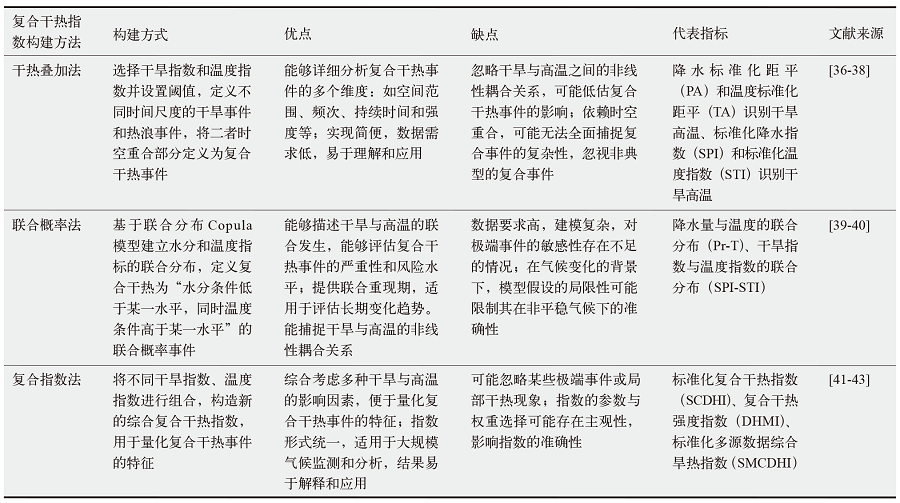 |
目前复合干热指标构建已取得进展,但未来研究应进一步加强指标与作物生理机制的结合,明确作物不同生育阶段对干旱与高温的差异性响应,增强气象要素与生物物理过程之间的相关性,并促进统计模型和作物模型的融合,以提高复合干热风险评估与预测的准确性。
1.2 复合干热事件的时空格局
图1
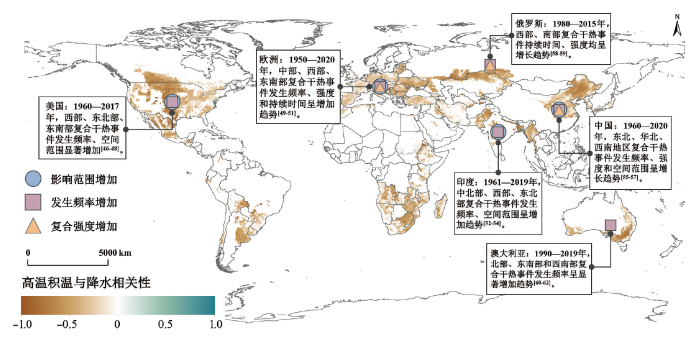
图1
小麦主产区复合干热事件的时空特征
Fig. 1
Spatial and temporal characteristics of compound hot and dry events in major wheat producing regions
注:图中相关性分析所用的温度与降水数据来自欧洲中期天气预报中心(ECMWF)发布的ERA5再分析数据集;全球小麦生长季时段数据参考文献[63]。高温积温定义为生长季内日最高气温超过30℃部分的累计温度值,累计降水为同期总降水量。各小麦主产区的特征变化总结自文献[46
在区域尺度上,Zhao等[47]使用温度、相对湿度和风速来定义小时尺度的复合干热事件,发现1980年以来美国大平原复合干热事件显著增加,特别是在小麦的抽穗期至成熟期,对产量造成重大威胁。Doshi等[49]通过多气候指标的相关性分析,发现欧洲中西部小麦产区复合干热事件的频率和持续时间显著增加。Rajeev等[52]利用标准化温度与土壤湿度指数评估印度1950—2020年间的复合干热事件,发现其多发生于季风降水不足时段,气候变暖将加剧其发生风险。中国作为全球最大的小麦生产国,其种植区对高温与水资源短缺高度敏感。Lu等[55]采用动态温度和降水阈值评估1980—2015年复合干热事件变化,发现中国大部分小麦种植区的复合干热事件发生频率增加,尤其是华北平原的增幅最显著。
未来气候变化情景下,全球小麦生长季的复合干热风险预计将持续上升。Zhang等[64]基于月尺度降水与气温百分位阈值评估,在高排放情景下全球农田复合干热风险将增加102%~225%。Li等[65]结合APSIM作物模型与气候数据,指出澳大利亚小麦开花敏感期的复合干热事件在2040年代频率和强度将分别增加15%和0.9%,至2080年代分别增加49%和5%。Goulart等[66]基于作物模型与机器学习方法预测,未来美洲小麦播种期复合干热事件频率将增长11~16倍,强度增加4%~15%。Zhang等[67]利用月降水量和温度研究发现,中国未来小麦生长季复合干热事件频率将比历史增长168%,农业风险提高1.3倍。
综合现有文献的分析,复合干热事件在全球小麦主产区呈现加剧趋势,且分布和成因机制存在区域差异。干热强度、生育期重叠及区域气候背景共同决定产量风险水平。未来研究需加强跨区对比与机制整合,深入识别干热演变模式,以提升农业适应策略的科学支撑。
2 复合干热事件对小麦产量的影响程度
2.1 复合干热事件对小麦产量的影响
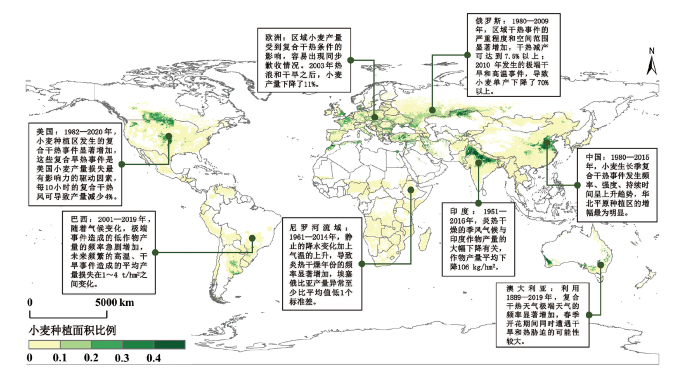
大量研究基于不同区域的观测资料与案例,揭示了复合干热事件与小麦产量损失之间显著的关联(图2)。2003年欧洲极端高温与干旱事件导致谷物提前成熟,小麦总体产量下降11%[71]。2010年俄罗斯的复合干热事件更是造成主产区小麦单产下降超过70%[72],其对农业的冲击不仅体现在强度上,也与事件持续性密切相关。2018年德国小麦产量因复合干热事件下降17%,再次验证了农业密集区对复合干热的高敏感性[73]。Zhao等[47]从小时尺度分析美国冬小麦在干热风事件下的表现,发现每增加10 h暴露可造成约4%的减产,这种高时间分辨率的研究强化了累积暴露指标在风险评估中的价值。Heino等[74]指出,1980—2009年间,全球小麦因复合干热事件平均减产3.9%,在中国和俄罗斯等主产区影响尤为突出,进一步印证了复合干热的空间异质性与地区脆弱性。Ribeiro等[78]使用Copula函数方法发现,当复合干热胁迫由中等增至极端时,西班牙小麦减产概率增加6%~8%,突显了强度提升与减产风险之间的非线性关系。
图2
2.2 小麦适应复合干热事件的策略与影响
3 复合干热对小麦产量的影响机理
图3
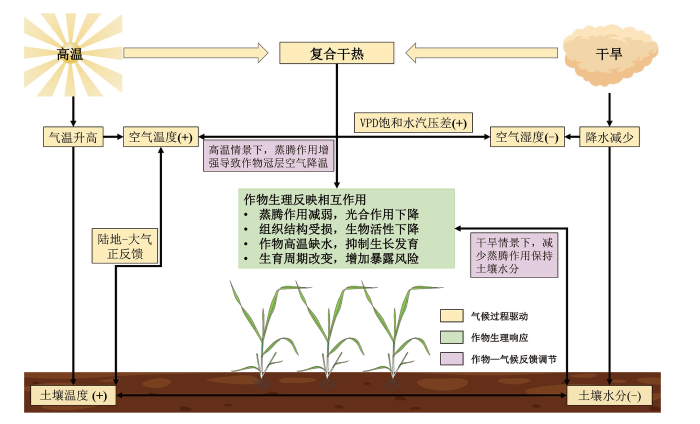
3.1 复合干热对小麦的直接作用机理
复合干热通过多种机制改变了小麦等作物的生长周期、生理过程和产量形成的关键过程。干旱与高温通过陆气相互作用形成正反馈,彼此推动和加强,从而加剧复合干热的影响[86-87]。高温提高了地表温度和蒸发速率,加剧了土壤干旱;土壤水分的减少削弱了蒸发冷却效应,进一步降低了空气湿度,使区域气候变得更加干热。这种反馈机制直接影响了小麦的生长环境,尤其在小麦关键生育阶段,温度与水分供应的失衡容易导致产量损失。复合干热事件常与大气阻塞等异常环流过程相关[88],如高压阻塞系统通过稳定的高压环流抑制冷空气入侵,形成持续的干热下沉气流,使大气环境维持较低的空气湿度,同时增强晴朗天气和地表太阳短波辐射强度。特别是在春末夏初,冷高压气团穿越山脉后发生下沉增温,形成干燥且高温的气团。这种大气动力学过程不仅显著升高小麦种植区的空气温度,还加速土壤水分流失,特别是在欧亚大陆和北美大平原等半湿润至半干旱地区,易形成复合干热事件[89-90]。这种气候背景加剧了温度与水分的双重胁迫,显著提高小麦对环境胁迫的敏感性,影响其生长发育。
3.2 小麦对复合干热的反馈响应机理
在复合干热频发的地区,这种反馈机制可能导致小麦生长环境进一步恶化。人工灌溉作为应对干热胁迫的重要管理措施,通过增加土壤水分,显著增强小麦的蒸腾强度,有效降低叶片与冠层温度[100]。这不仅缓解了复合干热带来的直接胁迫,还在一定程度上改善了局地小气候。然而,灌溉对水资源的高度依赖可能加剧水资源紧张,尤其在干旱频发地区,给农业可持续发展带来了挑战。
综上,小麦在复合干热胁迫下不仅表现出典型的生理响应,还通过蒸腾过程与局地气候形成动态反馈,进一步调节干热胁迫强度。复合干热对产量的影响源于气候系统异常与作物响应机制之间的双向作用,一方面外部气候因子通过陆气过程加剧干热环境,另一方面小麦的生理调节与蒸腾反馈又反作用于微气候条件,影响胁迫程度与持续性。这些机制相互交织,在复合干热事件的形成及其对产量影响的过程中发挥重要作用。在未来研究与农业管理中,应系统考虑这类交互机制,以提升作物适应力和减缓复合极端气候影响。
4 复合干热事件对小麦产量影响的研究方法
复合干热事件对小麦产量的影响涉及气候因素与作物反应之间复杂的相互作用。理清这些紧密相连的因果关系,对研究方法提出了挑战。目前已有的研究方法,主要包括田间控制实验法、数理统计法和作物模型法。
田间控制实验法通过模拟不同温度和水分条件,定量评估复合干热事件对小麦等作物的生长和产量的影响[105]。该方法能够较真实地再现作物在复合干热条件下的生理响应,广泛应用于植物生理学实验中。大量采用大田盆栽和人工气候室的实验研究表明,干旱和高温的共胁迫比单一胁迫对小麦的伤害更严重,尤其是在关键发育阶段。复合干热不仅会显著降低小麦的光合效率、水分代谢和抗氧化能力[106-107],还会加速生殖发育进程,导致籽粒的生物量积累不足[108]。高温与干旱的共同作用还会显著降低小麦的淀粉含量,尤其在灌浆期,复合干热表现出明显的负叠加效应[109]。虽然田间实验法能够揭示复合干热对作物生理影响的具体机制,但由于实验通常受到场地与资源的限制,样本数量有限且缺乏长期数据,使得实验结果难以外推到大范围地区。此外,田间实验法难以模拟未来极端气候情景,且实施成本较高,这些因素限制了其在大范围和长期气候变化预测中的广泛应用。
数理统计方法在研究气候因素变化对作物单产的影响时,通过构建统计模型模拟多变量极端气候对作物产量的影响[110]。在研究复合干热事件对作物产量的影响时,通常将温度、降水量、土壤水分等与水分和热量相关的指标作为主要变量,放入统计方程中,探究复合极端气候变化情况下对作物产量的影响[111-112]。常用的构建复合极端数理统计模型的方法包括多元回归模型、Copula联合分布函数和机器学习等。例如Lesk等[36]利用线性回归模型评估了全球作物标准化产量对温度和湿度变化的敏感性,发现随着温度升高,温度与水分的耦合变化可能增强作物的热敏感性,导致全球变暖对作物产量的负面影响平均加剧约5%;Manning等[51]则使用Copula模型探究了1950—2013年欧洲复合干热事件的持续时间和强度,结果显示复合干热事件在欧洲大部分地区的发生概率有所增加,而气温的升高是主要驱动因素;Heino等[74]利用机器学习方法,结合每日温度序列、土壤水分、降水量和作物年度产量数据进行建模,量化了高温和干旱同时发生对小麦产量的负面影响,结果显示,高温和干旱事件的共同发生对小麦产量造成了全球范围的一致负面影响。这些研究表明,统计模型能够适用于大范围区域且操作简便,但缺乏对胁迫机制的深入解释,且容易受到变量共线性问题的影响,导致结果的不确定性。尽管如此,统计模型仍然是当前气候变化对作物影响研究中广泛采用的方法,特别是在大范围气候变化趋势的评估中。
作物生长模型法基于作物生长机理与生长环境,对气候变化与作物生长过程之间的关系进行定量描述[113]。该方法通过利用长期的气象数据与田间管理信息,驱动模型对作物生长过程进行数值模拟,具有较高的准确性和外推效果,因此已成为评估气候变化对作物生产影响的重要工具[114-115]。针对复合干热的影响,作物模型通过设置高温和干旱的胁迫情景,模拟干旱、高温以及复合情景下小麦的生理特征及产量变化,并与正常背景下的结果进行对比分析。例如,Deihimfard等[116]使用APSIM作物模型,模拟了高温干旱对干旱地区小麦的影响,结果显示,在干热气候条件下,小麦籽粒产量的增减趋势最为明显。Hussain等[117]使用多种作物模型模拟了未来气候变化对巴基斯坦小麦的影响,发现复合干热条件下,小麦产量最大可下降27.5%。作物生长模型法通过模拟不同气候情景下的作物生长过程,能够较精确地量化复合干热条件对作物的影响,并且具备较强的预测能力。然而,作物模型的准确性通常依赖于高质量的输入数据,模型的复杂性和参数设定也常常导致在极端气候条件下的预测出现偏差[118]。
随着气候变化的加剧,对复合干热事件的预测和评估变得愈加重要。现有的研究方法在一定程度上揭示了复合干热事件的影响机制,但每种方法均存在局限性,尤其是在数据收集效率和长期预测能力方面。不同方法之间存在一定的结果差异,通常源于它们对气候因子与作物反应的不同假设和简化。例如,作物生长模型法通过细化气候因子和作物响应的关系,提供了更精细的长期预测,但在极端气候情景下的预测偏差较大;数理统计方法则提供了较简化的气候-作物反应模型,因此容易出现预测的误差。但在对干热事件的短期响应上,田间控制实验法、数理统计模型和作物生长模型三种方法具有较好的契合度。因此,未来研究需要进一步改进现有方法。在田间控制实验法方面,应提高其操作性和适用范围,例如利用遥感技术监测大范围小麦种植区的气候变化和生理特征。在数理统计模型方面,应该增强其机理解释能力,构建更具生物学意义的复合干热指数,以更好地解释气候变化对作物的影响。在作物生长模型方面,需进一步完善模型参数的率定,特别是在极端气候情景下,模型的准确性和预测能力仍然需要提升。通过田间实验法、数理统计模型和作物生长模型法的有效融合,可以更加全面地揭示复合干热事件对小麦的多维影响。构建多模型融合框架,注重不同方法之间的协同作用,结合田间控制实验法的实地验证、数理统计方法的宏观趋势分析和作物生长模型法的动态模拟,有助于更精确地评估复合干热事件对小麦的影响。
5 结论与展望
本文通过梳理复合干热事件对小麦产量影响的相关文献,认识到复合干热对小麦产量变化的重要作用,全球大部分小麦主产区发生的复合干热事件频率和强度均有所增加,并且对不同地区的小麦产量影响程度不同。同时从复合干热对小麦的直接作用与反馈响应机制,明确了其影响路径。另外,本文综合评价了相关研究采用的主要方法:田间控制试验、数理统计模型和作物生长机理模型的优势与缺陷,为定量评估复合极端事件的影响提供了重要研究途径。基于已有研究,本文总结出复合干热事件对小麦影响的综合研究框架(图4),并发现当前农作物的复合干热研究存在一些亟待解决的问题,尽管复合干热事件对小麦的影响研究逐渐增多且已经受到高度关注,但还是存在着影响机制不明确、评估结果不确定性较高等挑战。因此,需要对研究方法进行改进,并对未来研究方向和应对措施提出一些展望。
图4

图4
复合干热事件对小麦影响的综合研究框架
Fig. 4
Framework for integrated research on the impacts of compound hot and dry extreme events on wheat
(1)与小麦生理机制相协同的小麦复合干热指标的厘定。近年来,随着复合极端事件逐渐成为研究热点,针对多种时空尺度的复合干热事件研究大量增加,通过综述相关文献发现,当前研究缺少统一标准的针对农作物生理意义的复合干热危险性指标。现有复合干热指标大多基于气象要素(如温度和降水),缺乏对小麦生长生理过程的直接反映,未能全面考虑小麦在关键生长阶段(如拔节期、抽穗期和灌浆期)对复合干热的响应机制。因此,亟需构建能够反映小麦生理胁迫的复合干热危险性指标,结合小麦的需水规律和高温耐受特性,来提高指标的精准性和生理学意义。
(2)小麦复合干热多模型融合的模拟方法。当前研究方法主要依赖于田间控制试验、数理统计模型和作物生长机理模型,但这些方法在捕捉复合干热事件的动态响应方面存在局限性。田间控制试验和数理统计模型能揭示复合干热的历史影响,但对未来情景的预测能力有限;而作物生长机理模型的参数设置往往忽略复合胁迫下的相互作用机制,导致模拟精度不足。未来研究需探索多模型融合的方法,结合长期田间观测数据和高精度气象模拟,开发动态调整的作物模型框架。同时,应利用遥感与人工智能技术(如机器学习)提升大尺度小麦对复合干热事件响应的监测与预测能力,从多维度揭示复合干热事件对小麦产量的复杂影响。
(3)小麦不同生育阶段对复合干热的动态响应。现有研究多以整个生长季为研究单元,忽略了小麦在不同生育阶段对干旱和高温的耐受能力差异。特别是开花期和灌浆期对干热的响应存在显著差异。尽管小麦在开花期的花器(如花粉)极为敏感,高温可能导致花粉败育、结实率降低,然而,开花期通常不属于全年最干、最热的季节,因此干热对小麦的影响通常在开花期相对较轻。相比之下,干热事件的危害在小麦的灌浆期更显著,高温和干旱的协同作用会缩短灌浆期,减少籽粒的干物质积累,从而直接影响小麦的产量和品质。因此,研究小麦生长周期中的关键生育阶段及其对复合干热事件的动态响应,尤其是不同阶段的临界阈值(如耐热阈值和需水阈值),对于全面理解复合干热事件的影响至关重要。
(4)复合干热条件下小麦产量与品质的协同评估。虽然现有研究重点关注复合干热事件对小麦产量的直接影响,但对小麦品质的潜在影响研究较少。干热条件下,小麦籽粒中的蛋白质含量、面筋质量和微量营养成分可能发生显著变化,从而降低小麦的加工性能,并影响其在市场中的经济价值。未来应加强对干热条件下小麦产量和品质变化的系统性研究,加强对小麦品质变化的系统监测,尤其是不同品种和区域对复合干热事件的适应性差异,以全面理解气候变化对小麦生产的复杂影响,为育种和农业管理提供科学依据。
(5)小麦复合干热应对的适应性策略与实践效果评估。复合干热事件对作物生产系统的气候适应能力提出了更高要求,评估相关策略的实践效果也面临诸多挑战。尽管调整播种日期、改良作物品种和优化灌溉管理等适应性策略对干热单一影响的缓解作用已被广泛研究,但这些措施在应对复合干热事件时可能存在不确定性,实践策略的有效性尚需验证。针对小麦产区的区域气候特征,未来研究需设计区域化、分阶段的适应性策略,以提高干预措施的针对性和实际效果,同时需评估这些适应性策略在不同复合胁迫情景下的协同效益和潜在风险,优化小麦生产系统的气候适应能力。
(6)小麦复合干热灾害的风险评估。复合干热事件的成因和演变过程较复杂,其风险评估方法相对滞后。目前对复合干热事件对农作物影响的风险评估的定量化研究相对较少,现有评估模型多基于单一胁迫因素的脆弱性和暴露度,未能充分考虑干旱和高温的互馈作用。未来应发展综合性的风险评估模型,加快研发复合干热灾害风险评估技术和方法,量化复合干热事件对小麦的综合影响,并结合区域气候情景分析,优化防范和应对策略,为未来复合干热灾害风险防范提供科学支撑。
参考文献
Climate change impacts on crop yields
[J].
Attributing changes in food insecurity to a changing climate
[J].
DOI:10.1038/s41598-022-08696-x
PMID:35304565

It is generally accepted that climate change is having a negative impact on food security. However, most of the literature variously focuses on the complex and many mechanisms linking climate stressors; the links with food production or productivity rather than food security; and future rather than current effects. In contrast, we investigate the extent to which current changes in food insecurity can be plausibly attributed to climate change. We combine food insecurity data for 83 countries from the FAO food insecurity experience scale (FIES) with reanalysed climate data from ERA5-Land, and use a panel data regression with time-varying coefficients. This framework allows us to estimate whether the relationship between food insecurity and temperature anomaly is changing over time. We also control for Human Development Index, and drought measured by six-month Standardized Precipitation Index. Our empirical findings suggest that for every 1 [Formula: see text] of temperature anomaly, severe global food insecurity has increased by 1.4% (95% CI 1.3-1.47) in 2014 but by 1.64% (95% CI 1.6-1.65) in 2019. This impact is higher in the case of moderate to severe food insecurity, with a 1 [Formula: see text] increase in temperature anomaly resulting in a 1.58% (95% CI 1.48-1.68) increase in 2014 but a 2.14% (95% CI 2.08-2.20) increase in 2019. Thus, the results show that the temperature anomaly has not only increased the probability of food insecurity, but the magnitude of this impact has increased over time. Our counterfactual analysis suggests that climate change has been responsible for reversing some of the improvements in food security that would otherwise have been realised, with the highest impact in Africa. Our analysis both provides more evidence of the costs of climate change, and as such the benefits of mitigation, and also highlights the importance of targeted and efficient policies to reduce food insecurity. These policies are likely to need to take into account local contexts, and might include efforts to increase crop yields, targeted safety nets, and behavioural programs to promote household resilience.© 2022. The Author(s).
气候变化对粮食生产风险的影响研究进展
[J].
Advances in the study of climate change impact on crop producing risk
[J].
Understanding heatwave-drought compound hazards and impacts on socio-ecosystems
[J].
Compound hot-dry events greatly prolong the recovery time of dryland ecosystems
[J].
Extreme weather and climate change: population health and health system implications
[J].
DOI:10.1146/annurev-publhealth-012420-105026
PMID:33406378
[本文引用: 1]
Extreme weather and climate events, such as heat waves, cyclones, and floods, are an expression of climate variability. These events and events influenced by climate change, such as wildfires, continue to cause significant human morbidity and mortality and adversely affect mental health and well-being. Although adverse health impacts from extreme events declined over the past few decades, climate change and more people moving into harm's way could alter this trend. Long-term changes to Earth's energy balance are increasing the frequency and intensity of many extreme events and the probability of compound events, with trends projected to accelerate under certain greenhouse gas emissions scenarios. While most of these events cannot be completely avoided, many of the health risks could be prevented through building climate-resilient health systems with improved risk reduction, preparation, response, and recovery. Conducting vulnerability and adaptation assessments and developing health system adaptation plans can identify priority actions to effectively reduce risks, such as disaster risk management and more resilient infrastructure. The risks are urgent, so action is needed now.
Influence of extreme weather disasters on global crop production
[J].
Meta-analysis of drought and heat stress combination impact on crop yield and yield components
[J].
Impacts of heat, drought, and their interaction with nutrients on physiology, grain yield, and quality in field crops
[J].
Changes in climate-crop yield relationships affect risks of crop yield reduction
[J].
Decadal variability modulates trends in concurrent heat and drought over global croplands
[J].
地球系统视角下的多圈层复合极端事件研究进展与展望
[J].
Research progresses and prospects of multi-sphere compound extremes from the Earth System perspective
[J].
复合干热事件研究热点分析与展望
[J].
Research hotspot analysis and future prospects of compound dry-heat events
[J].
Drought- and heatwave-associated compound extremes: a review of hotspots, variables, parameters, drivers, impacts, and analysis frameworks
[J].
Crops that feed the world 10. Past successes and future challenges to the role played by wheat in global food security
[J].
Statistical prediction of agricultural drought severity in China based on dry or hot events
[J].
Global warming determines future increase in compound dry and hot days within wheat growing seasons worldwide
[J].
Future changes in spatially compounding hot, wet or dry events and their implications for the world’s breadbasket regions
[J].
Farming the planet: 2. Geographic distribution of crop areas, yields, physiological types, and net primary production in the year 2000
[J].
Managing the risks of extreme events and disasters to advance climate change adaptation: a special report of working groups I and II of the Intergovernmental Panel on Climate Change
[R].
Future climate risk from compound events
[J].
灾害系统: 灾害群、灾害链、灾害遭遇
[J].
Disaster system: disaster cluster, disaster chain and disaster compound
[J].
中国小麦干热风灾害研究进展
[J].
Review on disaster of hot dry wind for wheat in China
[J].
Probability of compound climate extremes in a changing climate: a copula-based study of hot, dry, and windy events in the central United States
[J].
Changes in the severity of compound hot-dry-windy events over global land areas
[J].
Evapotranspiration frequently increases during droughts
[J].
Increase in compound drought and heatwaves in a warming world
[J].
A multi-index evaluation of changes in compound dry and hot events of global maize areas
[J].
Projected changes in compound hot-dry events depend on the dry indicator considered
[J].
Spatiotemporal variability of extreme precipitation events and their impacts on soil moisture and water table depth in Argentina’s core crop region
[J].
Assessing the drought impact on sugarcane yield based on crop water requirements and standardized precipitation evapotranspiration index
[J].
Acclimation to higher VPD and temperature minimized negative effects on assimilation and grain yield of wheat
[J].
Plant responses to rising vapor pressure deficit
[J].
DOI:10.1111/nph.16485
PMID:32064613
[本文引用: 1]
Recent decades have been characterized by increasing temperatures worldwide, resulting in an exponential climb in vapor pressure deficit (VPD). VPD has been identified as an increasingly important driver of plant functioning in terrestrial biomes and has been established as a major contributor in recent drought-induced plant mortality independent of other drivers associated with climate change. Despite this, few studies have isolated the physiological response of plant functioning to high VPD, thus limiting our understanding and ability to predict future impacts on terrestrial ecosystems. An abundance of evidence suggests that stomatal conductance declines under high VPD and transpiration increases in most species up until a given VPD threshold, leading to a cascade of subsequent impacts including reduced photosynthesis and growth, and higher risks of carbon starvation and hydraulic failure. Incorporation of photosynthetic and hydraulic traits in 'next-generation' land-surface models has the greatest potential for improved prediction of VPD responses at the plant- and global-scale, and will yield more mechanistic simulations of plant responses to a changing climate. By providing a fully integrated framework and evaluation of the impacts of high VPD on plant function, improvements in forecasting and long-term projections of climate impacts can be made.© 2020 The Authors. New Phytologist © 2020 New Phytologist Trust.
The impact of high temperature and drought stress on the yield of major staple crops in northern China
[J].
Understanding the impacts of extreme temperature and humidity compounds on winter wheat traits in China
[J].
Stronger temperature-moisture couplings exacerbate the impact of climate warming on global crop yields
[J].
DOI:10.1038/s43016-021-00341-6
PMID:37117467
[本文引用: 3]
Rising air temperatures are a leading risk to global crop production. Recent research has emphasized the critical role of moisture availability in regulating crop responses to heat and the importance of temperature-moisture couplings in driving concurrent heat and drought. Here, we demonstrate that the heat sensitivity of key global crops depends on the local strength of couplings between temperature and moisture in the climate system. Over 1970-2013, maize and soy yields dropped more during hotter growing seasons in places where decreased precipitation and evapotranspiration more strongly accompanied higher temperatures, suggestive of compound heat-drought impacts on crops. On the basis of this historical pattern and a suite of climate model projections, we show that changes in temperature-moisture couplings in response to warming could enhance the heat sensitivity of these crops as temperatures rise, worsening the impact of warming by -5% (-17 to 11% across climate models) on global average. However, these changes will benefit crops where couplings weaken, including much of Asia, and projected impacts are highly uncertain in some regions. Our results demonstrate that climate change will impact crops not only through warming but also through changing drivers of compound heat-moisture stresses, which may alter the sensitivity of crop yields to heat as warming proceeds. Robust adaptation of cropping systems will need to consider this underappreciated risk to food production from climate change.© 2021. The Author(s), under exclusive licence to Springer Nature Limited.
Concurrent climate extremes in the key wheat producing regions of the world
[J].
DOI:10.1038/s41598-019-41932-5
PMID:30940858
[本文引用: 1]
Climate extremes have profound impacts on key socio-economic sectors such as agriculture. In a changing climate context, characterised by an intensification of these extremes and where the population is expected to grow, exposure and vulnerability must be accurately assessed. However, most risk assessments analyse extremes independently, thus potentially being overconfident in the resilience of the socio-economic sectors. Here, we propose a novel approach to defining and characterising concurrent climate extremes (i.e. extremes occurring within a specific temporal lag), which is able to identify spatio-temporal dependences without making any strict assumptions. The method is applied to large-scale heat stress and drought events in the key wheat producing regions of the world, as these extremes can cause serious yield losses and thus trigger market shocks. Wheat regions likely to have concurrent extremes (heat stress and drought events) are identified, as well as regions independent of each other or inhibiting each other in terms of these extreme events. This tool may be integrated in all risk assessments but could also be used to explore global climate teleconnections.
Projected changes in hot, dry, and compound hot-dry extremes over global land regions
[J].
Bivariate return periods of temperature and precipitation explain a large fraction of European crop yields
[J].
Increasing likelihood of global compound hot-dry extremes from temperature and runoff during the past 120 years
[J].
A standardized index for assessing sub-monthly compound dry and hot conditions with application in China
[J].
Dry-hot magnitude index: a joint indicator for compound event analysis
[J].
Recent shift from energy- to moisture-limitation over global croplands
[J].
Widespread shift from ecosystem energy to water limitation with climate change
[J].
Increased probability and severity of compound dry and hot growing seasons over world’s major croplands
[J].
US winter wheat yield loss attributed to compound hot-dry-windy events
[J].
DOI:10.1038/s41467-022-34947-6
PMID:36433980
[本文引用: 3]
Climate extremes cause significant winter wheat yield loss and can cause much greater impacts than single extremes in isolation when multiple extremes occur simultaneously. Here we show that compound hot-dry-windy events (HDW) significantly increased in the U.S. Great Plains from 1982 to 2020. These HDW events were the most impactful drivers for wheat yield loss, accounting for a 4% yield reduction per 10 h of HDW during heading to maturity. Current HDW trends are associated with yield reduction rates of up to 0.09 t ha per decade and HDW variations are atmospheric-bridged with the Pacific Decadal Oscillation. We quantify the "yield shock", which is spatially distributed, with the losses in severely HDW-affected areas, presumably the same areas affected by the Dust Bowl of the 1930s. Our findings indicate that compound HDW, which traditional risk assessments overlooked, have significant implications for the U.S. winter wheat production and beyond.© 2022. The Author(s).
Substantial increase in concurrent droughts and heatwaves in the United States
[J].
Hotspot movement of compound events on the Europe continent
[J].
Compound hot and dry events in Europe: variability and large-scale drivers
[J].
Increased probability of compound long-duration dry and hot events in Europe during summer (1950-2013)
[J].
Climate warming and summer monsoon breaks drive compound dry and hot extremes in India
[J].
Increased likelihood of compound dry and hot extremes in India
[J].
Spatiotemporal analysis of compound agrometeorological drought and hot events in India using a standardized index
[J].
Increasing compound events of extreme hot and dry days during growing seasons of wheat and maize in China
[J].
DOI:10.1038/s41598-018-34215-y
PMID:30420656
[本文引用: 2]
Compound events of climate extremes such as extremely high temperature and low precipitation during crop growing seasons can greatly affect agricultural production and food security. No study has investigated how Compound Extreme Hot and Dry days (CEHD days) during crop-growing seasons have changed or will change in response to climate warming. Based on observations, we find upward trends in CEHD days during wheat and maize growing seasons in China in the historical period 1980-2015. These trends are remarkably different during wheat and maize growing seasons, pointing to the need for targeted analysis focusing on crop-specific growing seasons. Projections of future temperature and precipitation from the Coordinated Regional Climate Downscaling Experiment show that upward trends will continue into future. On average over China, the frequencies of CEHD days during wheat and maize growing seasons are projected to increase respectively by 168% and 162% in 2036-2050 relatively to 1980-2015 under the RCP8.5 emissions scenario. The projected increases may have serious implications for China's food production, adding to the need for resilience planning to limit the impacts of growing-season CEHD days.
Evaluation of severity changes of compound dry and hot events in China based on a multivariate multi-index approach
[J].
Spatial-temporal variations and drivers of the compound dry-hot event in China
[J].
Quantifying the local effect of Northern Hemisphere atmospheric blocks on the persistence of summer hot and dry spells
[J].
Impacts of extreme climates on vegetation at middle-to-high latitudes in Asia
[J].
Compound drought and hot events assessment in Australia using copula functions
[J].
Combined role of ENSO and IOD on compound drought and heatwaves in Australia using two CMIP6 large ensembles
[J].
Global hotspots for the occurrence of compound events
[J].
DOI:10.1038/s41467-020-19639-3
PMID:33235203
[本文引用: 1]
Compound events (CEs) are weather and climate events that result from multiple hazards or drivers with the potential to cause severe socio-economic impacts. Compared with isolated hazards, the multiple hazards/drivers associated with CEs can lead to higher economic losses and death tolls. Here, we provide the first analysis of multiple multivariate CEs potentially causing high-impact floods, droughts, and fires. Using observations and reanalysis data during 1980-2014, we analyse 27 hazard pairs and provide the first spatial estimates of their occurrences on the global scale. We identify hotspots of multivariate CEs including many socio-economically important regions such as North America, Russia and western Europe. We analyse the relative importance of different multivariate CEs in six continental regions to highlight CEs posing the highest risk. Our results provide initial guidance to assess the regional risk of CE events and an observationally-based dataset to aid evaluation of climate models for simulating multivariate CEs.
Crop planting dates: an analysis of global patterns
[J].
Global warming increases risk from compound dry-hot events to human and agricultural systems
[J].
Can agronomic options alleviate the risk of compound drought-heat events during the wheat flowering period in southeastern Australia?
[J].
Increase of simultaneous soybean failures due to climate change
[J].
Agricultural risk assessment of compound dry and hot events in China
[J].
Dependence of drivers affects risks associated with compound events
[J].
Effects of drought and high temperature stress on synthetic hexaploid wheat
[J].
DOI:10.1071/FP11245
PMID:32480773
[本文引用: 1]
Drought and high temperature often occurs simultaneously, causing significant yield losses in wheat (Triticum aestivum L.). The objectives of this study were to: (i) quantify independent and combined effects of drought and high temperature stress on synthetic hexaploid wheat genotypes at anthesis and at 21 days after anthesis; and (ii) determine whether responses to stress varied among genotypes. Four synthetic hexaploid and two spring wheat genotypes were grown from emergence to anthesis (Experiment I) and emergence to 21 days after anthesis (Experiment II), with full irrigation and 21/15°C day/night temperature. Thereafter, four treatments were imposed for 16 days as (a) optimum condition: irrigation+21/15°C, (b) drought stress: withhold irrigation+21/15°C, (c) high temperature stress: irrigation+36/30°C and (d) combined stress: withhold irrigation+36/30°C. Results indicated a decrease in leaf chlorophyll, individual grain weight and grain yield in an increasing magnitude of drought<high temperature<combined stress. There were 69, 81 and 92% grain yield decreases in Experiment I and 26, 37 and 50% in Experiment II under drought, high temperature and combined stress respectively. Synthetic hexaploid wheat genotypes varied in their response to stresses. Genotypes ALTAR 84/AO'S' and ALTAR 84/Aegilops tauschii Coss. (WX 193) were least affected by combined stress in Experiments I and II respectively. Overall, combined effect of drought+high temperature stress was more detrimental than the individual stress and the interaction effect was hypo-additive in nature.
Abiotic and biotic stress combinations
[J].
DOI:10.1111/nph.12797
PMID:24720847
[本文引用: 1]
Environmental stress conditions such as drought, heat, salinity, cold, or pathogen infection can have a devastating impact on plant growth and yield under field conditions. Nevertheless, the effects of these stresses on plants are typically being studied under controlled growth conditions in the laboratory. The field environment is very different from the controlled conditions used in laboratory studies, and often involves the simultaneous exposure of plants to more than one abiotic and/or biotic stress condition, such as a combination of drought and heat, drought and cold, salinity and heat, or any of the major abiotic stresses combined with pathogen infection. Recent studies have revealed that the response of plants to combinations of two or more stress conditions is unique and cannot be directly extrapolated from the response of plants to each of the different stresses applied individually. Moreover, the simultaneous occurrence of different stresses results in a high degree of complexity in plant responses, as the responses to the combined stresses are largely controlled by different, and sometimes opposing, signaling pathways that may interact and inhibit each other. In this review, we will provide an update on recent studies focusing on the response of plants to a combination of different stresses. In particular, we will address how different stress responses are integrated and how they impact plant growth and physiological traits.© 2014 The Authors. New Phytologist © 2014 New Phytologist Trust.
A review of the European summer heat wave of 2003
[J].
Agricultural and food security impacts from the 2010 Russia flash drought
[J].
The record-breaking compound hot and dry 2018 growing season in Germany
[J].
Increased probability of hot and dry weather extremes during the growing season threatens global crop yields
[J].
DOI:10.1038/s41598-023-29378-2
PMID:36869041
[本文引用: 2]
Although extreme weather events recur periodically everywhere, the impacts of their simultaneous occurrence on crop yields are globally unknown. In this study, we estimate the impacts of combined hot and dry extremes as well as cold and wet extremes on maize, rice, soybean, and wheat yields using gridded weather data and reported crop yield data at the global scale for 1980-2009. Our results show that co-occurring extremely hot and dry events have globally consistent negative effects on the yields of all inspected crop types. Extremely cold and wet conditions were observed to reduce crop yields globally too, although to a lesser extent and the impacts being more uncertain and inconsistent. Critically, we found that over the study period, the probability of co-occurring extreme hot and dry events during the growing season increased across all inspected crop types; wheat showing the largest, up to a six-fold, increase. Hence, our study highlights the potentially detrimental impacts that increasing climate variability can have on global food production.© 2023. The Author(s).
Uncertainty in simulating wheat yields under climate change
[J].
Future exacerbation of hot and dry summer monsoon extremes in India
[J].
Frequency of compound hot-dry weather extremes has significantly increased in Australia since 1889
[J].
DOI:10.1111/jac.12545
[本文引用: 1]
There is high confidence that climate change has increased the probability of concurrent temperature-precipitation extremes, changed their spatial-temporal variations and affected the relationships between drivers of such natural hazards. However, the extent of such changes has been less investigated in Australia. We used 131 years (1889-2019) of daily data from SILO gridded data set at 700 grid cells (1 degrees x 1 degrees) across Australia to calculate annual and seasonal mean daily maximum temperature (MMT) and total precipitation (TPR). A nonparametric multivariate copula framework was adopted to estimate the return period of compound hot-dry (CHD) events based on an 'And' hazard scenario (hotter than a threshold 'And' drier than a threshold). We defined CHD extremes as years with joint return periods of longer than 25 years calculated over the period 1889-2019. Mann-Kendall nonparametric tests were used to analyse trends in MMT and TPR as well as in the frequency of univariate and CHD extremes. We found a general cooling-wetting trend over 1889-1989. Significant increasing trends were detected over 1990-2019 in the frequency and severity of hot extremes across the country while trends in dry extremes were mostly insignificant (and decreasing). We showed a significant increase in the association between temperature and precipitation at various temporal scales. The frequency of CHD extremes was mostly stable over 1889-1989, but significantly increased between 1990 and 2019 at 44% of studied grid cells, mostly located in the north, south-east and southwest.
Risk of crop failure due to compound dry and hot extremes estimated with nested copulas
[J].
Substantial increase of compound droughts and heatwaves in wheat growing seasons worldwide
[J].
The effects of climate extremes on global agricultural yields
[J].
Global irrigation contribution to wheat and maize yield
[J].
DOI:10.1038/s41467-021-21498-5
PMID:33623028
[本文引用: 1]
Irrigation is the largest sector of human water use and an important option for increasing crop production and reducing drought impacts. However, the potential for irrigation to contribute to global crop yields remains uncertain. Here, we quantify this contribution for wheat and maize at global scale by developing a Bayesian framework integrating empirical estimates and gridded global crop models on new maps of the relative difference between attainable rainfed and irrigated yield (ΔY). At global scale, ΔY is 34 ± 9% for wheat and 22 ± 13% for maize, with large spatial differences driven more by patterns of precipitation than that of evaporative demand. Comparing irrigation demands with renewable water supply, we find 30-47% of contemporary rainfed agriculture of wheat and maize cannot achieve yield gap closure utilizing current river discharge, unless more water diversion projects are set in place, putting into question the potential of irrigation to mitigate climate change impacts.
The role of irrigation in changing wheat yields and heat sensitivity in India
[J].
DOI:10.1038/s41467-019-12183-9
PMID:31515485
[本文引用: 1]
Irrigation has been pivotal in wheat's rise as a major crop in India and is likely to be increasingly important as an adaptation response to climate change. Here we use historical data across 40 years to quantify the contribution of irrigation to wheat yield increases and the extent to which irrigation reduces sensitivity to heat. We estimate that national yields in the 2000s are 13% higher than they would have been without irrigation trends since 1970. Moreover, irrigated wheat exhibits roughly one-quarter of the heat sensitivity estimated for fully rainfed conditions. However, yield gains from irrigation expansion have slowed in recent years and negative impacts of warming have continued to accrue despite lower heat sensitivity from the widespread expansion of irrigation. We conclude that as constraints on expanding irrigation become more binding, furthering yield gains in the face of additional warming is likely to present an increasingly difficult challenge.
抗逆广适小麦品种共性特征分析
[J].
DOI:10.3864/j.issn.0578-1752.2023.11.003
[本文引用: 1]
【目的】在黄淮北片气象灾害频发的异常气候背景下,通过筛选抗旱、耐热和抗寒的冬小麦品种,明确抗逆广适品种的产量构成特征、株型结构特征和生理特征,为抗逆广适品种筛选工作提供简易检测指标。【方法】于2017年秋至2020年夏连续3个小麦生长季在河北藁城堤上试验站进行大田水分试验(试验1)和温室试验(试验2),同时,利用2018年和2020年春季自然低温进行抗寒品种筛选试验;试验1设置3个灌水处理,0水、1水(拔节水)和2水(拔节水+开花水),试验2设置2个温度处理,灌浆后期常温对照和增温处理,以16个冬小麦品种为材料,测定抗逆性能评价指标、产量形成指标、株型结构指标和叶片生理指标。【结果】综合考虑产量、抗旱指数、产量热感指数和冻害级别,筛选出济麦23、山农30、冀麦325、济麦22、品育8012 5个冬小麦品种,这些品种综合表现较优,具有抗旱、耐热、抗寒性强、丰产稳产的特点。通过分析产量与产量形成指标、株型指标和叶片生理指标的相关性,千粒重、收获指数和生物产量与产量呈极显著正相关;旗叶叶宽、茎粗和穗长与产量呈显著或极显著正相关,而旗叶茎叶夹角与产量呈显著负相关;旗叶相对叶绿素值(SPAD值)和相对含水量与产量均呈极显著正相关,冠层温度与产量呈极显著负相关。与其他品种比较,抗逆广适品种千粒重、收获指数和生物产量分别提高了12.9%、5.2%和3.4%;旗叶叶宽为(16.2±0.4) cm、茎叶夹角(18.2±3.2)°、基部茎粗(4.0±0.3) mm、穗长(7.5±0.14) cm、株高(80.3±1.3) cm;灌浆后期旗叶SPAD值和相对含水量分别提高了9.8%和4.2%、冠层温度降低了1.9 ℃。【结论】明确了抗逆广适小麦品种“上部紧凑直立、下部松散平展”的优化株型,提出了旗叶叶宽、茎叶夹角、基部茎粗、穗长的定量指标;明确了生育后期旗叶SPAD和相对含水量较高、冠层温度较低的生理特征以及千粒重、收获指数和生物产量较高的产量特征。
Analysis of common characteristics of widely adaptive wheat cultivars
[J].
不同耕作方式对旱地小麦生长发育、生理代谢及产量的影响
[J].
Effects of different tillage methods on growth, physiological metabolism, and yield of wheat in dryland
[J].
Compound heat and moisture extreme impacts on global crop yields under climate change
[J].
Comparison of the risks and drivers of compound hot-dry and hot-wet extremes in a warming world
[J].
Historical changes in the causal effect networks of compound hot and dry extremes in central Europe
[J].
Dynamics and characteristics of dry and moist heatwaves over East Asia
[J].
Process-oriented compound long-duration dry and hot events in China: atmospheric conditions, moisture, and heat budget analyses
[J].
Dominant modes of interannual variability in spring compound dry and hot events over Northern Asia and the possible mechanisms
[J].
气候变化背景下中国主要粮食作物生长期界定的研究综述
[J].
Definition of growing period for major grain crops in China: a review
[J].
Photosynthesis of wheat in a warm, irrigated environment: I: genetic diversity and crop productivity
[J].
Growth and yield components of wheat under water stress of different growth stages
[J].
花后高温干旱胁迫下氮素对冬小麦氮积累与代谢酶、蛋白质含量及水氮利用效率的影响
[J].
DOI:10.3864/j.issn.0578-1752.2022.17.004
[本文引用: 1]
【目的】 本研究基于气候室模拟温度日变化特征,旨在探讨氮素对高温、干旱及复合胁迫下冬小麦地上干物质重、氮积累与分配、氮代谢相关酶活性、蛋白质含量、产量及水氮利用效率的影响。【方法】 基于人工气候室开展冬小麦盆栽试验,以小偃22号为试验材料,采用裂-裂区随机完全区组设计,以2个温度处理(高温:H;适宜温度:S)为主区,以2个水分水平(干旱:D;充分供水:F)为裂区,3个施氮水平(低氮:N<sub>1</sub>;中氮:N<sub>2</sub>;高氮:N<sub>3</sub>)为裂-裂区,研究冬小麦生长生理特性、产量及水氮利用效率对高温干旱胁迫及各施氮量的响应特征。【结果】 高温、干旱及复合胁迫导致地上总干物质重(ADW)和氮积累量(ANA)降低。在成熟期,高温干旱复合胁迫(HD)和干旱胁迫(SD)下N<sub>3</sub>处理ANA分别较N<sub>1</sub>处理增加7.26%和6.82%。高温、干旱及复合胁迫提高小麦花前氮素对籽粒贡献率(NRR),HD胁迫各施氮处理NRR均值较对照(SF)增加达38.21%,施氮量的增加扩大这种增加效应。高温、干旱及复合胁迫导致成熟期穗氮分配率降低,特别是复合胁迫。暴露于高温、干旱及复合胁迫下籽粒蛋白质产量(PY)降低,干旱胁迫(7.37%)各施氮处理PY均值较高温胁迫(3.94%)降低更多,无论单一或复合胁迫下籽粒PY均在N<sub>2</sub>处理下显著增加。此外,单一的干旱和高温胁迫下降低的谷氨酰胺合成酶(GS)和硝酸还原酶(NR)活性在N<sub>2</sub>处理下显著增加,复合胁迫N<sub>1</sub>处理NR和GS活性分别较N<sub>3</sub>处理提高23.81%和23.07%。与对照相比,干旱胁迫各施氮处理穗粒数、千粒重和产量均值的降幅均高于高温胁迫,N<sub>2</sub>处理对高温和干旱胁迫下这些参数存在明显正向调控,产量水分利用效率(WUE<sub>g</sub>)和生物量水分利用效率(WUE<sub>b</sub>)在N<sub>2</sub>处理下得到明显改善。充分供水+N<sub>2</sub>处理籽粒(NUE<sub>g</sub>)分别较低干旱和复合胁迫N<sub>3</sub>处理提高19.09%和19.44%,表明在水分充足条件下中氮能有效地缓解干旱和高温胁迫下籽粒氮利用效率的降低。NUE<sub>g</sub>和NUE<sub>b</sub>的提高可能归因于合理氮肥调控下增加的GS和NR活性。主成分分析表明胁迫条件下小麦千粒重和ADW与产量的关系更紧密。【结论】 高温和干旱胁迫的综合效应比单一胁迫对小麦危害更大。在单一高温和干旱胁迫下,适量增加氮输入能增加氮代谢酶活性并维持更高氮代谢能力,提高籽粒氮积累量及蛋白质产量,将更有利于提高产量及水氮利用效率。然而在花后遭遇高温干旱复合胁迫时,相比低施氮量,增加施氮对小麦产量形成及水氮的吸收利用均产生一定抑制作用,应适当减少氮肥用量。
Effects of nitrogen on nitrogen accumulation and distribution, nitrogen metabolizing enzymes, protein content, and water and nitrogen use efficiency in winter wheat under heat and drought stress after anthesis
[J].
DOI:10.3864/j.issn.0578-1752.2022.17.004
[本文引用: 1]
【Objective】 The diurnal variation of temperature was simulated based on the growth chamber, this study aimed to investigate the effects of nitrogen (N) on dry matter accumulation, N accumulation and distribution, activities of N metabolism-related enzymes, protein content, yield, and water and N use efficiency of winter wheat plants under heat, drought and combined stress.【Method】 The experiments were carried out based on growth chambers with Xiaoyan 22 as test material. The experiment consisted of three blocks, in which two temperature treatments (high temperature: H; suitable temperature: S) were assigned as the main plot, two watering treatments (drought: D; sufficient water supply: F) were arranged split-plot, and three N supply levels (low N: N1; medium N: N2; high N: N3) were arranged split-split plot to form a completely randomized block design to investigate the response of the growth and physiological characteristics, yield, and water and N use efficiency in wheat plants to heat, drought stress and different N applications.【Result】 Heat, drought and combined stress resulted in the decrease in ADW (aboveground dry weight) and ANA (aboveground nitrogen accumulation). At maturity, the ANA of N3 supply under HD and SD was higher 7.26% and 6.82% than that under N1 supply, respectively. Heat, drought and combined stress resulted in the increase in NRR, and the average NRR of three N supplies under HD increased by 38.21% compared with the control, while increasing N supply further expanded this increasing effect. Heat, drought and combined stress led to decrease in N distribution rate of panicle at maturity, especially combined stress. PY decreased significantly when exposed to heat, drought and combined stress. Compared with the control, the decrease of PY under drought stress conditions (7.37%) was more obvious than that under heat stress conditions (3.94%). Under individual and combined stress treatments, PY was significantly increased under N2 supply. Furthermore, GS and NR activities decreased under individual heat and drought stress, which were significantly increased under regulation of N2 supply. The NR and GS activities of N1 supply under HD were 23.81% and 23.07% higher than that of N3 supply, respectively. Compared with the control, the reduction in grain number per spike, 1000 grain weight and yield under drought stress conditions was greater than that under heat stress. N2 supply had an obvious positive effect on these parameters of the two stress treatments, and WUEg and WUEb were significantly improved under N2 supply. Adequate water supply under N2 had 19.09% and 19.44% higher NUEg than drought and combined stress under N3, respectively. This indicates adequate water supply under medium N could effectively alleviate the decrease of NUEg induced by drought and heat stress. The increase of NUEg and NUEb might be attributed to increase of GS and NR activities by appropriate N supply. Principal component analysis indicated that TGW and ADW of wheat were more closely related to yield under stresses conditions.【Conclusion】 The results showed that combined effect of drought and heat stress was more detrimental than individual stresses. Under individual heat and drought stress, an appropriate N supply could increase the activities of N metabolism enzymes and maintain higher N metabolism capacity, improve GNA and PY, and would be much more beneficial to increasing grain yield, water and N use efficiency in wheat production. However, when wheat was subjected to the combined stress after anthesis, compared with low N supply, increasing N supply had a restrictive effect on wheat yield formation as well as water and N utilization capacity, while N supply should be appropriately reduced.
Abiotic stress, the field environment and stress combination
[J].
DOI:10.1016/j.tplants.2005.11.002
PMID:16359910
[本文引用: 1]
Farmers and breeders have long known that often it is the simultaneous occurrence of several abiotic stresses, rather than a particular stress condition, that is most lethal to crops. Surprisingly, the co-occurrence of different stresses is rarely addressed by molecular biologists that study plant acclimation. Recent studies have revealed that the response of plants to a combination of two different abiotic stresses is unique and cannot be directly extrapolated from the response of plants to each of the different stresses applied individually. Tolerance to a combination of different stress conditions, particularly those that mimic the field environment, should be the focus of future research programs aimed at developing transgenic crops and plants with enhanced tolerance to naturally occurring environmental conditions.
灌浆期高温与干旱胁迫对小麦籽粒淀粉合成关键酶活性及淀粉积累的影响
[J].
Effects of high temperature and water deficiency during grain filling on activities of key starch synthesis enzymes and starch accumulation in wheat
[J].
Examining the interaction of growing crops with local climate using a coupled crop-climate model
[J].
Crop-climate feedbacks boost US maize and soy yields
[J].
Feedbacks between agriculture and climate: an illustration of the potential unintended consequences of human land use activities
[J].
Global relationships between cropland intensification and summer temperature extremes over the last 50 years
[J].
Canopy temperature and heat stress are increased by compound high air temperature and water stress and reduced by irrigation: a modeling analysis
[J].
Characteristics, drivers and feedbacks of global greening
[J].
干旱胁迫对旱地冬小麦产量及其抗旱相关基因表达的影响
[J].
Effects of drought stress on yield and expression of drought-resistant genes in dryland winter wheat
[J].
Analysis of dynamic changes and correlation between microbial community and flavor quality during Fagopyrum tataricum baijiu fermentation
[J].
High night temperatures during grain number determination reduce wheat and barley grain yield: a field study
[J].
DOI:10.1111/gcb.13009
PMID:26111197
[本文引用: 1]
Warm nights are a widespread predicted feature of climate change. This study investigated the impact of high night temperatures during the critical period for grain yield determination in wheat and barley crops under field conditions, assessing the effects on development, growth and partitioning crop-level processes driving grain number per unit area (GN). Experiments combined: (i) two contrasting radiation and temperature environments: late sowing in 2011 and early sowing in 2013, (ii) two well-adapted crops with similar phenology: bread wheat and two-row malting barley and (iii) two temperature regimes: ambient and high night temperatures. The night temperature increase (ca. 3.9 °C in both crops and growing seasons) was achieved using purpose-built heating chambers placed on the crop at 19:000 hours and removed at 7:00 hours every day from the third detectable stem node to 10 days post-flowering. Across growing seasons and crops, the average minimum temperature during the critical period ranged from 11.2 to 17.2 °C. Wheat and barley grain yield were similarly reduced under warm nights (ca. 7% °C(-1) ), due to GN reductions (ca. 6% °C(-1) ) linked to a lower number of spikes per m(2). An accelerated development under high night temperatures led to a shorter critical period duration, reducing solar radiation capture with negative consequences for biomass production, GN and therefore, grain yield. The information generated could be used as a starting point to design management and/or breeding strategies to improve crop adaptation facing climate change.© 2015 John Wiley & Sons Ltd.
高温干旱复合胁迫下冬小麦叶片和冠层尺度SIF与光合作用的关联变化特征研究
[J].
Correlation change feature of leaf and canopy scale SIF and photosynthesis in impacts of combined heat and drought stress on winter wheat
[J].
小麦生育中后期干旱高温对籽粒产量形成过程的影响机制及缓解措施
[J].
Impacts mechanism of drought and heat stress in the middle and late growing period on wheat grain yield formation process and mitigation measure
[J].
Impacts of combined drought and high-temperature stress on growth, physiology, and yield of crops
[J].
灌浆期高温与干旱对小麦籽粒淀粉合成相关酶基因表达的影响
[J].
Response of enzymes involved in starch biosynthesis to high temperature and drought stress during the grain filling stage
[J].
气候变化对农业影响的经济学方法研究进展
[J].
Research progress on economic methods of climate change impacts on agriculture
[J].
Quantifying likelihoods of extreme occurrences causing maize yield reduction at the global scale
[J].
Climatic challenges in the growth cycle of winter wheat in the Huang-Huai-Hai plain: new perspectives on high-temperature-drought and low-temperature-drought compound events
[J].
A review of the research status and prospects of regional crop yield simulations
[J].
作物生长模型研究现状与展望
[J].
Progress and perspective of crop growth models
[J].
Climate impacts on global agriculture emerge earlier in new generation of climate and crop models
[J].
An optimal combination of sowing date and cultivar could mitigate the impact of simultaneous heat and drought on rainfed wheat in arid regions
[J].
Performance of four crop models for simulations of wheat phenology, leaf growth, biomass and yield across planting dates
[J].
Substantial differences in crop yield sensitivities between models call for functionality-based model evaluation
[J].


